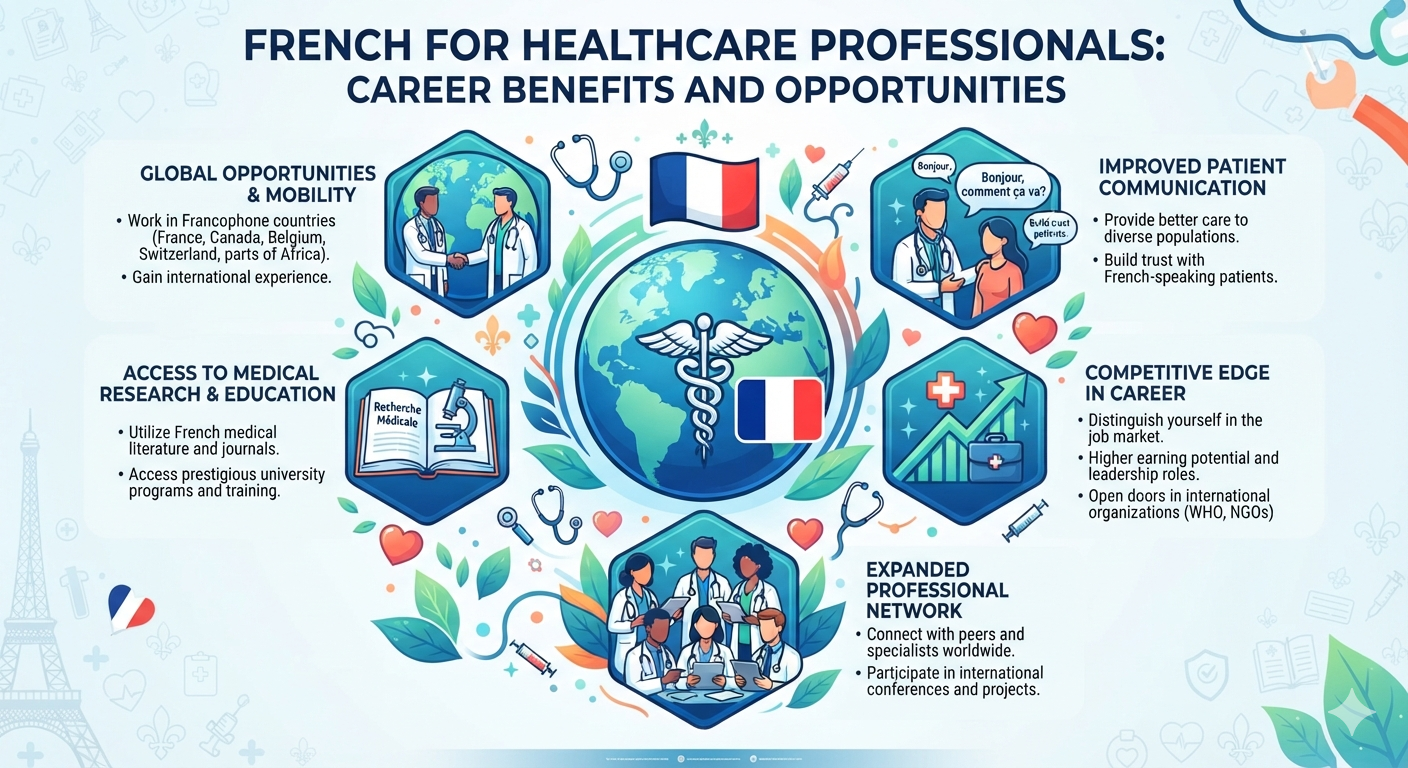
The healthcare industry has become increasingly global, with professionals working across countries, collaborating with international teams, and serving patients from diverse cultural and linguistic backgrounds. While medical knowledge and technical expertise remain the foundation of a successful healthcare career, language skills have become equally valuable in today's interconnected world.
Among the many foreign languages that professionals choose to learn, French stands out as one of the most beneficial for healthcare workers. Spoken by more than 320 million people across five continents, French is an official language in numerous countries and plays a significant role in international healthcare, medical research, humanitarian work, and public health organizations.
Whether you are a doctor, nurse, pharmacist, physiotherapist, dentist, medical laboratory technician, hospital administrator, or a student preparing for a healthcare career, learning French can significantly expand your career opportunities.
In this comprehensive guide, we will explore why French is becoming an important skill for healthcare professionals, the career advantages it offers, industries that value French-speaking medical professionals, and how learning French can transform your professional journey.
Why Language Skills Matter in Healthcare
Healthcare is built on communication. Every diagnosis, treatment plan, consultation, and patient interaction depends on effective communication between healthcare providers and patients.
Language barriers often lead to:
Miscommunication during diagnosis
Delayed treatment
Medication errors
Reduced patient satisfaction
Lower quality of care
Increased healthcare costs
Healthcare professionals who speak multiple languages are better equipped to understand patients' concerns, explain treatment procedures clearly, and provide compassionate care.
French, being one of the world's most widely spoken languages, enables healthcare workers to communicate with millions of additional patients globally.
Why Learn French as a Healthcare Professional?
Learning French isn't just about speaking another language—it is about unlocking international opportunities and becoming a more versatile healthcare professional.
Some of the biggest advantages include:
1. Access to International Healthcare Careers
Many countries where French is an official language actively recruit skilled healthcare professionals.
These include:
France
Canada (especially Quebec)
Belgium
Switzerland
Luxembourg
Monaco
Outside Europe, French is widely spoken in several African nations experiencing rapid healthcare development.
Examples include:
Senegal
Ivory Coast
Cameroon
Morocco
Tunisia
Algeria
These countries frequently require qualified:
Doctors
Nurses
Midwives
Dentists
Medical Technologists
Public Health Experts
Knowing French gives candidates a significant competitive advantage during recruitment.
2. Better Communication with Patients
Healthcare is more than treatment—it's about trust.
Patients naturally feel more comfortable when healthcare professionals speak their native language.
French-speaking patients often:
Explain symptoms more accurately
Ask more questions
Understand prescriptions better
Follow treatment plans correctly
Feel emotionally supported
Better communication leads to better health outcomes.
3. Higher Employability
Hospitals, clinics, NGOs, and international healthcare organizations increasingly prefer multilingual candidates.
A healthcare professional who speaks both English and French often stands out during recruitment because they can:
Handle international patients
Assist multilingual medical teams
Support medical tourism
Participate in global healthcare projects
This makes your resume stronger compared to candidates with only one language.
Global Demand for French-Speaking Healthcare Professionals
Several factors are driving the demand:
Aging Population
Many French-speaking countries have aging populations that require more healthcare workers.
This creates opportunities for:
Nurses
Caregivers
Physiotherapists
Geriatric specialists
Occupational therapists
Medical Tourism
Countries worldwide receive patients from French-speaking regions.
Hospitals treating international patients value professionals who can communicate effectively in French.
Medical tourism continues to grow in specialties such as:
Cardiology
Orthopedics
Fertility treatment
Cosmetic surgery
Oncology
Rehabilitation
Public Health Programs
International healthcare organizations frequently operate in French-speaking countries.
Professionals involved in:
Vaccination drives
Disease prevention
Maternal healthcare
Nutrition programs
Community health
benefit greatly from French language skills.
Career Opportunities After Learning French
French opens doors to numerous healthcare careers.
Doctors
Doctors working internationally can:
Consult patients directly
Collaborate with international specialists
Participate in overseas fellowships
Attend global medical conferences
Specializations with international demand include:
Internal Medicine
Pediatrics
Cardiology
Surgery
Emergency Medicine
Radiology
Nurses
Nursing is among the most sought-after professions worldwide.
French-speaking nurses are in demand in:
Hospitals
Elder care facilities
Rehabilitation centers
Community healthcare organizations
Countries like Canada and France regularly recruit qualified nurses with French proficiency.
Dentists
Dental professionals serving multicultural communities benefit greatly from bilingual communication.
French-speaking dentists can:
Explain procedures confidently
Build stronger patient relationships
Expand private practice opportunities
Pharmacists
Pharmacists frequently interact with patients regarding medications and dosage instructions.
French proficiency helps them:
Counsel patients accurately
Prevent medication misunderstandings
Work in multinational pharmaceutical companies
Physiotherapists
Physiotherapists rely heavily on verbal communication throughout treatment.
French enables professionals to:
Guide exercises clearly
Understand patient feedback
Improve rehabilitation outcomes
Medical Laboratory Professionals
Although laboratory work involves limited patient interaction, French is beneficial when collaborating with:
International hospitals
Research institutions
Global diagnostic companies
Public Health Specialists
Public health experts often work with international agencies.
French proficiency supports careers in:
Epidemiology
Disease surveillance
Community health
Health education
Global health policy
French in International Healthcare Organizations
Many global organizations operate extensively in French-speaking regions.
Healthcare professionals with French language skills have better opportunities to work with international humanitarian missions, research collaborations, and global public health initiatives.
Examples include:
International humanitarian organizations
Global medical research programs
Public health partnerships
International vaccination campaigns
Emergency medical response teams
French often becomes an essential communication tool during cross-border healthcare projects.
Benefits for Medical Students
Learning French early provides long-term advantages.
Medical students can:
Access French medical literature
Participate in exchange programs
Apply for scholarships
Attend international internships
Build international professional networks
Adding French to your skill set before graduation gives you a competitive edge when applying for jobs or postgraduate studies.
French and Medical Research
France, Belgium, Switzerland, and Canada contribute significantly to global medical research.
Researchers who understand French can:
Read scientific journals
Access research papers
Collaborate with international teams
Present findings at conferences
Participate in multinational clinical trials
This broadens academic and professional opportunities.
French in the Pharmaceutical Industry
Global pharmaceutical companies frequently operate across French-speaking regions.
Professionals with French skills can work in:
Clinical research
Drug safety
Medical affairs
Regulatory affairs
Medical writing
Pharmacovigilance
International marketing
Language proficiency improves communication between international offices and healthcare providers.
French in Medical Tourism
Medical tourism has become one of the fastest-growing sectors in the global healthcare industry. Every year, millions of patients travel abroad for high-quality and cost-effective treatments, including surgeries, dental care, fertility treatments, cosmetic procedures, and rehabilitation services.
Many of these patients come from French-speaking countries or regions. Healthcare professionals who can communicate in French provide a more comfortable and reassuring experience for international patients.
Benefits of French in Medical Tourism
Better patient communication
Increased trust and confidence
Improved understanding of medical procedures
Enhanced patient satisfaction
Greater opportunities to work in internationally accredited hospitals
Hospitals that cater to international patients often prefer multilingual professionals because they help bridge communication gaps and improve the overall quality of care.
Humanitarian and NGO Opportunities
Healthcare professionals often aspire to make a meaningful impact by working with humanitarian organizations. Many international NGOs and healthcare missions operate in French-speaking countries across Africa, Europe, and other regions.
French language skills can significantly improve your chances of participating in:
Emergency healthcare missions
Disaster relief operations
Public health awareness campaigns
Maternal and child healthcare programs
Vaccination drives
Disease prevention initiatives
Refugee healthcare services
Being able to communicate directly with local communities allows healthcare workers to build trust, educate patients effectively, and deliver better medical assistance.
Salary and Career Growth Advantages
Although language skills alone do not determine salary, they often increase your value as a professional.
Healthcare professionals who speak French may benefit from:
Better job opportunities
Higher-paying international roles
Faster career progression
Additional responsibilities in multinational hospitals
Eligibility for overseas assignments
Increased networking opportunities
Employers appreciate candidates who can work with diverse patient populations and international teams, making bilingual professionals highly competitive.
Countries Where French-Speaking Healthcare Professionals Are in Demand
Learning French opens doors to employment opportunities in several countries known for their advanced healthcare systems.
France
France has one of the world's leading healthcare systems and regularly requires qualified healthcare professionals in various specialties.
Popular opportunities include:
Doctors
Nurses
Dentists
Physiotherapists
Pharmacists
Healthcare administrators
Canada
Canada, especially the province of Quebec, highly values French-speaking professionals. Bilingual healthcare workers are often preferred because they can communicate effectively with both English- and French-speaking patients.
Career opportunities include:
Hospitals
Community health centers
Long-term care facilities
Rehabilitation clinics
Public health departments
Switzerland
Switzerland has multiple official languages, including French. Healthcare professionals with French proficiency can find opportunities in hospitals, research institutions, and specialized clinics.
Belgium
Belgium has a strong healthcare infrastructure where French is one of the official languages. Healthcare workers with French skills can explore opportunities in both public and private healthcare sectors.
French-Speaking African Nations
Several African countries are investing significantly in healthcare infrastructure, creating growing demand for skilled medical professionals.
Opportunities exist in:
Government hospitals
Private healthcare organizations
International NGOs
Public health projects
Medical research institutions
Healthcare Careers That Benefit from French
French language skills are valuable across a wide range of healthcare professions, including:
Doctors
Nurses
Dentists
Pharmacists
Physiotherapists
Occupational Therapists
Psychologists
Nutritionists
Medical Laboratory Technologists
Radiographers
Speech Therapists
Public Health Professionals
Healthcare Administrators
Medical Researchers
Clinical Trial Coordinators
Regardless of your specialization, learning French can broaden your career options and make you more adaptable in an increasingly global healthcare environment.
Essential French Skills for Healthcare Professionals
Healthcare workers do not need to become language experts overnight. Focusing on practical communication can make a significant difference.
Important areas include:
Medical Vocabulary
Learning common medical terms helps in patient consultations and clinical settings.
Patient Communication
Professionals should be able to:
Ask about symptoms
Explain diagnoses
Discuss treatment plans
Provide medication instructions
Offer post-treatment guidance
Professional Communication
Healthcare teams often collaborate across departments and countries. French language skills help in:
Team discussions
Medical documentation
International conferences
Research collaborations
Recommended French Proficiency Levels
The ideal level depends on your career goals.
A1–A2
Suitable for:
Beginners
Basic conversations
Everyday communication
B1–B2
Ideal for:
Healthcare professionals
Workplace communication
Patient interactions
Hospital environments
C1–C2
Recommended for:
Medical researchers
Specialists
Academic professionals
Healthcare educators
International consultants
For most healthcare careers, achieving a B2 level provides strong communication skills for professional settings.
How to Start Learning French
If you're new to French, a structured learning approach will help you progress steadily.
Step 1: Learn the Basics
Build a strong foundation by learning:
Alphabet
Pronunciation
Basic grammar
Everyday vocabulary
Step 2: Improve Listening Skills
Practice with:
French podcasts
News channels
Healthcare-related videos
Educational content
Step 3: Focus on Medical Vocabulary
Expand your knowledge by learning:
Body parts
Diseases
Symptoms
Medicines
Medical procedures
Hospital terminology
Step 4: Practice Speaking
Speaking regularly helps improve pronunciation, confidence, and fluency.
Join conversation sessions or language classes where you can practice real-life healthcare scenarios.
Step 5: Prepare for Certification
International certifications such as DELF can validate your language proficiency and strengthen your resume.
Why Choose Skill Excellent for French Language Training?
Choosing the right institute is just as important as choosing the right language. At Skill Excellent, learners receive practical, career-focused French language training designed to help them succeed in academic, professional, and international environments.
Industry-Oriented Curriculum
The course focuses on practical communication skills rather than just theoretical grammar.
Experienced Trainers
Learn from qualified instructors who guide students through every stage of their language-learning journey.
Interactive Learning
The training includes:
Live speaking sessions
Listening practice
Vocabulary development
Pronunciation improvement
Real-life conversation exercises
Flexible Learning Options
Whether you are a student or a working professional, flexible class schedules make learning convenient.
Career Support
Skill Excellent also provides guidance for:
DELF preparation
Interview readiness
Career counseling
International opportunities
Tips to Learn French Faster
To accelerate your learning:
Practice speaking every day.
Learn new vocabulary regularly.
Read simple French articles.
Watch French videos with subtitles.
Listen to French podcasts.
Keep a vocabulary notebook.
Revise grammar consistently.
Use French in daily conversations whenever possible.
Set weekly learning goals.
Stay consistent and patient.
Small daily efforts lead to long-term fluency.
Frequently Asked Questions (FAQs)
Is French useful for healthcare professionals?
Yes. French improves communication with patients, enhances employability, and opens opportunities in international healthcare, research, NGOs, and multinational hospitals.
Can nurses benefit from learning French?
Absolutely. Nurses frequently interact with patients, making language skills extremely valuable for delivering quality care and improving patient satisfaction.
Is French difficult to learn?
French requires dedication and consistent practice, but with proper guidance and structured learning, it is achievable for beginners.
Which French level is recommended for healthcare professionals?
A B2 level is generally recommended for effective workplace communication and patient interaction.
Does learning French improve international career opportunities?
Yes. French proficiency can strengthen your resume and increase opportunities to work or collaborate in French-speaking countries and global healthcare organizations.
Conclusion
The future of healthcare is increasingly global, and language skills are becoming an essential part of professional success. French is much more than an additional qualification—it is a gateway to international careers, stronger patient relationships, research collaborations, humanitarian work, and long-term professional growth.
Whether you are a medical student planning your future, a nurse seeking overseas opportunities, a doctor aiming for international collaboration, or a healthcare professional looking to enhance your career, learning French can give you a significant competitive advantage.
By investing in French language skills today, you prepare yourself for a future where communication, cultural understanding, and global collaboration are just as important as clinical expertise.
If you're ready to take the next step in your healthcare career, Skill Excellent's French Language Course provides practical training, experienced faculty, and career-focused learning to help you gain confidence and unlock exciting opportunities in the global healthcare industry.