Introduction
Human Resource Management Systems (HRMS) have become essential for organizations of every size. An HRMS is software that centralizes employee information, automates repetitive HR tasks, and helps organizations make better decisions through accurate data. Businesses use HRMS platforms to manage recruitment, onboarding, attendance, leave, payroll, performance, learning, and compliance in one place. As companies embrace digital transformation, HRMS solutions improve efficiency, reduce paperwork, and enhance the employee experience.
For HR professionals, learning HRMS is a valuable career skill. Whether you are a student, a fresher, or an experienced HR executive, understanding HRMS can improve productivity and open new career opportunities.
Human Resource Management Systems (HRMS) have become essential for organizations of every size. An HRMS is software that centralizes employee information, automates repetitive HR tasks, and helps organizations make better decisions through accurate data. Businesses use HRMS platforms to manage recruitment, onboarding, attendance, leave, payroll, performance, learning, and compliance in one place. As companies embrace digital transformation, HRMS solutions improve efficiency, reduce paperwork, and enhance the employee experience.
For HR professionals, learning HRMS is a valuable career skill. Whether you are a student, a fresher, or an experienced HR executive, understanding HRMS can improve productivity and open new career opportunities.
Human Resource Management Systems (HRMS) have become essential for organizations of every size. An HRMS is software that centralizes employee information, automates repetitive HR tasks, and helps organizations make better decisions through accurate data. Businesses use HRMS platforms to manage recruitment, onboarding, attendance, leave, payroll, performance, learning, and compliance in one place. As companies embrace digital transformation, HRMS solutions improve efficiency, reduce paperwork, and enhance the employee experience.
For HR professionals, learning HRMS is a valuable career skill. Whether you are a student, a fresher, or an experienced HR executive, understanding HRMS can improve productivity and open new career opportunities.
Human Resource Management Systems (HRMS) have become essential for organizations of every size. An HRMS is software that centralizes employee information, automates repetitive HR tasks, and helps organizations make better decisions through accurate data. Businesses use HRMS platforms to manage recruitment, onboarding, attendance, leave, payroll, performance, learning, and compliance in one place. As companies embrace digital transformation, HRMS solutions improve efficiency, reduce paperwork, and enhance the employee experience.
For HR professionals, learning HRMS is a valuable career skill. Whether you are a student, a fresher, or an experienced HR executive, understanding HRMS can improve productivity and open new career opportunities.
Human Resource Management Systems (HRMS) have become essential for organizations of every size. An HRMS is software that centralizes employee information, automates repetitive HR tasks, and helps organizations make better decisions through accurate data. Businesses use HRMS platforms to manage recruitment, onboarding, attendance, leave, payroll, performance, learning, and compliance in one place. As companies embrace digital transformation, HRMS solutions improve efficiency, reduce paperwork, and enhance the employee experience.
For HR professionals, learning HRMS is a valuable career skill. Whether you are a student, a fresher, or an experienced HR executive, understanding HRMS can improve productivity and open new career opportunities.
Human Resource Management Systems (HRMS) have become essential for organizations of every size. An HRMS is software that centralizes employee information, automates repetitive HR tasks, and helps organizations make better decisions through accurate data. Businesses use HRMS platforms to manage recruitment, onboarding, attendance, leave, payroll, performance, learning, and compliance in one place. As companies embrace digital transformation, HRMS solutions improve efficiency, reduce paperwork, and enhance the employee experience.
For HR professionals, learning HRMS is a valuable career skill. Whether you are a student, a fresher, or an experienced HR executive, understanding HRMS can improve productivity and open new career opportunities.
What is HRMS?
HRMS stands for Human Resource Management System. It is an integrated software solution that combines multiple HR functions into a single platform. Instead of maintaining spreadsheets and paper records, HR teams can securely manage employee information, automate workflows, and generate reports.
An HRMS often includes employee databases, recruitment, onboarding, attendance, leave management, payroll, benefits, performance management, learning, and analytics.
HRMS stands for Human Resource Management System. It is an integrated software solution that combines multiple HR functions into a single platform. Instead of maintaining spreadsheets and paper records, HR teams can securely manage employee information, automate workflows, and generate reports.
An HRMS often includes employee databases, recruitment, onboarding, attendance, leave management, payroll, benefits, performance management, learning, and analytics.
HRMS stands for Human Resource Management System. It is an integrated software solution that combines multiple HR functions into a single platform. Instead of maintaining spreadsheets and paper records, HR teams can securely manage employee information, automate workflows, and generate reports.
An HRMS often includes employee databases, recruitment, onboarding, attendance, leave management, payroll, benefits, performance management, learning, and analytics.
HRMS stands for Human Resource Management System. It is an integrated software solution that combines multiple HR functions into a single platform. Instead of maintaining spreadsheets and paper records, HR teams can securely manage employee information, automate workflows, and generate reports.
An HRMS often includes employee databases, recruitment, onboarding, attendance, leave management, payroll, benefits, performance management, learning, and analytics.
HRMS stands for Human Resource Management System. It is an integrated software solution that combines multiple HR functions into a single platform. Instead of maintaining spreadsheets and paper records, HR teams can securely manage employee information, automate workflows, and generate reports.
An HRMS often includes employee databases, recruitment, onboarding, attendance, leave management, payroll, benefits, performance management, learning, and analytics.
HRMS stands for Human Resource Management System. It is an integrated software solution that combines multiple HR functions into a single platform. Instead of maintaining spreadsheets and paper records, HR teams can securely manage employee information, automate workflows, and generate reports.
An HRMS often includes employee databases, recruitment, onboarding, attendance, leave management, payroll, benefits, performance management, learning, and analytics.
Key Features
Employee database, recruitment management, onboarding, attendance tracking, leave management, payroll integration, performance management, learning and development, employee self-service, analytics and dashboards.
Employee database, recruitment management, onboarding, attendance tracking, leave management, payroll integration, performance management, learning and development, employee self-service, analytics and dashboards.
Employee database, recruitment management, onboarding, attendance tracking, leave management, payroll integration, performance management, learning and development, employee self-service, analytics and dashboards.
Employee database, recruitment management, onboarding, attendance tracking, leave management, payroll integration, performance management, learning and development, employee self-service, analytics and dashboards.
Employee database, recruitment management, onboarding, attendance tracking, leave management, payroll integration, performance management, learning and development, employee self-service, analytics and dashboards.
Employee database, recruitment management, onboarding, attendance tracking, leave management, payroll integration, performance management, learning and development, employee self-service, analytics and dashboards.
Benefits
Automation saves time, improves accuracy, strengthens compliance, enhances employee experience, supports data-driven decisions, reduces operational costs, and scales with business growth.
Automation saves time, improves accuracy, strengthens compliance, enhances employee experience, supports data-driven decisions, reduces operational costs, and scales with business growth.
Automation saves time, improves accuracy, strengthens compliance, enhances employee experience, supports data-driven decisions, reduces operational costs, and scales with business growth.
Automation saves time, improves accuracy, strengthens compliance, enhances employee experience, supports data-driven decisions, reduces operational costs, and scales with business growth.
Automation saves time, improves accuracy, strengthens compliance, enhances employee experience, supports data-driven decisions, reduces operational costs, and scales with business growth.
Automation saves time, improves accuracy, strengthens compliance, enhances employee experience, supports data-driven decisions, reduces operational costs, and scales with business growth.
Modules
Core HR, Recruitment, Payroll, Time & Attendance, Performance Management, Learning Management, Employee Self-Service, Analytics.
Core HR, Recruitment, Payroll, Time & Attendance, Performance Management, Learning Management, Employee Self-Service, Analytics.
Core HR, Recruitment, Payroll, Time & Attendance, Performance Management, Learning Management, Employee Self-Service, Analytics.
Core HR, Recruitment, Payroll, Time & Attendance, Performance Management, Learning Management, Employee Self-Service, Analytics.
Core HR, Recruitment, Payroll, Time & Attendance, Performance Management, Learning Management, Employee Self-Service, Analytics.
Core HR, Recruitment, Payroll, Time & Attendance, Performance Management, Learning Management, Employee Self-Service, Analytics.
HRMS vs HRIS vs HCM
HRIS focuses on core HR records, HRMS expands with payroll and workforce management, while HCM includes strategic talent management and workforce planning.
HRIS focuses on core HR records, HRMS expands with payroll and workforce management, while HCM includes strategic talent management and workforce planning.
HRIS focuses on core HR records, HRMS expands with payroll and workforce management, while HCM includes strategic talent management and workforce planning.
HRIS focuses on core HR records, HRMS expands with payroll and workforce management, while HCM includes strategic talent management and workforce planning.
HRIS focuses on core HR records, HRMS expands with payroll and workforce management, while HCM includes strategic talent management and workforce planning.
HRIS focuses on core HR records, HRMS expands with payroll and workforce management, while HCM includes strategic talent management and workforce planning.
How to Choose
Evaluate business size, required features, ease of use, security, scalability, integrations, vendor support, and total cost of ownership.
Evaluate business size, required features, ease of use, security, scalability, integrations, vendor support, and total cost of ownership.
Evaluate business size, required features, ease of use, security, scalability, integrations, vendor support, and total cost of ownership.
Evaluate business size, required features, ease of use, security, scalability, integrations, vendor support, and total cost of ownership.
Evaluate business size, required features, ease of use, security, scalability, integrations, vendor support, and total cost of ownership.
Evaluate business size, required features, ease of use, security, scalability, integrations, vendor support, and total cost of ownership.
Future
AI-powered recruiting, predictive analytics, chatbots, mobile-first HR, automation, cloud deployment, and personalized employee experiences are shaping the future of HRMS.
AI-powered recruiting, predictive analytics, chatbots, mobile-first HR, automation, cloud deployment, and personalized employee experiences are shaping the future of HRMS.
AI-powered recruiting, predictive analytics, chatbots, mobile-first HR, automation, cloud deployment, and personalized employee experiences are shaping the future of HRMS.
AI-powered recruiting, predictive analytics, chatbots, mobile-first HR, automation, cloud deployment, and personalized employee experiences are shaping the future of HRMS.
AI-powered recruiting, predictive analytics, chatbots, mobile-first HR, automation, cloud deployment, and personalized employee experiences are shaping the future of HRMS.
AI-powered recruiting, predictive analytics, chatbots, mobile-first HR, automation, cloud deployment, and personalized employee experiences are shaping the future of HRMS.
Career Opportunities
Knowledge of HRMS is valuable for HR Executives, Recruiters, Payroll Specialists, HR Analysts, HR Managers, HRIS Analysts, and Talent Acquisition professionals.
Knowledge of HRMS is valuable for HR Executives, Recruiters, Payroll Specialists, HR Analysts, HR Managers, HRIS Analysts, and Talent Acquisition professionals.
Knowledge of HRMS is valuable for HR Executives, Recruiters, Payroll Specialists, HR Analysts, HR Managers, HRIS Analysts, and Talent Acquisition professionals.
Knowledge of HRMS is valuable for HR Executives, Recruiters, Payroll Specialists, HR Analysts, HR Managers, HRIS Analysts, and Talent Acquisition professionals.
Knowledge of HRMS is valuable for HR Executives, Recruiters, Payroll Specialists, HR Analysts, HR Managers, HRIS Analysts, and Talent Acquisition professionals.
Knowledge of HRMS is valuable for HR Executives, Recruiters, Payroll Specialists, HR Analysts, HR Managers, HRIS Analysts, and Talent Acquisition professionals.
FAQs
Q: Is HRMS suitable for small businesses?
A: Yes, many cloud-based HRMS solutions are affordable and scalable.
Q: Does HRMS replace HR professionals?
A: No. It automates repetitive tasks while HR professionals focus on strategy and people.
Q: What skills are needed?
A: HR fundamentals, communication, reporting, and familiarity with HR software.
Q: Is HRMS suitable for small businesses?
A: Yes, many cloud-based HRMS solutions are affordable and scalable.
Q: Does HRMS replace HR professionals?
A: No. It automates repetitive tasks while HR professionals focus on strategy and people.
Q: What skills are needed?
A: HR fundamentals, communication, reporting, and familiarity with HR software.
Q: Is HRMS suitable for small businesses?
A: Yes, many cloud-based HRMS solutions are affordable and scalable.
Q: Does HRMS replace HR professionals?
A: No. It automates repetitive tasks while HR professionals focus on strategy and people.
Q: What skills are needed?
A: HR fundamentals, communication, reporting, and familiarity with HR software.
Q: Is HRMS suitable for small businesses?
A: Yes, many cloud-based HRMS solutions are affordable and scalable.
Q: Does HRMS replace HR professionals?
A: No. It automates repetitive tasks while HR professionals focus on strategy and people.
Q: What skills are needed?
A: HR fundamentals, communication, reporting, and familiarity with HR software.
Q: Is HRMS suitable for small businesses?
A: Yes, many cloud-based HRMS solutions are affordable and scalable.
Q: Does HRMS replace HR professionals?
A: No. It automates repetitive tasks while HR professionals focus on strategy and people.
Q: What skills are needed?
A: HR fundamentals, communication, reporting, and familiarity with HR software.
Q: Is HRMS suitable for small businesses?
A: Yes, many cloud-based HRMS solutions are affordable and scalable.
Q: Does HRMS replace HR professionals?
A: No. It automates repetitive tasks while HR professionals focus on strategy and people.
Q: What skills are needed?
A: HR fundamentals, communication, reporting, and familiarity with HR software.
Conclusion
HRMS is more than software—it is a strategic tool that enables efficient HR operations and better employee experiences. Learning HRMS prepares aspiring HR professionals for modern workplaces where technology and people management go hand in hand.
Call to Action: Enroll in Skill Excellent's HR Training Course to gain practical HRMS knowledge, recruitment skills, payroll basics, compliance understanding, and job-ready expertise.
HRMS is more than software—it is a strategic tool that enables efficient HR operations and better employee experiences. Learning HRMS prepares aspiring HR professionals for modern workplaces where technology and people management go hand in hand.
Call to Action: Enroll in Skill Excellent's HR Training Course to gain practical HRMS knowledge, recruitment skills, payroll basics, compliance understanding, and job-ready expertise.
HRMS is more than software—it is a strategic tool that enables efficient HR operations and better employee experiences. Learning HRMS prepares aspiring HR professionals for modern workplaces where technology and people management go hand in hand.
Call to Action: Enroll in Skill Excellent's HR Training Course to gain practical HRMS knowledge, recruitment skills, payroll basics, compliance understanding, and job-ready expertise.
HRMS is more than software—it is a strategic tool that enables efficient HR operations and better employee experiences. Learning HRMS prepares aspiring HR professionals for modern workplaces where technology and people management go hand in hand.
Call to Action: Enroll in Skill Excellent's HR Training Course to gain practical HRMS knowledge, recruitment skills, payroll basics, compliance understanding, and job-ready expertise.
HRMS is more than software—it is a strategic tool that enables efficient HR operations and better employee experiences. Learning HRMS prepares aspiring HR professionals for modern workplaces where technology and people management go hand in hand.
Skillexcellent
HRMS Explained: Everything You Need to Know
July 02, 2026
•
5 min read
Key Highlights
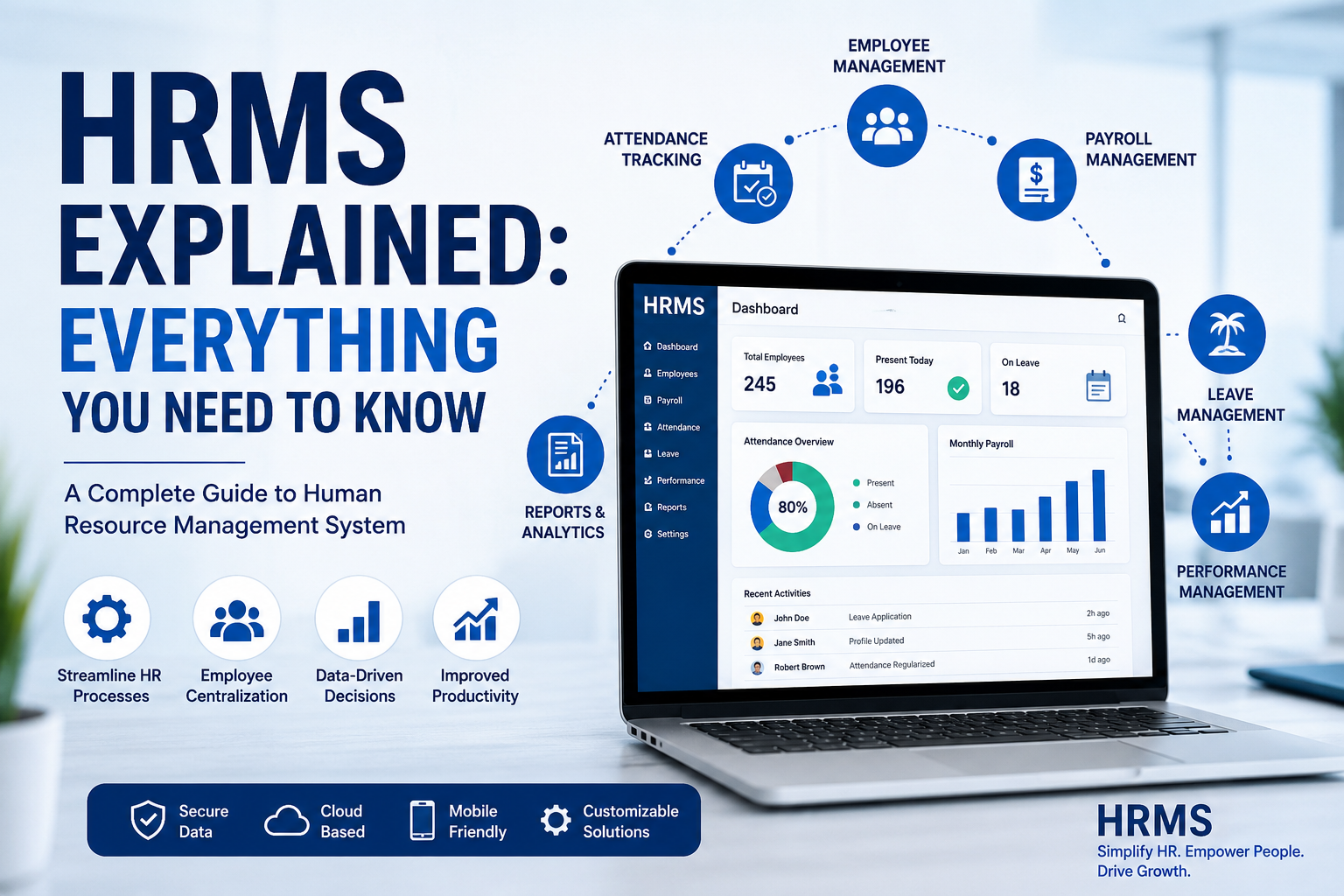
Human Resource Management Systems (HRMS) have become essential for organizations of every size. An HRMS is software that centralizes employee information, automates repetitive HR tasks, and helps organizations make better decisions through accurate data. Businesses use HRMS platforms to manage recruitment, onboarding, attendance, leave, payroll, performance, learning, and compliance in one place. As companies embrace digital transformation, HRMS solutions improve efficiency, reduce paperwork, and enhance the employee experience.
Related Topics
#HRtraining.
Enjoyed this article?
Share it with your network and explore more insights!