Introduction
The world of work is changing faster than ever before. Technological advancements, artificial intelligence, automation, digital transformation, and globalization are reshaping industries and creating entirely new career opportunities. Jobs that were highly demanded a decade ago are becoming obsolete, while new roles requiring specialized skills are emerging every year.
For students, job seekers, and working professionals, staying relevant in this rapidly evolving landscape means focusing on future-ready skills. Employers are no longer looking only for academic qualifications; they are seeking candidates who possess a combination of technical expertise, digital literacy, creativity, problem-solving abilities, and adaptability.
Understanding future skills is no longer optional—it is essential for long-term career success. Whether you are planning your first job, considering a career switch, or aiming for professional growth, acquiring the right skills today can help you secure better opportunities tomorrow.
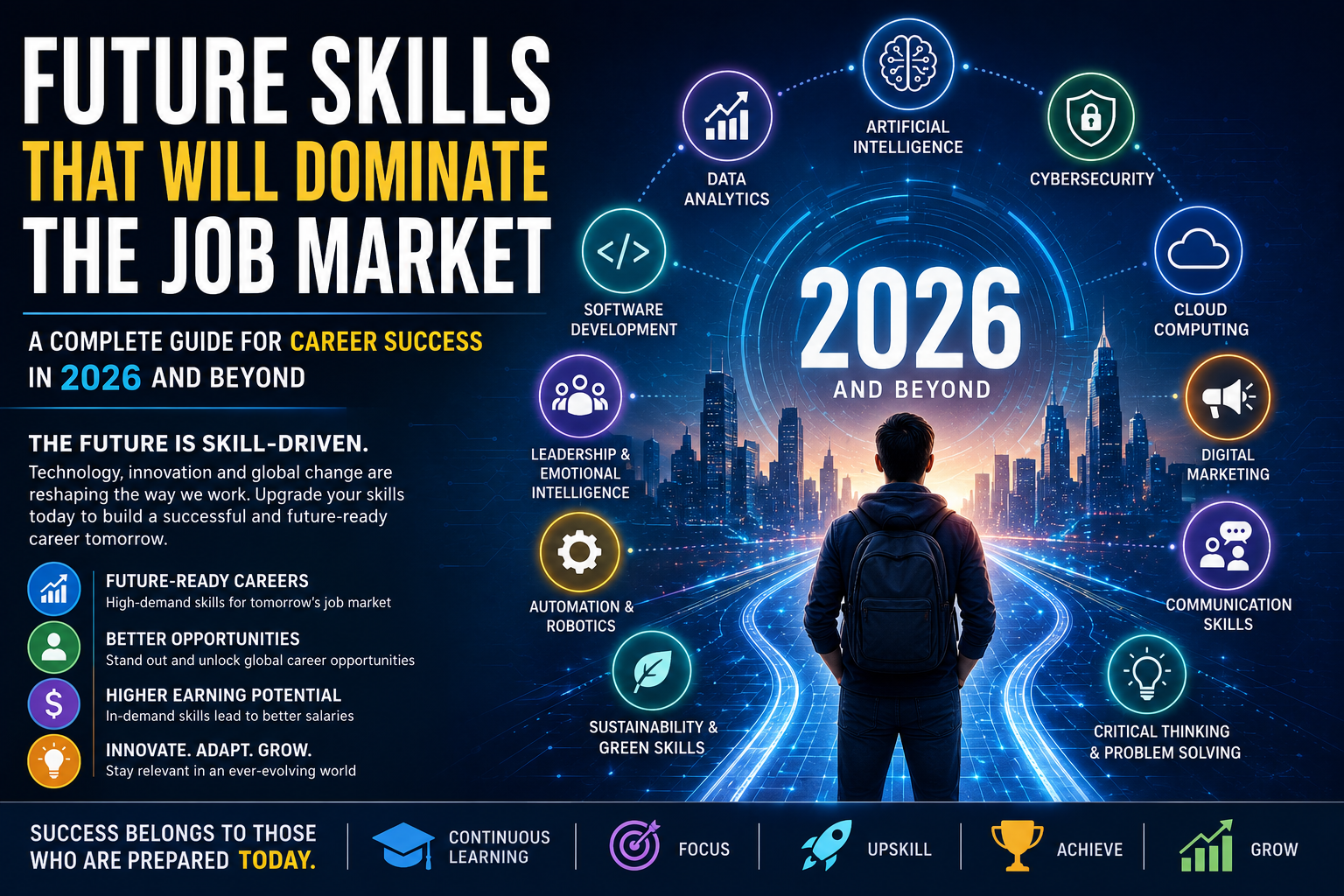
In this comprehensive guide, we will explore the future skills that are expected to dominate the job market in 2026 and beyond, why they matter, and how you can develop them to stay ahead of the competition.
What Are Future Skills?
Future skills refer to the competencies, knowledge, and abilities that individuals need to thrive in the evolving workplace. These skills enable professionals to adapt to technological changes, solve complex problems, and contribute effectively in modern organizations.
Future skills can be broadly categorized into:
- Technical Skills
- Digital Skills
- Cognitive Skills
- Social and Emotional Skills
- Leadership Skills
- Entrepreneurial Skills
The combination of these skills helps individuals remain employable and competitive in the modern job market.
Why Future Skills Are Important
1. Rapid Technological Advancement
Artificial Intelligence, Machine Learning, Robotics, and Automation are transforming industries at an unprecedented pace. Professionals must continuously learn new technologies to remain relevant.
2. Changing Job Roles
Many traditional jobs are evolving. New roles such as AI Specialists, Data Analysts, Digital Marketing Experts, Cloud Engineers, and Cybersecurity Professionals are becoming increasingly important.
3. Increased Competition
As the workforce becomes more globalized, employers have access to talent from around the world. Future skills help candidates stand out.
4. Higher Employability
Professionals with future-ready skills often enjoy better job opportunities, higher salaries, and greater career stability.
5. Career Flexibility
Future skills allow individuals to adapt to different industries and career paths as job markets evolve.
Top Future Skills That Will Dominate the Job Market
1. Artificial Intelligence (AI) and Machine Learning
Artificial Intelligence is revolutionizing how businesses operate. From healthcare and finance to education and manufacturing, AI applications are becoming widespread.
Key AI Skills
- Machine Learning
- Natural Language Processing
- AI Model Development
- Data Analysis
- Prompt Engineering
- Deep Learning
Career Opportunities
- AI Engineer
- Machine Learning Specialist
- AI Research Scientist
- Data Scientist
- AI Consultant
As AI adoption increases globally, professionals with AI expertise will remain highly sought after.
2. Data Analytics and Data Science
Data has become one of the most valuable assets for organizations. Businesses rely on data-driven insights to make informed decisions.
Important Data Skills
- Data Visualization
- Statistical Analysis
- Python Programming
- SQL
- Business Intelligence Tools
- Predictive Analytics
Career Opportunities
- Data Analyst
- Data Scientist
- Business Analyst
- Data Engineer
- Analytics Consultant
Organizations across industries are investing heavily in data-driven decision-making, making data science one of the most promising career fields.
3. Cybersecurity
As digital systems become more sophisticated, cyber threats continue to grow. Organizations need cybersecurity experts to protect sensitive information and infrastructure.
Essential Cybersecurity Skills
- Ethical Hacking
- Network Security
- Risk Assessment
- Cloud Security
- Incident Response
- Security Compliance
Career Opportunities
- Cybersecurity Analyst
- Information Security Specialist
- Ethical Hacker
- Security Consultant
- Security Engineer
Cybersecurity is expected to remain one of the fastest-growing sectors worldwide.
4. Cloud Computing
Cloud technology powers modern businesses by enabling scalable and efficient operations.
Popular Cloud Platforms
- AWS
- Microsoft Azure
- Google Cloud Platform
Valuable Skills
- Cloud Architecture
- Cloud Security
- DevOps
- Infrastructure Management
- Virtualization
Career Opportunities
- Cloud Engineer
- Cloud Architect
- DevOps Engineer
- Systems Administrator
Cloud computing expertise will continue to be highly valuable as organizations migrate their operations to cloud environments.
5. Digital Marketing
The rise of online business has significantly increased demand for digital marketing professionals.
Important Digital Marketing Skills
- Search Engine Optimization (SEO)
- Content Marketing
- Social Media Marketing
- Email Marketing
- Paid Advertising
- Analytics
Career Opportunities
- Digital Marketing Manager
- SEO Specialist
- Content Strategist
- Social Media Manager
- Performance Marketer
Digital marketing combines creativity and technology, making it an attractive career option.
6. Software Development and Programming
Technology continues to drive innovation, making software development one of the most in-demand skills globally.
Popular Programming Languages
- Python
- JavaScript
- Java
- C++
- TypeScript
Emerging Areas
- Mobile App Development
- Full Stack Development
- Web Development
- Software Engineering
- Blockchain Development
Career Opportunities
- Software Developer
- Web Developer
- Mobile App Developer
- Full Stack Engineer
Coding remains a foundational skill in the digital economy.
7. Emotional Intelligence (EQ)
Technical expertise alone is no longer enough. Employers increasingly value emotional intelligence.
Components of Emotional Intelligence
- Self-awareness
- Empathy
- Communication
- Relationship Management
- Conflict Resolution
Benefits
- Better teamwork
- Stronger leadership
- Improved workplace relationships
- Enhanced productivity
Professionals with high emotional intelligence often perform better in leadership and collaborative roles.
8. Critical Thinking and Problem-Solving
Future workplaces require employees who can analyze situations, evaluate information, and develop innovative solutions.
Why It Matters
- Complex business challenges
- Rapid decision-making
- Innovation requirements
- Strategic planning
Critical thinking remains one of the most valuable skills regardless of industry.
9. Communication Skills
Effective communication is essential in every profession.
Key Communication Skills
- Public Speaking
- Business Writing
- Presentation Skills
- Negotiation
- Active Listening
Professionals who communicate effectively often advance faster in their careers.
10. Adaptability and Learning Agility
The ability to learn new skills quickly has become a competitive advantage.
Characteristics
- Open-mindedness
- Curiosity
- Continuous Learning
- Flexibility
As industries evolve, adaptable professionals will remain relevant and employable.
11. Leadership and Management Skills
Organizations need leaders who can guide teams through change and uncertainty.
Essential Leadership Skills
- Decision-Making
- Team Management
- Strategic Thinking
- Motivation
- Change Management
Leadership capabilities are valuable even for professionals who are not in managerial positions.
12. Creativity and Innovation
Automation can handle repetitive tasks, but creativity remains uniquely human.
Creative Skills Include
- Idea Generation
- Innovation
- Design Thinking
- Strategic Vision
Companies seek employees who can develop innovative products, services, and business solutions.
13. Project Management
Modern organizations require professionals who can efficiently manage resources, timelines, and objectives.
Key Project Management Skills
- Planning
- Risk Management
- Budgeting
- Team Coordination
- Agile Methodologies
Popular Certifications
- PMP
- Scrum Master
- Agile Certifications
Project management skills are applicable across industries.
14. UX/UI Design
User experience has become a major competitive factor in digital products.
Skills Required
- User Research
- Wireframing
- Prototyping
- Visual Design
- User Testing
Career Opportunities
- UX Designer
- UI Designer
- Product Designer
Demand for skilled UX professionals continues to grow.
15. Sustainability and Green Skills
Environmental concerns are influencing business strategies worldwide.
Emerging Green Skills
- Renewable Energy Management
- Sustainable Business Practices
- Environmental Compliance
- ESG Reporting
The transition toward sustainability is creating new career opportunities across industries.
Industries Creating the Most Demand for Future Skills
Several industries are expected to generate significant demand for future-ready professionals:
Information Technology
AI, cloud computing, cybersecurity, and software development.
Healthcare
Health technology, data analytics, telemedicine, and biotechnology.
Renewable Energy
Solar energy, sustainability management, and green technology.
Finance
FinTech, blockchain, cybersecurity, and data analytics.
E-Commerce
Digital marketing, logistics, customer experience, and analytics.
Education
Online learning platforms, instructional design, and educational technology.
How to Develop Future Skills
1. Enroll in Professional Training Programs
Skill development courses provide structured learning and industry-relevant knowledge.
2. Earn Certifications
Certifications validate your expertise and improve your employability.
3. Learn Online
Take advantage of online courses, webinars, and virtual workshops.
4. Gain Practical Experience
Apply your skills through projects, internships, and freelancing opportunities.
5. Build a Professional Portfolio
Showcase your achievements, projects, and certifications.
6. Network with Industry Experts
Networking can open doors to mentorship and career opportunities.
7. Commit to Lifelong Learning
Continuous learning is essential in today's dynamic job market.
The Role of Skill Development in Career Growth
Skill development plays a critical role in preparing individuals for future careers. Employers increasingly prioritize practical competencies over traditional qualifications alone.
Benefits of skill development include:
- Improved employability
- Better salary prospects
- Career advancement
- Enhanced confidence
- Increased productivity
- Greater adaptability
Organizations and educational institutions are placing greater emphasis on skill-based learning to meet workforce demands.
How Skill Excellent Helps You Build Future-Ready Skills
At Skill Excellent, we understand the importance of preparing individuals for the careers of tomorrow. Our industry-focused training programs help students, job seekers, and professionals acquire the skills employers demand.
Our programs focus on:
- Digital Skills Training
- Career Counselling
- Professional Development
- Employability Enhancement
- Industry-Relevant Certifications
- Career Guidance and Mentorship
By combining practical learning with career support, Skill Excellent empowers learners to achieve long-term professional success.
Conclusion
The future job market will reward individuals who embrace continuous learning and develop future-ready skills. Artificial Intelligence, Data Analytics, Cybersecurity, Cloud Computing, Digital Marketing, Leadership, Emotional Intelligence, and Problem-Solving are among the most valuable skills that will dominate the workforce in 2026 and beyond.
Success in the modern workplace is no longer determined solely by academic qualifications. It depends on your ability to adapt, innovate, collaborate, and learn continuously. By investing in skill development today, you can secure a successful, resilient, and rewarding career for the future.
The sooner you start building these future skills, the better prepared you will be to seize emerging opportunities and thrive in an ever-changing professional landscape.