Introduction
In today's competitive job market, attracting talented employees is only half the battle. The real challenge lies in retaining them. Organizations across industries are facing increasing employee turnover, talent shortages, and rising recruitment costs. As a result, employee retention has become one of the most critical priorities for Human Resource (HR) professionals and business leaders.
Employee retention refers to an organization's ability to keep its employees engaged, satisfied, and committed over a long period. High employee retention rates contribute to organizational stability, improved productivity, stronger workplace culture, and significant cost savings. On the other hand, frequent employee turnover can disrupt operations, decrease team morale, and negatively impact customer satisfaction.
This comprehensive guide explores proven employee retention strategies that actually work and can help organizations build a loyal, motivated, and high-performing workforce.
Why Employee Retention Matters
Before discussing retention strategies, it is important to understand why retaining employees is essential for organizational success.
Reduced Recruitment Costs
Hiring new employees involves advertising vacancies, conducting interviews, onboarding, and training. These activities require considerable time and financial resources. Retaining existing employees reduces these costs significantly.
Increased Productivity
Experienced employees understand company processes, systems, and goals. Their knowledge enables them to perform tasks more efficiently and contribute to business growth.
Better Workplace Culture
Long-term employees help establish a stable and positive organizational culture. They often become mentors and role models for new team members.
Improved Customer Satisfaction
Employees who stay with an organization longer build stronger relationships with customers and deliver consistent service, leading to improved customer loyalty.
Stronger Employer Brand
Organizations known for employee satisfaction and retention attract top talent more easily than companies with high turnover rates.
Understanding Why Employees Leave
To improve retention, organizations must first understand the common reasons employees resign.
Lack of Career Growth
Employees often leave when they feel there are limited opportunities for advancement.
Poor Management
One of the most cited reasons for employee turnover is ineffective leadership or poor manager-employee relationships.
Inadequate Compensation
Employees may seek better-paying opportunities if they believe their skills and contributions are undervalued.
Work-Life Imbalance
Excessive workloads, long working hours, and lack of flexibility can lead to burnout.
Limited Recognition
Employees who feel unappreciated often lose motivation and begin searching for other opportunities.
Toxic Workplace Culture
Negative work environments characterized by favoritism, poor communication, and conflicts contribute significantly to turnover.
Understanding these factors helps HR professionals develop targeted retention strategies.
1. Offer Competitive Compensation and Benefits
Salary remains one of the most important factors influencing employee retention.
Organizations should regularly evaluate compensation packages to ensure they remain competitive within the industry.
Effective Compensation Strategies
- Conduct regular salary benchmarking
- Offer performance-based incentives
- Provide annual salary reviews
- Introduce retention bonuses
- Offer comprehensive healthcare benefits
- Provide retirement and insurance plans
Employees who feel fairly compensated are more likely to remain loyal to their employer.
Beyond Salary
Modern employees value benefits such as:
- Flexible working arrangements
- Mental health support
- Wellness programs
- Paid parental leave
- Learning and development opportunities
A strong benefits package can significantly improve retention rates.
2. Create Clear Career Development Opportunities
Employees want to know that they have a future within the organization.
A lack of career progression is one of the leading reasons employees seek new jobs.
How to Promote Career Growth
Individual Development Plans
Work with employees to create personalized career development plans aligned with organizational goals.
Internal Promotions
Prioritize internal candidates when filling leadership positions.
Mentorship Programs
Pair employees with experienced mentors who can guide their professional growth.
Leadership Development
Offer training programs that prepare employees for future leadership roles.
When employees see growth opportunities, they are more likely to stay and invest in the organization's success.
3. Strengthen Employee Engagement
Engaged employees are emotionally connected to their work and organization.
Research consistently shows that highly engaged employees are less likely to leave.
Employee Engagement Strategies
Encourage Open Communication
Create channels where employees can share feedback and suggestions freely.
Involve Employees in Decision-Making
Employees appreciate being included in discussions that affect their work.
Conduct Employee Surveys
Regular surveys help identify workplace concerns before they become major problems.
Foster Team Collaboration
Promote teamwork through projects, workshops, and team-building activities.
Engagement creates a sense of belonging, which significantly improves retention.
4. Recognize and Reward Employee Contributions
Recognition is a powerful retention tool.
Employees who feel valued are more motivated, productive, and loyal.
Effective Recognition Methods
- Employee of the Month programs
- Peer recognition initiatives
- Public appreciation during meetings
- Performance awards
- Spot bonuses
- Personalized thank-you messages
Recognition does not always need to be monetary. Simple appreciation often has a significant positive impact on employee morale.
5. Build a Positive Workplace Culture
Culture plays a major role in employee retention.
A supportive workplace encourages employees to stay even when they receive external job offers.
Characteristics of a Strong Workplace Culture
- Respect and inclusivity
- Transparency
- Trust
- Collaboration
- Accountability
- Diversity and inclusion
How HR Can Improve Culture
- Promote organizational values
- Encourage respectful communication
- Address conflicts promptly
- Support diversity initiatives
- Celebrate employee achievements
Employees are more likely to remain in organizations where they feel respected and included.
6. Invest in Learning and Development
Employees want opportunities to improve their skills and advance their careers.
Organizations that invest in employee development demonstrate a commitment to long-term growth.
Learning and Development Initiatives
Technical Training
Help employees stay updated with industry trends and technologies.
Soft Skills Training
Develop communication, leadership, and teamwork skills.
Certification Programs
Support professional certifications relevant to employee roles.
Online Learning Platforms
Provide access to digital courses and learning resources.
Continuous learning keeps employees motivated and enhances organizational performance.
7. Improve Leadership and Management Quality
Employees often leave managers, not organizations.
Strong leadership significantly influences employee retention.
Leadership Practices That Improve Retention
Provide Regular Feedback
Constructive feedback helps employees improve and feel supported.
Show Empathy
Managers should understand employee concerns and challenges.
Encourage Career Growth
Support employee aspirations and development goals.
Lead by Example
Demonstrate professionalism, integrity, and accountability.
Organizations should invest in leadership development programs to strengthen managerial effectiveness.
8. Promote Work-Life Balance
Today's workforce increasingly prioritizes work-life balance.
Organizations that support employee well-being often experience higher retention rates.
Work-Life Balance Strategies
Flexible Work Arrangements
Offer remote work, hybrid schedules, or flexible hours.
Manage Workloads
Ensure workloads are realistic and manageable.
Encourage Time Off
Promote the use of vacation and leave benefits.
Support Employee Wellness
Implement wellness programs and mental health initiatives.
Employees who maintain a healthy balance between work and personal life are less likely to experience burnout.
9. Conduct Stay Interviews
Most organizations conduct exit interviews after employees decide to leave.
A more effective approach is conducting stay interviews.
What Are Stay Interviews?
Stay interviews involve conversations with current employees to understand:
- Why they stay
- What they enjoy about their role
- What challenges they face
- What improvements they would like to see
Benefits of Stay Interviews
- Identify potential turnover risks
- Improve employee satisfaction
- Strengthen manager-employee relationships
- Create proactive retention plans
Stay interviews help organizations address concerns before employees decide to leave.
10. Foster Diversity, Equity, and Inclusion (DEI)
Employees want to work in environments where everyone is treated fairly and respectfully.
A strong DEI strategy contributes significantly to employee retention.
DEI Best Practices
- Inclusive hiring practices
- Equal career opportunities
- Diversity training programs
- Employee resource groups
- Bias-free performance evaluations
Inclusive workplaces promote employee engagement and loyalty.
11. Provide Meaningful Work
Employees increasingly seek purpose in their careers.
When individuals understand how their work contributes to organizational goals, they feel more connected and motivated.
How to Create Meaningful Work
- Communicate organizational mission clearly
- Show how employee contributions impact business success
- Assign challenging and rewarding projects
- Encourage innovation and creativity
Purpose-driven employees are more likely to remain committed to the organization.
12. Use HR Analytics to Predict Turnover
Modern HR departments use data-driven approaches to improve retention.
Key Metrics to Monitor
- Employee turnover rate
- Absenteeism rate
- Employee satisfaction scores
- Internal promotion rates
- Training participation
- Employee engagement levels
HR analytics helps organizations identify patterns and implement proactive retention strategies.
Common Employee Retention Mistakes to Avoid
Even well-intentioned organizations can make mistakes that increase turnover.
Ignoring Employee Feedback
Employees become frustrated when feedback is collected but not acted upon.
Delaying Recognition
Recognition should be timely and meaningful.
Overlooking Career Development
Employees need clear growth opportunities.
Focusing Only on Compensation
While salary is important, culture, leadership, and development opportunities matter equally.
Poor Onboarding
The employee experience begins on day one. A weak onboarding process can lead to early resignations.
Avoiding these mistakes strengthens long-term retention efforts.
Future Trends in Employee Retention
As workplaces continue evolving, organizations must adapt their retention strategies.
Hybrid Work Models
Flexible work arrangements are becoming standard expectations.
Employee Well-Being Programs
Mental health support and wellness initiatives will continue gaining importance.
Personalized Employee Experiences
Organizations are increasingly tailoring benefits and development opportunities to individual employee needs.
AI-Powered HR Solutions
Artificial intelligence helps identify turnover risks and improve employee engagement.
Continuous Learning Culture
Upskilling and reskilling will remain key retention drivers.
Organizations that embrace these trends will be better positioned to retain top talent.
Conclusion
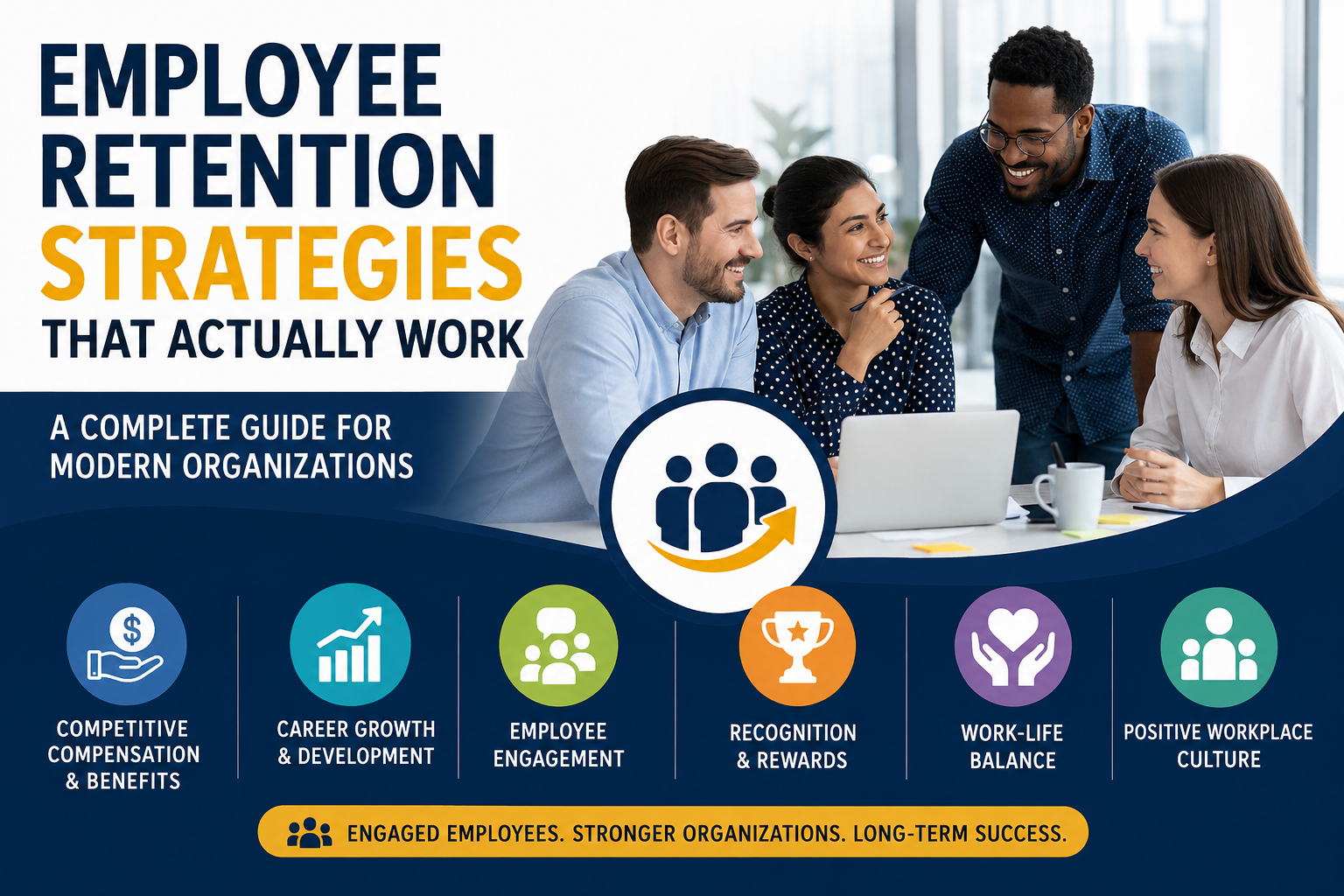
Employee retention is not achieved through a single initiative. It requires a comprehensive strategy that addresses compensation, career development, workplace culture, leadership quality, employee engagement, and well-being.
Organizations that prioritize their employees' growth, satisfaction, and overall experience create a loyal workforce that drives long-term business success. By implementing proven employee retention strategies such as competitive compensation, career development programs, recognition systems, flexible work arrangements, and strong leadership practices, companies can significantly reduce turnover and build a thriving workplace.
In today's competitive talent landscape, retaining great employees is one of the smartest investments an organization can make. Companies that focus on employee retention not only save costs but also create a stronger, more productive, and future-ready workforce.