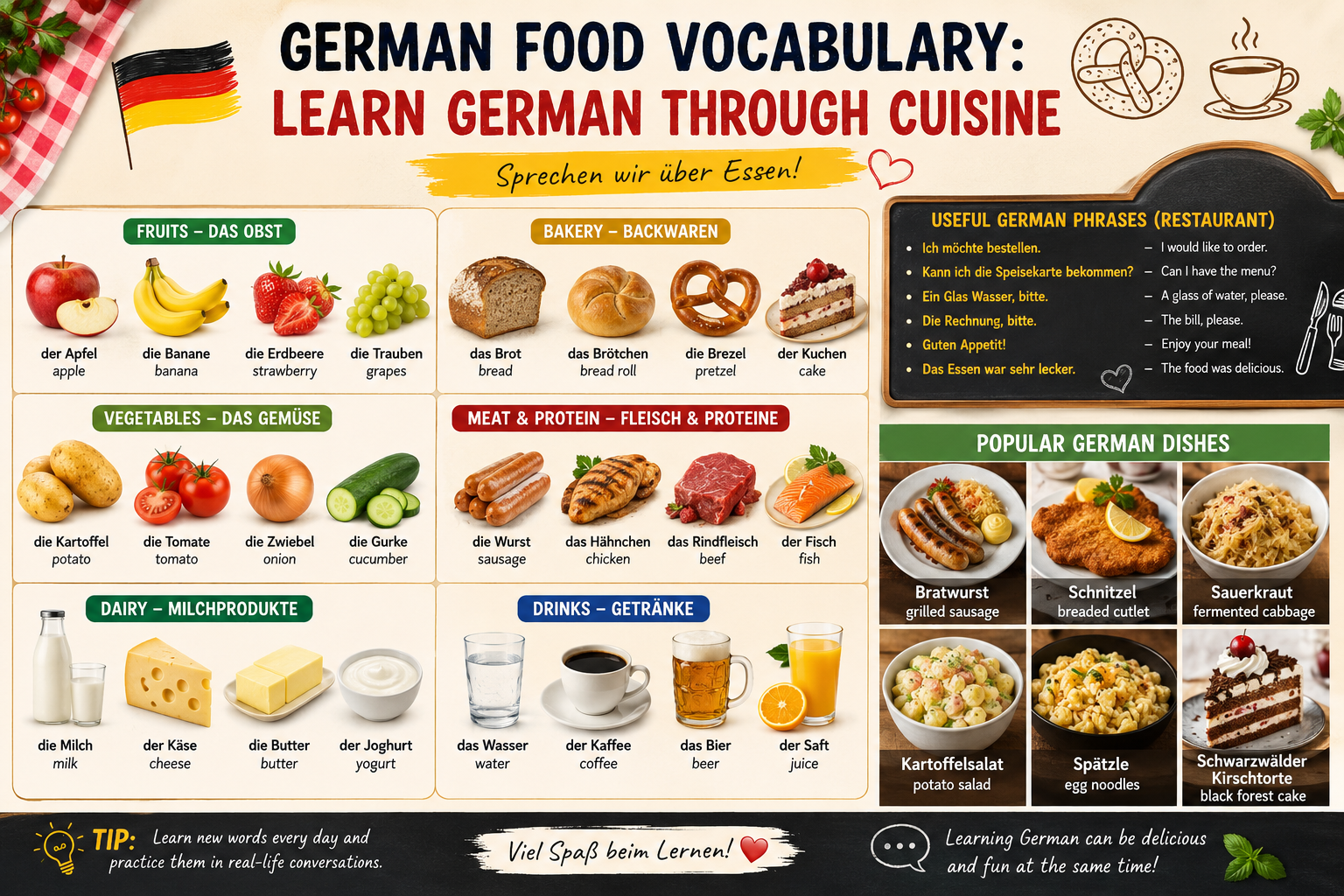
A Delicious Way to Master the German Language
Learning a new language can sometimes feel challenging, especially when it comes to memorizing vocabulary and understanding cultural nuances. However, one of the most enjoyable and effective ways to learn German is through food. Food is an essential part of every culture, and Germany's rich culinary traditions provide an excellent opportunity for language learners to expand their vocabulary while gaining cultural insights.
Whether you dream of studying in Germany, working with German-speaking professionals, traveling across Europe, or simply exploring a new language, learning German food vocabulary can make your language-learning journey more engaging and practical.
In this comprehensive guide, you'll discover common German food words, restaurant phrases, traditional German dishes, dining etiquette, and useful vocabulary that will help you communicate confidently in German-speaking environments.
Why Learn German Through Food?
Food is one of the most commonly discussed topics in everyday conversations. When learning German food vocabulary, you're not only memorizing words but also learning practical language skills that can be used in real-life situations.
Benefits of Learning German Through Cuisine
- Improves everyday vocabulary
- Enhances cultural understanding
- Makes language learning more enjoyable
- Helps travelers navigate restaurants and markets
- Strengthens listening and speaking skills
- Creates memorable associations for faster learning
Since food is part of daily life, these words are frequently used and easy to practice.
Basic German Food Vocabulary
Let's start with some essential German food-related words.
| English | German |
|---|---|
| Food | Das Essen |
| Meal | Die Mahlzeit |
| Breakfast | Das Frühstück |
| Lunch | Das Mittagessen |
| Dinner | Das Abendessen |
| Snack | Der Snack |
| Drink | Das Getränk |
| Water | Das Wasser |
| Bread | Das Brot |
| Cheese | Der Käse |
| Butter | Die Butter |
| Milk | Die Milch |
| Egg | Das Ei |
| Meat | Das Fleisch |
| Fish | Der Fisch |
| Fruit | Das Obst |
| Vegetables | Das Gemüse |
These words form the foundation of everyday German conversations about food.
German Vocabulary for Fruits
Germany offers a wide variety of fresh fruits throughout the year. Learning fruit names is an excellent way to build your vocabulary.
| English | German |
| Apple | Der Apfel |
| Banana | Die Banane |
| Orange | Die Orange |
| Strawberry | Die Erdbeere |
| Grapes | Die Trauben |
| Pineapple | Die Ananas |
| Lemon | Die Zitrone |
| Peach | Der Pfirsich |
| Pear | Die Birne |
| Cherry | Die Kirsche |
Example Sentence
Ich esse einen Apfel.
(I'm eating an apple.)
German Vocabulary for Vegetables
Vegetables are commonly used in German cuisine and are essential words to learn.
| English | German |
| Potato | Die Kartoffel |
| Tomato | Die Tomate |
| Onion | Die Zwiebel |
| Carrot | Die Karotte |
| Cucumber | Die Gurke |
| Lettuce | Der Salat |
| Garlic | Der Knoblauch |
| Cabbage | Der Kohl |
| Spinach | Der Spinat |
| Mushroom | Der Pilz |
Example Sentence
Die Kartoffel ist sehr beliebt in Deutschland.
(The potato is very popular in Germany.)
German Bakery Vocabulary
Germany is famous worldwide for its bread and bakery culture.
Common Bakery Words
| English | German |
| Bread | Das Brot |
| Roll | Das Brötchen |
| Cake | Der Kuchen |
| Cookie | Der Keks |
| Pretzel | Die Brezel |
| Pastry | Das Gebäck |
| Bakery | Die Bäckerei |
| Flour | Das Mehl |
| Sugar | Der Zucker |
| Yeast | Die Hefe |
German bakeries are often considered among the best in Europe due to their incredible variety of bread and pastries.
Meat and Protein Vocabulary
Protein-rich foods are a major part of traditional German meals.
| English | German |
| Chicken | Das Hähnchen |
| Beef | Das Rindfleisch |
| Pork | Das Schweinefleisch |
| Sausage | Die Wurst |
| Ham | Der Schinken |
| Fish | Der Fisch |
| Egg | Das Ei |
| Turkey | Der Truthahn |
| Lamb | Das Lamm |
| Bacon | Der Speck |
Germany is particularly famous for its many varieties of sausages.
Popular German Dishes and Their Names
Learning the names of traditional German dishes can help you understand menus and cultural conversations.
Bratwurst
One of Germany's most famous sausages.
Vocabulary:
- Die Bratwurst = Grilled sausage
- Grillen = To grill
Schnitzel
A breaded and fried meat cutlet.
Vocabulary:
- Das Schnitzel
- Gebraten = Fried
Sauerkraut
Fermented cabbage often served as a side dish.
Vocabulary:
- Das Sauerkraut
- Der Kohl = Cabbage
Kartoffelsalat
German potato salad.
Vocabulary:
- Die Kartoffel = Potato
- Der Salat = Salad
Schwarzwälder Kirschtorte
Black Forest Cake.
Vocabulary:
- Die Kirsche = Cherry
- Die Torte = Cake
German Restaurant Vocabulary
When dining in Germany, you'll encounter these words frequently.
| English | German |
| Restaurant | Das Restaurant |
| Menu | Die Speisekarte |
| Waiter | Der Kellner |
| Waitress | Die Kellnerin |
| Table | Der Tisch |
| Reservation | Die Reservierung |
| Bill | Die Rechnung |
| Tip | Das Trinkgeld |
| Customer | Der Kunde |
| Order | Die Bestellung |
Useful German Restaurant Phrases
These practical phrases can help you communicate confidently.
Ordering Food
Ich möchte bestellen.
(I would like to order.)
Asking for the Menu
Kann ich die Speisekarte bekommen?
(Can I get the menu?)
Requesting Water
Ein Glas Wasser, bitte.
(A glass of water, please.)
Asking for the Bill
Die Rechnung, bitte.
(The bill, please.)
Expressing Satisfaction
Das Essen war sehr lecker.
(The food was very delicious.)
German Cooking Vocabulary
If you enjoy cooking, these words are useful.
| English | German |
| Cook | Kochen |
| Bake | Backen |
| Fry | Braten |
| Boil | Kochen |
| Mix | Mischen |
| Cut | Schneiden |
| Stir | Rühren |
| Recipe | Das Rezept |
| Kitchen | Die Küche |
| Ingredient | Die Zutat |
Example
Ich koche heute Abend Pasta.
(I am cooking pasta this evening.)
Beverage Vocabulary in German
Drinks are a major part of everyday communication.
| English | German |
| Water | Wasser |
| Coffee | Kaffee |
| Tea | Tee |
| Juice | Saft |
| Milk | Milch |
| Wine | Wein |
| Beer | Bier |
| Soft Drink | Erfrischungsgetränk |
| Lemonade | Limonade |
| Hot Chocolate | Heiße Schokolade |
German Dining Etiquette and Cultural Insights
Learning vocabulary becomes more meaningful when paired with cultural understanding.
Wait for Everyone
In Germany, people often wait until everyone has received their food before eating.
Say "Guten Appetit"
Before eating, Germans commonly say:
"Guten Appetit!"
Meaning:
"Enjoy your meal!"
Proper Table Manners
Good table manners are highly valued in German culture.
Tipping
Tips are appreciated in restaurants and usually range from 5% to 10%.
Understanding these customs helps language learners interact more naturally.
Food Shopping Vocabulary
Whether visiting a grocery store or local market, these words are useful.
| English | German |
| Supermarket | Der Supermarkt |
| Market | Der Markt |
| Shopping Cart | Der Einkaufswagen |
| Cashier | Der Kassierer |
| Price | Der Preis |
| Discount | Der Rabatt |
| Receipt | Der Kassenbon |
| Bag | Die Tasche |
| Fresh | Frisch |
| Organic | Bio |
Practice Sentences Using German Food Vocabulary
Breakfast
Ich esse Brot und Käse zum Frühstück.
(I eat bread and cheese for breakfast.)
Shopping
Ich kaufe Äpfel im Supermarkt.
(I buy apples in the supermarket.)
Restaurant
Das Restaurant serviert ausgezeichnetes Essen.
(The restaurant serves excellent food.)
Cooking
Meine Mutter kocht heute Kartoffelsuppe.
(My mother is cooking potato soup today.)
Tips for Learning German Through Cuisine
1. Watch German Cooking Shows
Cooking programs expose you to authentic vocabulary and pronunciation.
2. Read German Recipes
Recipes introduce ingredients, measurements, and cooking instructions.
3. Label Food Items at Home
Place German labels on kitchen items and ingredients.
4. Follow German Food Bloggers
Food-related content helps reinforce vocabulary naturally.
5. Visit German Restaurants
Ordering in German can build confidence and speaking skills.
6. Create Food Flashcards
Visual learning improves retention and recall.
7. Practice Daily Conversations
Talk about meals, recipes, and favorite dishes using German vocabulary.
Common German Food Expressions
Ich habe Hunger.
(I am hungry.)
Ich habe Durst.
(I am thirsty.)
Das schmeckt gut.
(This tastes good.)
Das ist köstlich.
(This is delicious.)
Ich bin satt.
(I am full.)
These expressions are used regularly in daily conversations.
How Food Vocabulary Improves German Fluency
Food vocabulary goes beyond restaurants and recipes. It helps learners:
- Build everyday conversational skills
- Improve listening comprehension
- Practice sentence construction
- Learn cultural traditions
- Increase confidence while traveling
- Expand vocabulary naturally
Since food is discussed daily, mastering this vocabulary significantly contributes to overall German fluency.
Conclusion
Learning German through cuisine is one of the most enjoyable and practical approaches to language acquisition. From understanding restaurant menus and shopping at local markets to discussing favorite recipes and traditional dishes, food vocabulary connects language learners directly with German culture.
By mastering essential German food vocabulary, restaurant phrases, cooking terms, and cultural etiquette, you'll develop stronger communication skills while gaining a deeper appreciation of Germany's rich culinary heritage.
Whether you're preparing for a German language course, planning to study abroad, pursuing international career opportunities, or simply exploring a new culture, food-related vocabulary provides a delicious pathway toward fluency.
So the next time you enjoy a Bratwurst, order a Kaffee, or bake a Kuchen, remember—you are not just enjoying German cuisine; you're actively learning the German language one bite at a time.