Introduction
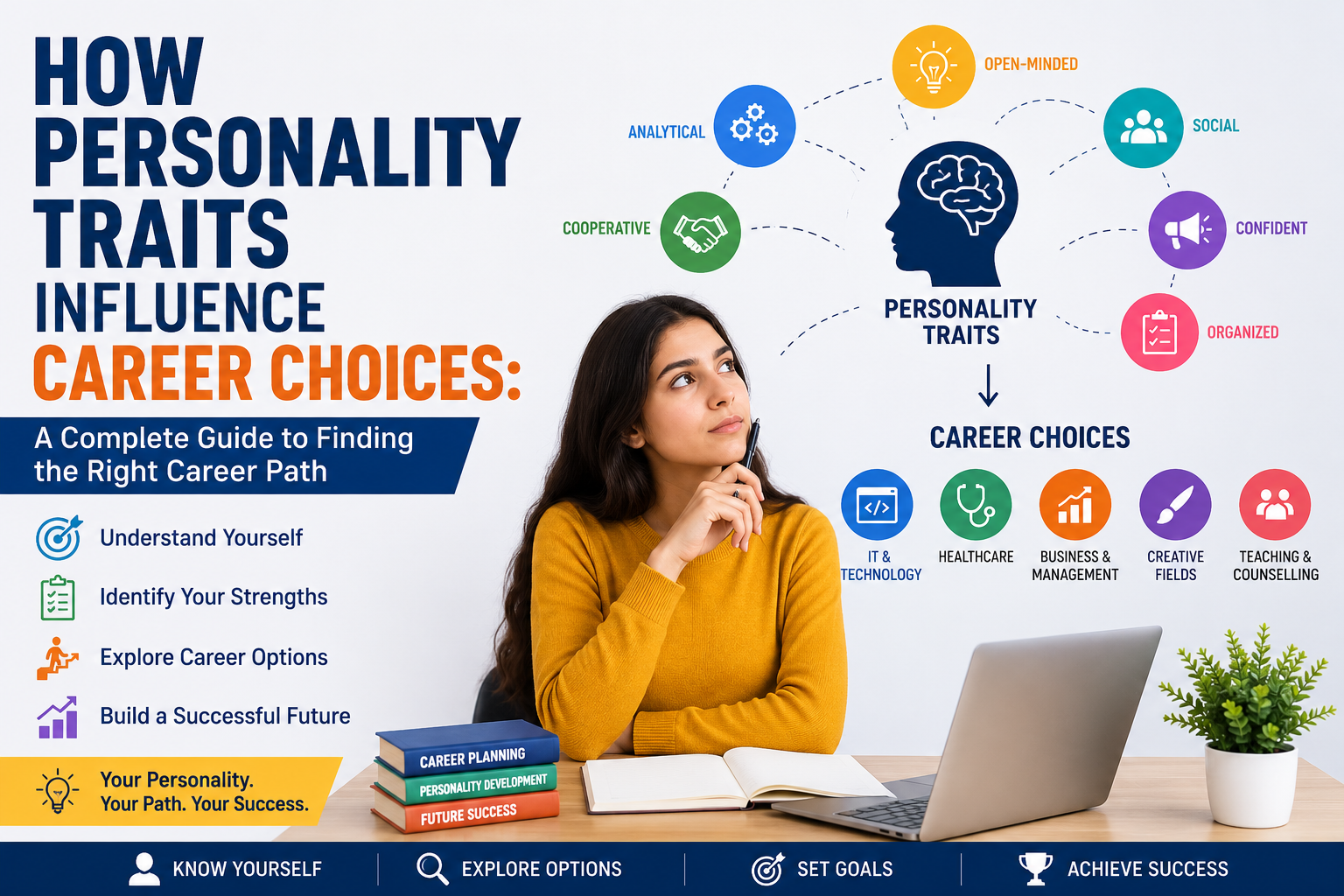
Choosing a career is one of the most important decisions a person makes in life. While factors such as education, skills, family expectations, and job market trends play significant roles, one often overlooked aspect is personality. Understanding your personality traits can provide valuable insights into the careers that align with your natural strengths, preferences, and work style.
Many people enter professions based solely on salary potential or societal expectations, only to discover later that they are unhappy or unfulfilled. This often happens because their personality does not align with the demands and culture of their chosen career. Career satisfaction is not just about earning a good income—it is about finding work that resonates with who you are.
This is where career counselling becomes crucial. Professional career counsellors use personality assessments, aptitude tests, and career guidance techniques to help individuals identify careers that match their unique characteristics.
In this comprehensive guide, we will explore how personality traits influence career choices, why understanding your personality matters, and how career counselling can help you make informed career decisions.
What Are Personality Traits?
Personality traits are consistent patterns of thoughts, feelings, and behaviors that influence how individuals interact with the world around them. These traits shape communication styles, problem-solving approaches, decision-making abilities, and workplace preferences.
Personality traits affect:
- How you interact with others
- Your leadership style
- Your work preferences
- Your stress management abilities
- Your motivation levels
- Your adaptability to change
- Your career satisfaction
Understanding these traits can help individuals identify professions where they are more likely to thrive and succeed.
Why Personality Matters in Career Selection
Imagine an introverted person working in a highly social sales role that requires constant networking and client interaction. While they may possess the necessary skills, they may feel exhausted and dissatisfied over time.
Similarly, a highly creative individual may struggle in a job that requires strict adherence to repetitive processes and procedures.
When career choices align with personality traits, individuals often experience:
- Higher job satisfaction
- Better work performance
- Increased motivation
- Lower stress levels
- Greater career growth
- Improved work-life balance
Therefore, understanding personality is a critical step in career planning.
The Connection Between Personality and Career Success
Research consistently shows that people tend to perform better in jobs that match their personality characteristics.
A good personality-career fit can lead to:
Enhanced Productivity
People naturally excel in environments that suit their strengths and preferences.
Increased Job Satisfaction
Employees who enjoy their work environment are more engaged and committed.
Better Team Collaboration
Understanding personality helps individuals work effectively with colleagues.
Reduced Workplace Stress
When job demands align with personal preferences, stress levels often decrease.
Long-Term Career Growth
People are more likely to stay motivated and develop expertise in careers that suit their personalities.
Major Personality Types and Suitable Career Paths
1. The Analytical Personality
Analytical individuals enjoy solving complex problems, working with data, and making logical decisions.
Key Characteristics
- Detail-oriented
- Logical thinker
- Independent
- Curious
- Research-focused
Suitable Careers
- Data Analyst
- Software Developer
- Scientist
- Financial Analyst
- Engineer
- Researcher
- Statistician
These careers require critical thinking and problem-solving abilities that analytical personalities naturally possess.
2. The Creative Personality
Creative individuals thrive in environments that encourage innovation, imagination, and self-expression.
Key Characteristics
- Imaginative
- Innovative
- Open-minded
- Artistic
- Visionary
Suitable Careers
- Graphic Designer
- Content Creator
- Writer
- Marketing Specialist
- Photographer
- Animator
- Fashion Designer
Creative personalities often excel in industries where originality and innovation are highly valued.
3. The Social Personality
Social personalities enjoy interacting with people, helping others, and building relationships.
Key Characteristics
- Empathetic
- Friendly
- Communicative
- Supportive
- Cooperative
Suitable Careers
- Teacher
- Counselor
- Human Resources Specialist
- Social Worker
- Nurse
- Customer Success Manager
- Public Relations Professional
These careers involve regular interaction and relationship-building opportunities.
4. The Enterprising Personality
Enterprising individuals are ambitious, confident, and motivated by leadership opportunities.
Key Characteristics
- Persuasive
- Competitive
- Goal-oriented
- Energetic
- Confident
Suitable Careers
- Entrepreneur
- Business Development Manager
- Sales Executive
- Marketing Manager
- Corporate Leader
- Political Consultant
- Real Estate Agent
They often thrive in leadership and decision-making roles.
5. The Organized Personality
Organized individuals enjoy structure, planning, and maintaining order.
Key Characteristics
- Reliable
- Detail-focused
- Responsible
- Efficient
- Methodical
Suitable Careers
- Project Manager
- Accountant
- Operations Manager
- Administrative Officer
- Compliance Specialist
- Logistics Coordinator
These roles require strong organizational and management skills.
Introverts vs. Extroverts: Career Implications
Careers for Introverts
Introverts often prefer independent work environments and deep focus.
Examples include:
- Software Development
- Writing
- Graphic Design
- Research
- Data Analysis
- Accounting
Careers for Extroverts
Extroverts gain energy from social interactions and collaborative environments.
Examples include:
- Sales
- Marketing
- Public Relations
- Teaching
- Event Management
- Hospitality
Neither personality type is superior. Success depends on finding the right fit.
The Big Five Personality Traits and Career Choices
Psychologists often use the Big Five Personality Model to understand behavior.
Openness to Experience
Individuals high in openness enjoy creativity and innovation.
Suitable careers:
- Artist
- Researcher
- Designer
- Entrepreneur
Conscientiousness
Highly conscientious people are disciplined and reliable.
Suitable careers:
- Accountant
- Project Manager
- Lawyer
- Administrator
Extraversion
Extroverts enjoy social engagement.
Suitable careers:
- Sales Professional
- Public Speaker
- Teacher
- Recruiter
Agreeableness
Agreeable individuals value cooperation and helping others.
Suitable careers:
- Healthcare Professional
- Counselor
- Social Worker
- Human Resources Specialist
Emotional Stability
People with strong emotional stability handle pressure effectively.
Suitable careers:
- Emergency Services
- Leadership Roles
- Healthcare Management
- Corporate Management
Common Mistakes People Make When Choosing Careers
Following Trends Blindly
Popular careers may not suit everyone's personality.
Ignoring Personal Interests
Interests often indicate areas where long-term motivation exists.
Choosing Based Solely on Salary
High-paying jobs may not guarantee happiness.
Following Family Pressure
External expectations can lead to career dissatisfaction.
Not Seeking Career Guidance
Professional career counselling can help avoid costly mistakes.
How Career Counselling Uses Personality Assessments
Career counsellors use scientifically designed assessments to understand an individual's strengths, preferences, and personality characteristics.
These assessments help identify:
- Career interests
- Natural strengths
- Work preferences
- Communication styles
- Leadership potential
Based on these insights, counsellors recommend career paths that align with the individual's personality profile.
Benefits of Matching Personality with Career
Greater Job Satisfaction
People enjoy work that aligns with their natural preferences.
Better Performance
Individuals perform better when using their strengths daily.
Increased Motivation
Aligned careers keep professionals engaged and enthusiastic.
Lower Burnout Risk
Suitable careers reduce stress and emotional exhaustion.
Improved Career Longevity
People are more likely to stay committed to careers they genuinely enjoy.
How Students Can Discover Their Personality Traits
Students can gain valuable self-awareness by:
- Taking personality assessments
- Exploring hobbies and interests
- Seeking feedback from teachers and mentors
- Participating in extracurricular activities
- Working with professional career counsellors
Early understanding helps students make informed educational and career decisions.
The Future of Personality-Based Career Guidance
Technology and artificial intelligence are transforming career counselling.
Modern career guidance platforms now combine:
- Personality assessments
- Aptitude testing
- Labor market analysis
- Skill-gap identification
- Career forecasting
These tools provide more personalized career recommendations than ever before.
As industries evolve rapidly, personality-based career planning will become increasingly important for long-term professional success.
Conclusion
Personality traits play a powerful role in shaping career choices and long-term professional satisfaction. While skills, education, and experience are essential, understanding who you are can significantly improve your chances of choosing a fulfilling career.
Whether you are a student exploring future opportunities, a graduate planning your career path, or a professional considering a career change, understanding your personality can provide valuable direction.
Career counselling offers the guidance, assessments, and expertise needed to connect personality traits with suitable career options. By making informed decisions based on self-awareness, individuals can build careers that not only provide financial stability but also personal fulfillment and long-term success.
The key to a successful career is not simply finding a job—it is finding a career that aligns with your personality, strengths, interests, and aspirations. When your personality and profession work together, success becomes a natural outcome rather than a constant struggle.