Introduction
The workplace has undergone a dramatic transformation over the past decade. Rapid advancements in technology, the rise of remote and hybrid work models, artificial intelligence (AI), automation, cloud computing, and data analytics have reshaped how organizations operate. At the center of this transformation stands Human Resources (HR), a function that has evolved far beyond traditional administrative responsibilities.
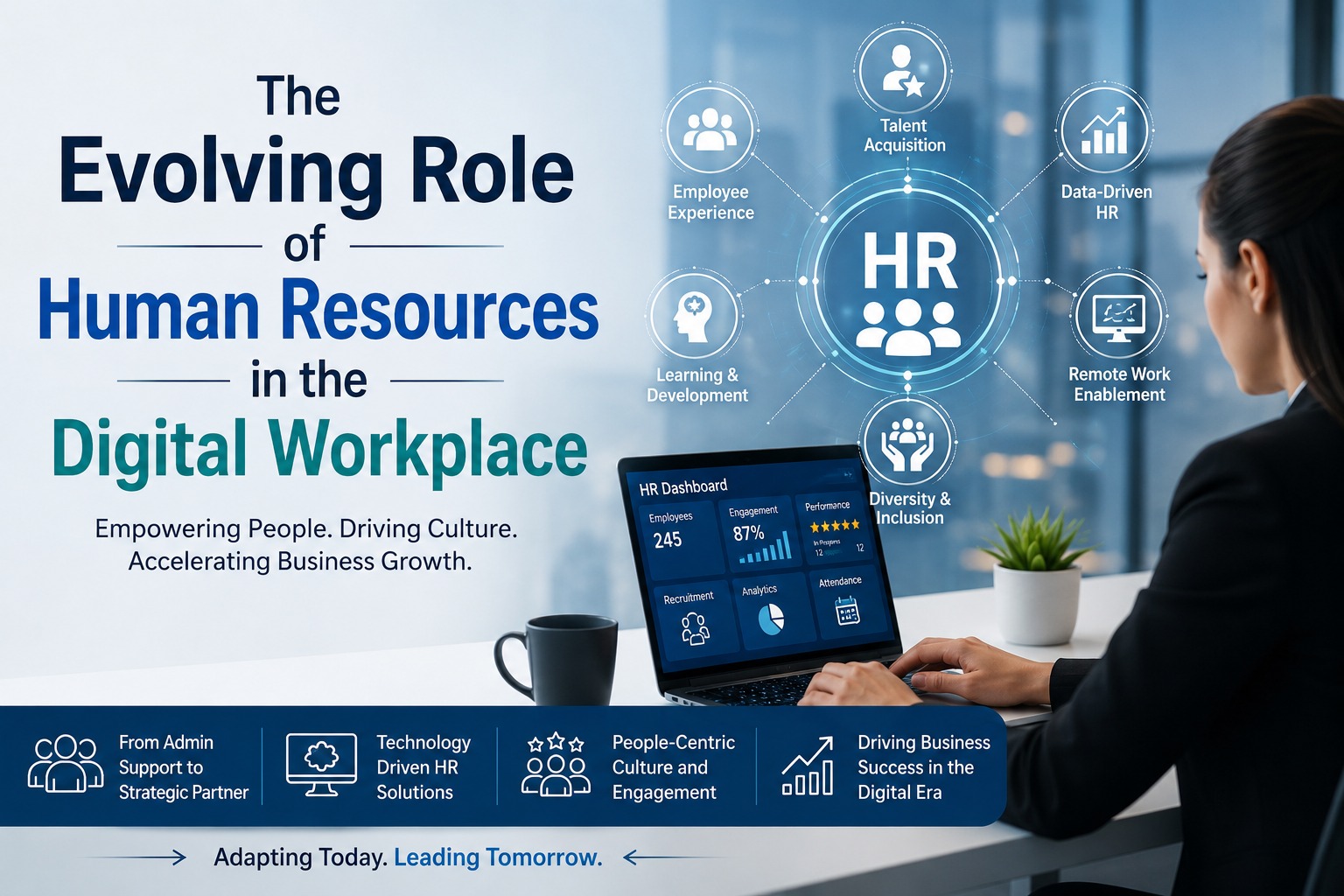
Today, HR professionals are strategic business partners who drive organizational growth, employee engagement, digital transformation, and workforce development. As companies increasingly embrace digital technologies, the role of Human Resources in the digital workplace continues to expand and become more influential.
In this article, we explore the evolving role of Human Resources in the digital workplace, the impact of technology on HR functions, emerging trends, challenges, and the skills HR professionals need to thrive in the modern business environment.
What Is a Digital Workplace?
A digital workplace refers to an organizational environment where employees use digital tools, technologies, and platforms to communicate, collaborate, and perform their work efficiently. It integrates technology into everyday business operations, enabling employees to work from anywhere while remaining connected and productive.
Key components of a digital workplace include:
- Cloud-based collaboration tools
- Human Resource Management Systems (HRMS)
- Artificial Intelligence (AI)
- Employee self-service portals
- Learning Management Systems (LMS)
- Digital communication platforms
- Workforce analytics tools
- Remote work technologies
The digital workplace is designed to improve productivity, employee experience, flexibility, and organizational agility.
Traditional HR vs Modern Digital HR
Traditional HR Responsibilities
Historically, HR departments focused on administrative tasks such as:
- Payroll processing
- Attendance management
- Employee record keeping
- Recruitment administration
- Compliance management
- Employee relations
While these responsibilities remain important, modern organizations require HR to contribute strategically to business objectives.
Modern HR Responsibilities
Today's HR professionals are expected to:
- Support digital transformation initiatives
- Develop talent strategies
- Enhance employee experience
- Utilize workforce analytics
- Drive diversity and inclusion programs
- Foster organizational culture
- Manage remote and hybrid teams
- Lead workforce upskilling efforts
This shift has transformed HR from a support function into a critical driver of business success.
The Impact of Digital Transformation on HR
Digital transformation has fundamentally changed how HR operates.
Automation of Routine Tasks
Many repetitive HR processes are now automated through HR software and AI-powered tools.
Examples include:
- Resume screening
- Interview scheduling
- Payroll processing
- Leave management
- Benefits administration
- Employee onboarding
Automation reduces administrative burdens, allowing HR professionals to focus on strategic initiatives.
Benefits of Automation
- Improved efficiency
- Reduced human error
- Faster decision-making
- Better employee experiences
- Lower operational costs
The Rise of Data-Driven HR
One of the biggest changes in HR is the use of data analytics.
Modern HR departments collect and analyze workforce data to make informed decisions.
HR Analytics Helps Organizations:
- Predict employee turnover
- Identify skill gaps
- Improve hiring quality
- Measure employee engagement
- Track workforce productivity
- Optimize training programs
Organizations that leverage HR analytics gain a competitive advantage because they can make evidence-based workforce decisions.
Example
Instead of relying on intuition, HR managers can analyze employee engagement survey results and turnover trends to identify departments at risk of losing talent.
HR's Role in Employee Experience
Employee experience has become a major focus in today's workplace.
Employees expect:
- Flexible work arrangements
- Career growth opportunities
- Personalized learning experiences
- Well-being support
- Modern workplace technology
HR plays a crucial role in designing positive employee experiences throughout the employee lifecycle.
Key Areas of Employee Experience
Recruitment Experience
Candidates expect smooth digital hiring processes.
HR now uses:
- AI-powered recruitment tools
- Virtual interviews
- Online assessments
- Automated communication systems
Onboarding Experience
Digital onboarding platforms help new employees integrate quickly.
Features often include:
- Virtual orientation sessions
- Online training modules
- Electronic document signing
- Self-service HR portals
Continuous Engagement
HR uses employee engagement platforms to gather feedback and maintain strong communication.
Managing Remote and Hybrid Workforces
The global shift toward remote work has significantly expanded HR responsibilities.
HR professionals now manage teams that may be distributed across different cities, countries, and time zones.
HR's Responsibilities in Remote Work Environments
Workforce Connectivity
HR ensures employees remain connected through collaboration tools such as:
- Video conferencing platforms
- Team communication software
- Digital project management tools
Employee Well-Being
Remote work can create challenges such as:
- Isolation
- Burnout
- Stress
- Work-life balance issues
HR develops wellness programs and support systems to address these concerns.
Performance Management
Traditional performance evaluation methods are being replaced with continuous feedback systems and outcome-based assessments.
AI and the Future of Human Resources
Artificial Intelligence is revolutionizing HR practices.
AI helps HR professionals improve efficiency and decision-making while enhancing employee experiences.
Applications of AI in HR
Recruitment
AI can:
- Screen resumes
- Match candidates with job requirements
- Conduct preliminary assessments
- Reduce hiring time
Employee Support
AI-powered chatbots answer common employee questions regarding:
- Leave policies
- Benefits
- Payroll
- Company policies
Workforce Planning
AI analyzes workforce trends to help organizations predict future talent needs.
Learning and Development
AI recommends personalized training programs based on employee roles, skills, and career goals.
Learning and Development in the Digital Era
Continuous learning has become essential in today's rapidly changing business environment.
Technology evolves quickly, creating new skill requirements across industries.
HR departments are increasingly responsible for:
- Upskilling employees
- Reskilling workers
- Supporting lifelong learning
- Building future-ready workforces
Digital Learning Platforms
Modern organizations use:
- Learning Management Systems (LMS)
- Virtual classrooms
- Mobile learning applications
- Microlearning modules
- AI-driven learning recommendations
These technologies make learning more accessible, flexible, and personalized.
HR as a Strategic Business Partner
The role of HR has shifted from administrative support to strategic leadership.
HR leaders now collaborate with senior management to:
- Align workforce planning with business goals
- Drive organizational change
- Improve productivity
- Support innovation
- Build leadership pipelines
Strategic Contributions of HR
Talent Management
Attracting and retaining top talent is critical for organizational success.
Change Management
HR plays a key role in helping employees adapt to new technologies, processes, and organizational structures.
Organizational Development
HR supports business growth by building strong cultures and developing future leaders.
Diversity, Equity, and Inclusion (DEI)
Modern workplaces prioritize diversity, equity, and inclusion.
Digital HR tools help organizations create fair and inclusive work environments.
HR's Role in DEI
Responsibilities include:
- Eliminating hiring bias
- Promoting equal opportunities
- Supporting diverse talent pipelines
- Creating inclusive workplace policies
- Monitoring diversity metrics
A diverse workforce drives innovation, creativity, and business performance.
Employee Wellness and Mental Health
Employee well-being has become a major priority for organizations.
The digital workplace offers many benefits, but it can also contribute to:
- Stress
- Burnout
- Digital fatigue
- Mental health challenges
HR departments are increasingly implementing wellness initiatives.
Popular Wellness Programs
- Mental health counseling
- Employee assistance programs
- Flexible work schedules
- Fitness initiatives
- Mindfulness programs
- Stress management workshops
Organizations that invest in employee well-being often experience higher engagement and retention rates.
Emerging HR Technologies
Several technologies are shaping the future of HR.
Human Resource Management Systems (HRMS)
HRMS platforms centralize HR operations and employee data.
Artificial Intelligence
AI improves recruitment, workforce planning, and employee support.
Cloud Computing
Cloud-based HR systems provide accessibility and scalability.
People Analytics
Advanced analytics help organizations make smarter workforce decisions.
Blockchain
Blockchain technology may improve credential verification and employee record security.
Virtual Reality (VR)
VR is increasingly used for:
- Employee training
- Virtual onboarding
- Leadership development
- Workplace simulations
Challenges Facing Digital HR
Despite numerous benefits, digital transformation presents challenges.
Data Privacy and Security
HR manages sensitive employee information.
Organizations must ensure compliance with data protection regulations and cybersecurity standards.
Technology Adoption
Not all employees embrace new technologies equally.
HR must provide training and support during digital transitions.
Maintaining Human Connections
Technology should enhance—not replace—human relationships.
HR must balance digital efficiency with genuine employee engagement.
Skills Gaps
Rapid technological changes create workforce skill shortages.
HR must continuously identify and address these gaps through training programs.
Essential Skills for Modern HR Professionals
As HR evolves, professionals must develop new competencies.
Digital Literacy
Understanding HR technologies is now essential.
Data Analysis
HR professionals increasingly use analytics to support decision-making.
Communication Skills
Strong communication remains critical in managing people and organizational change.
Change Management
HR leaders must help organizations navigate transformation successfully.
Emotional Intelligence
Human-centered leadership remains vital despite technological advancements.
Strategic Thinking
Modern HR professionals contribute directly to organizational growth and competitiveness.
The Future of Human Resources
The future of HR will be increasingly shaped by technology and workforce expectations.
Key trends include:
- Greater use of AI and automation
- Personalized employee experiences
- Skills-based hiring
- Predictive workforce analytics
- Remote-first work models
- Continuous learning cultures
- Increased focus on employee well-being
Organizations that embrace these trends will be better positioned for long-term success.
HR professionals who continuously adapt and develop digital skills will play a pivotal role in shaping the future workplace.
Conclusion
The role of Human Resources has evolved dramatically in the digital workplace. No longer limited to administrative tasks, HR has become a strategic function that drives talent management, employee engagement, digital transformation, workforce planning, and organizational success.
Technology has empowered HR professionals to automate routine tasks, leverage data-driven insights, enhance employee experiences, and support increasingly diverse and distributed workforces. At the same time, the human aspect of HR remains essential, as organizations continue to rely on strong leadership, empathy, communication, and culture-building.
As businesses navigate rapid technological change, the importance of skilled HR professionals will only continue to grow. Those who embrace innovation, develop digital competencies, and prioritize employee well-being will help create workplaces that are productive, inclusive, and future-ready.
For aspiring HR professionals, now is an excellent time to pursue HR training and develop the skills needed to succeed in the evolving digital workplace. The future of work is digital—and HR is leading the way.