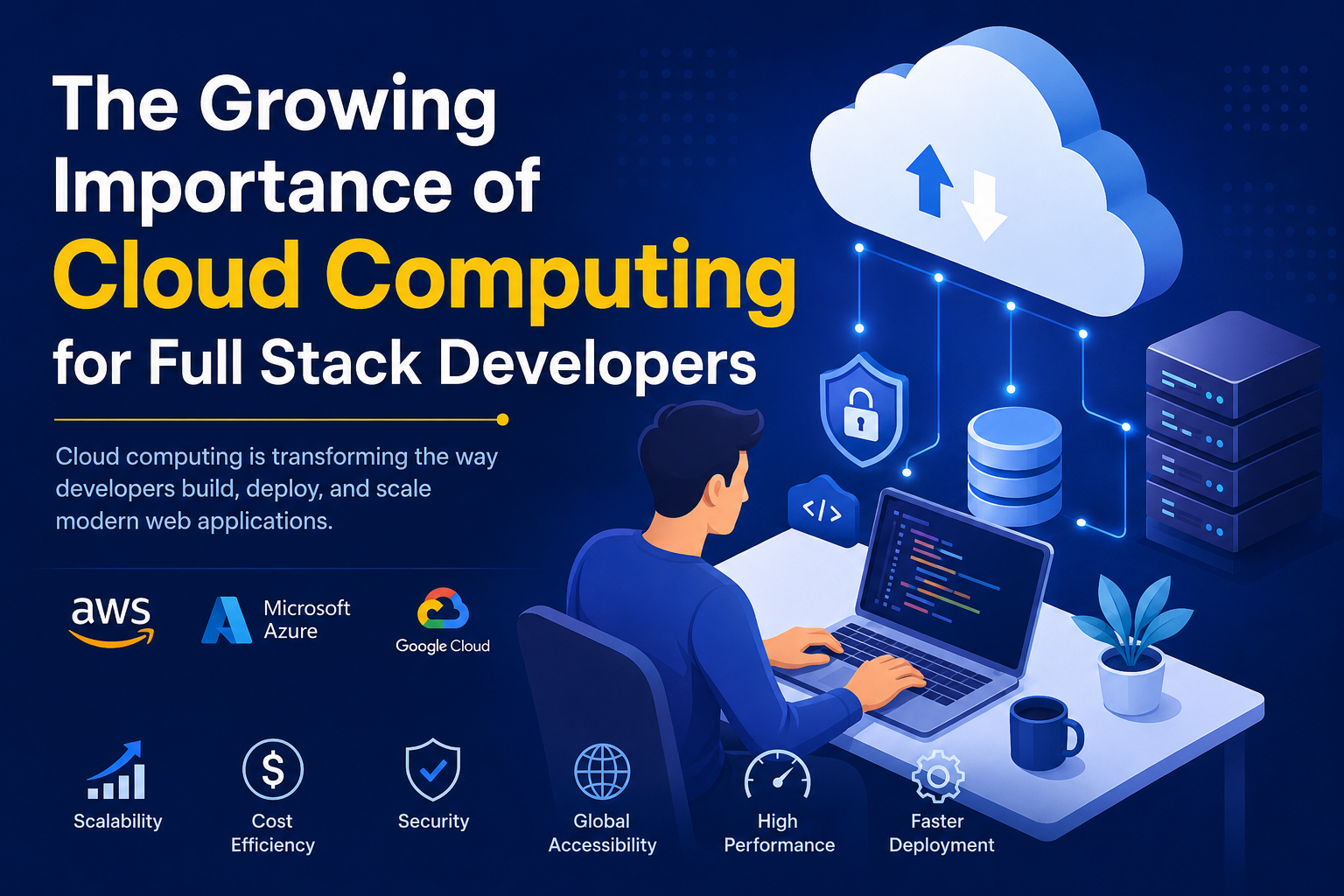
Introduction
The world of web development is evolving at an unprecedented pace. Modern applications are no longer limited to simple websites hosted on traditional servers. Businesses today demand scalable, secure, and highly available applications that can serve users across the globe. This shift has made cloud computing one of the most critical technologies in the software industry.
For aspiring and experienced full stack developers, understanding cloud computing is no longer optional—it has become a necessity. Companies increasingly seek developers who can not only build applications but also deploy, manage, and scale them efficiently using cloud platforms.
As organizations embrace digital transformation, cloud services are becoming the backbone of modern web applications. From startups launching innovative products to multinational corporations managing millions of users, cloud computing enables businesses to operate with greater flexibility and efficiency.
In this article, we will explore the growing importance of cloud computing for full stack developers, its benefits, essential cloud skills, career opportunities, and why learning cloud technologies can significantly enhance your professional growth.
What Is Cloud Computing?
Cloud computing refers to the delivery of computing services over the internet. Instead of purchasing and maintaining physical servers, organizations can access computing resources such as storage, databases, networking, software, and processing power on demand.
Popular cloud service providers include:
- Amazon Web Services (AWS)
- Microsoft Azure
- Google Cloud Platform (GCP)
- Oracle Cloud
- IBM Cloud
These platforms allow developers to build, test, deploy, and manage applications without investing heavily in physical infrastructure.
Cloud computing offers three primary service models:
1. Infrastructure as a Service (IaaS)
Provides virtual servers, storage, and networking resources.
Examples:
- Amazon EC2
- Google Compute Engine
- Azure Virtual Machines
2. Platform as a Service (PaaS)
Provides a development environment where developers can deploy applications without managing servers.
Examples:
- Heroku
- Azure App Service
- Google App Engine
3. Software as a Service (SaaS)
Provides software applications accessible through the internet.
Examples:
- Gmail
- Salesforce
- Microsoft 365
Who Is a Full Stack Developer?
A full stack developer is a professional who works on both the frontend and backend components of a web application.
Their responsibilities typically include:
Frontend Development
- HTML
- CSS
- JavaScript
- React
- Angular
- Vue.js
Backend Development
- Node.js
- Python
- Java
- PHP
- .NET
Database Management
- MySQL
- PostgreSQL
- MongoDB
API Development
- REST APIs
- GraphQL
Deployment and Maintenance
- Hosting applications
- Monitoring performance
- Managing servers
This last responsibility is where cloud computing plays a major role.
Why Cloud Computing Matters for Full Stack Developers
In the past, developers would build applications and hand them over to dedicated infrastructure teams for deployment.
Today, organizations prefer agile development environments where developers handle a larger portion of the application lifecycle.
Cloud computing enables full stack developers to:
- Deploy applications independently
- Scale applications automatically
- Manage databases efficiently
- Improve security
- Monitor performance in real time
- Reduce infrastructure costs
As a result, cloud skills have become highly valuable in the job market.
The Shift Toward Cloud-Native Development
Modern applications are increasingly built as cloud-native solutions.
Cloud-native applications are designed specifically to take advantage of cloud environments.
Characteristics include:
- Microservices architecture
- Containerization
- Continuous integration
- Continuous deployment
- Automated scaling
Full stack developers who understand cloud-native development can build applications that are:
- Faster
- More reliable
- Easier to maintain
- Highly scalable
This is one of the biggest reasons cloud computing is becoming essential for developers.
Key Benefits of Cloud Computing for Full Stack Developers
1. Faster Application Deployment
Cloud platforms provide ready-to-use infrastructure.
Instead of spending days configuring servers, developers can deploy applications within minutes.
Benefits include:
- Reduced development time
- Faster product launches
- Improved productivity
Tools such as AWS Elastic Beanstalk and Azure App Services simplify deployment significantly.
2. Scalability
One of the biggest advantages of cloud computing is scalability.
Suppose a website suddenly receives thousands of visitors due to a marketing campaign.
Traditional hosting may struggle to handle the traffic.
Cloud platforms automatically allocate additional resources to maintain performance.
Benefits include:
- Better user experience
- Improved uptime
- Reduced risk of crashes
Scalability is particularly important for growing businesses and startups.
3. Cost Efficiency
Cloud computing follows a pay-as-you-go model.
Organizations only pay for the resources they use.
Advantages include:
- Lower upfront costs
- Reduced maintenance expenses
- Better budget management
For startups and small businesses, this makes cloud infrastructure highly attractive.
4. Enhanced Security
Security is a top priority for businesses.
Leading cloud providers invest billions of dollars in security technologies.
Features include:
- Data encryption
- Identity management
- Threat detection
- Firewall protection
- Backup solutions
Full stack developers can leverage these tools to build more secure applications.
5. Global Accessibility
Cloud services operate through data centers worldwide.
This allows applications to serve users from different countries with minimal latency.
Benefits include:
- Faster loading times
- Better user experiences
- Global reach
For developers creating international applications, cloud infrastructure is indispensable.
Essential Cloud Skills Every Full Stack Developer Should Learn
Understanding Cloud Platforms
Developers should become familiar with major cloud providers:
AWS
The largest cloud platform globally.
Popular services include:
- EC2
- S3
- Lambda
- RDS
- CloudFront
Microsoft Azure
Widely used by enterprises.
Popular services include:
- Azure Functions
- Azure Storage
- Azure SQL Database
Google Cloud Platform
Known for data analytics and machine learning capabilities.
Popular services include:
- Compute Engine
- Cloud Run
- BigQuery
Containerization with Docker
Docker allows developers to package applications with all dependencies.
Benefits include:
- Consistent environments
- Easier deployment
- Improved portability
Docker has become a standard skill for modern full stack developers.
Kubernetes
Kubernetes automates:
- Deployment
- Scaling
- Management of containers
Large organizations increasingly use Kubernetes to manage cloud applications efficiently.
Understanding Kubernetes significantly boosts employability.
CI/CD Pipelines
Continuous Integration and Continuous Deployment help automate software delivery.
Popular tools include:
- GitHub Actions
- Jenkins
- GitLab CI/CD
- Azure DevOps
CI/CD skills are highly valued in cloud-focused development roles.
Serverless Computing
Serverless architecture allows developers to run code without managing servers.
Examples include:
- AWS Lambda
- Azure Functions
- Google Cloud Functions
Benefits:
- Lower costs
- Automatic scaling
- Reduced maintenance
Serverless computing is becoming increasingly popular in modern application development.
Cloud Computing and DevOps
The rise of cloud computing has also accelerated the adoption of DevOps practices.
DevOps combines development and operations to improve collaboration and efficiency.
Cloud-enabled DevOps allows developers to:
- Automate deployments
- Monitor applications
- Manage infrastructure
- Improve software quality
Many companies now seek professionals who possess both full stack and cloud skills.
Real-World Applications of Cloud Computing
Cloud computing powers many of the platforms we use daily.
Examples include:
E-Commerce Platforms
Online stores rely on cloud infrastructure to handle traffic spikes during sales events.
Streaming Services
Video streaming platforms use cloud resources to deliver content worldwide.
Social Media Applications
Cloud services ensure scalability and reliability for millions of users.
Banking and Finance
Financial institutions use secure cloud environments for digital banking solutions.
Healthcare Systems
Cloud technology enables secure storage and sharing of patient records.
These examples highlight why cloud expertise is valuable for developers.
Career Opportunities for Cloud-Skilled Full Stack Developers
Professionals with cloud computing knowledge enjoy excellent career prospects.
Common job roles include:
- Full Stack Developer
- Cloud Developer
- DevOps Engineer
- Software Engineer
- Cloud Solutions Architect
- Site Reliability Engineer
- Backend Developer
- Platform Engineer
Organizations across industries actively seek professionals who can develop and manage cloud-based applications.
Salary Advantages of Learning Cloud Computing
Cloud skills often lead to higher-paying positions.
Employers recognize the value of developers who can:
- Build applications
- Deploy applications
- Scale applications
- Maintain infrastructure
As a result, cloud-certified developers frequently earn more than their peers with only traditional development skills.
The demand for cloud expertise continues to grow globally, making it one of the most rewarding technology investments.
Future Trends in Cloud Computing
The future of cloud computing looks incredibly promising.
Key trends include:
Artificial Intelligence Integration
Cloud providers are embedding AI capabilities into their services.
Developers can integrate AI features more easily than ever before.
Edge Computing
Processing data closer to users reduces latency and improves performance.
Edge computing will play a significant role in future web applications.
Multi-Cloud Strategies
Organizations increasingly use multiple cloud providers.
Developers who understand AWS, Azure, and GCP gain a competitive advantage.
Serverless Growth
Serverless computing is expected to become more widespread as businesses seek greater efficiency.
Cloud Security Innovations
Advanced security solutions will continue to emerge, creating new opportunities for skilled developers.
How a Full Stack Development Course Can Help
A comprehensive Full Stack Development course can help learners build both development and cloud skills.
An ideal course should cover:
- Frontend development
- Backend development
- Database management
- API development
- Git and GitHub
- Cloud deployment
- Docker
- CI/CD pipelines
- DevOps fundamentals
Practical projects provide valuable hands-on experience and prepare students for real-world challenges.
By mastering cloud technologies alongside full stack development, learners become more attractive to employers and better prepared for the future of software development.
Conclusion
Cloud computing has transformed the way applications are built, deployed, and maintained. For full stack developers, cloud knowledge is no longer a bonus skill—it is becoming a core requirement in today's technology landscape.
Organizations want professionals who can develop complete applications and manage their deployment in scalable, secure cloud environments. From faster deployment and cost savings to enhanced security and global accessibility, cloud computing offers countless advantages that directly impact modern web development.
As cloud adoption continues to grow, developers who invest in cloud skills will enjoy stronger career opportunities, higher salaries, and greater professional flexibility. Whether you are a student, beginner, or experienced developer, learning cloud computing alongside full stack development is one of the smartest career decisions you can make.
The future belongs to developers who can build, deploy, scale, and innovate in the cloud. By embracing cloud computing today, full stack developers can position themselves at the forefront of tomorrow's digital revolution.