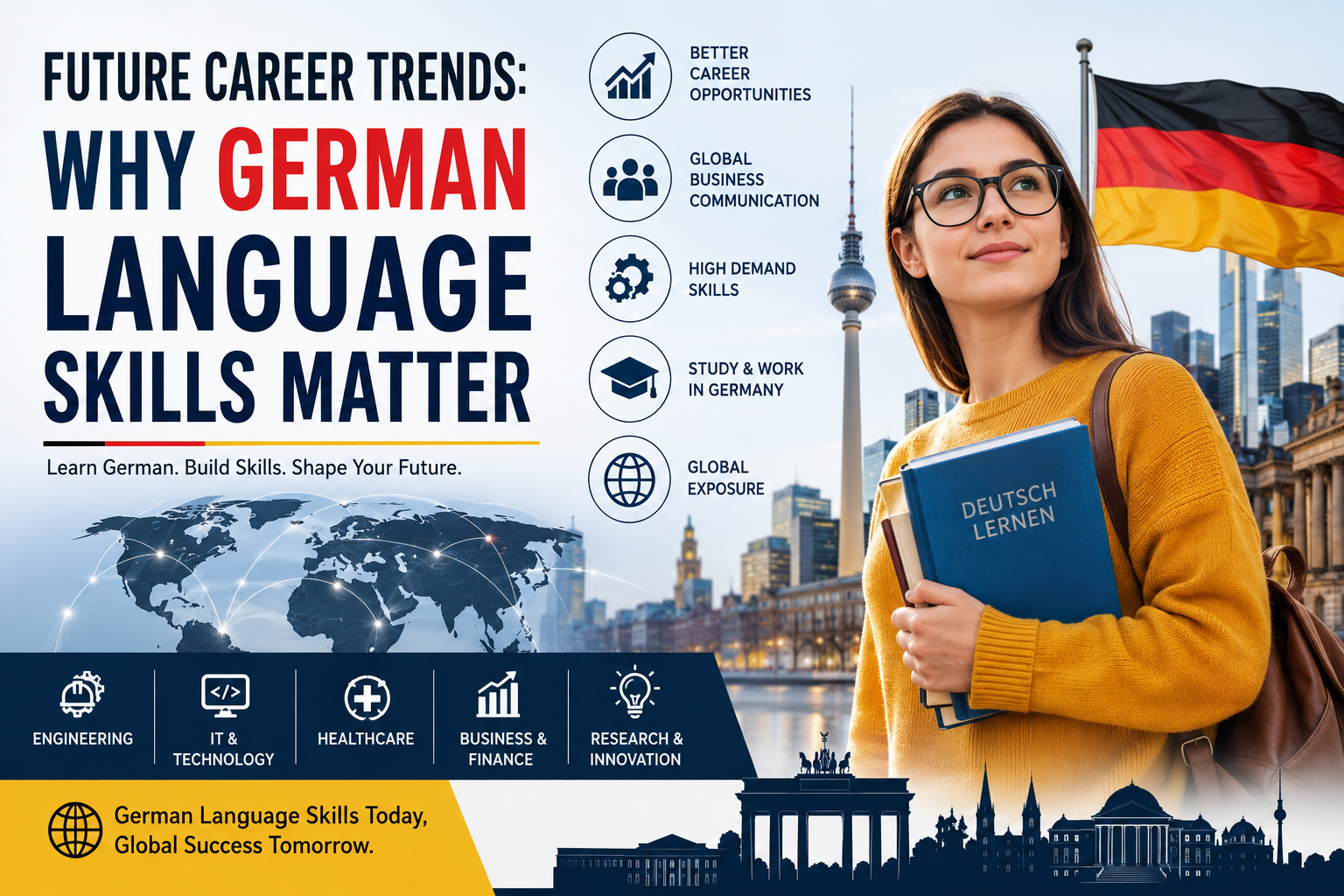
Introduction
In today's rapidly evolving global economy, professionals are constantly searching for skills that can give them a competitive advantage. While technical expertise, digital literacy, and soft skills remain essential, foreign language proficiency is becoming increasingly valuable. Among the many languages spoken worldwide, German stands out as one of the most influential languages for career growth, international education, and business opportunities.
As industries become more interconnected and companies expand across borders, the demand for multilingual professionals continues to rise. German language skills are no longer limited to language enthusiasts or translators. Today, they are highly sought after in fields such as engineering, information technology, healthcare, finance, tourism, research, and international business.
With Germany being Europe's largest economy and a global leader in innovation, learning German can significantly enhance career prospects. This article explores future career trends and explains why German language skills will play a crucial role in professional success in the coming years.
The Growing Importance of Foreign Languages in the Global Workforce
Globalization has transformed how businesses operate. Companies are increasingly working with international clients, suppliers, and partners. As a result, employers prefer candidates who can communicate effectively across cultures and languages.
Language skills help professionals:
- Access international job markets
- Improve communication with global teams
- Build stronger business relationships
- Increase employability
- Enhance cultural understanding
Among foreign languages, German holds a unique position because of Germany's economic strength and its influence across Europe and beyond.
Germany: A Global Economic Powerhouse
Germany is recognized as one of the world's strongest economies. It is known for excellence in:
- Engineering
- Manufacturing
- Automotive technology
- Renewable energy
- Research and innovation
- Information technology
- Healthcare
Major multinational companies such as BMW, Mercedes-Benz, Volkswagen, Siemens, Bosch, and SAP have established a global presence. These organizations actively seek professionals who can communicate in German and understand German business culture.
As international collaboration increases, professionals with German language skills gain a significant advantage when applying for jobs with these organizations.
Future Career Trends Driving Demand for German Language Skills
1. Increased International Hiring
Remote work and digital transformation have made international hiring easier than ever before. Companies can now recruit talent from different countries without geographical limitations.
German companies are increasingly hiring skilled professionals from around the world in areas such as:
- Software development
- Artificial intelligence
- Cybersecurity
- Data science
- Healthcare
- Engineering
Candidates who possess German language skills often stand out during the hiring process because they can integrate more effectively into multilingual teams.
2. Rising Demand for Skilled Professionals in Germany
Germany faces workforce shortages in several sectors due to demographic changes and an aging population.
Industries experiencing significant demand include:
Healthcare
Germany requires doctors, nurses, caregivers, and medical technicians.
Information Technology
Demand continues to grow for:
- Software developers
- Cloud engineers
- Cybersecurity specialists
- Data analysts
Engineering
German industries require professionals specializing in:
- Mechanical engineering
- Electrical engineering
- Civil engineering
- Industrial engineering
Learning German significantly improves employment opportunities within these sectors.
3. Expansion of Global Business Networks
Businesses increasingly operate across multiple countries. Professionals involved in international trade, supply chain management, and global operations benefit greatly from multilingual communication skills.
German language proficiency enables professionals to:
- Communicate directly with German clients
- Participate in international negotiations
- Manage cross-border projects
- Build stronger professional relationships
As global business networks continue to expand, language skills will become even more valuable.
4. Growth of the European Job Market
The European Union promotes labor mobility among member nations. Germany remains one of the most attractive destinations for skilled professionals due to:
- Strong economic stability
- Competitive salaries
- High quality of life
- Excellent working conditions
Many employers prefer candidates who possess at least intermediate German language skills, making language training a worthwhile investment for future career growth.
German Language Skills in the Technology Sector
The Digital Revolution
Technology continues to reshape industries worldwide. Germany is investing heavily in:
- Artificial Intelligence (AI)
- Industry 4.0
- Automation
- Robotics
- Cloud Computing
- Smart Manufacturing
Technology professionals who can communicate in German often have access to:
- Better job opportunities
- International assignments
- Collaborative research projects
- Leadership positions
As digital transformation accelerates, bilingual professionals will be increasingly valuable.
German Language Skills in Engineering Careers
Germany has long been known as an engineering powerhouse.
Future engineering trends include:
- Electric vehicles
- Sustainable manufacturing
- Green technology
- Smart infrastructure
- Renewable energy systems
Many German engineering companies conduct technical discussions, training sessions, and project documentation in German.
Engineers who understand the language gain:
- Better collaboration opportunities
- Access to specialized knowledge
- Enhanced career advancement prospects
- Greater employability in international markets
Healthcare Careers and German Language Demand
Healthcare is among the fastest-growing sectors worldwide.
Germany faces a significant shortage of healthcare professionals, creating strong demand for:
- Doctors
- Nurses
- Physiotherapists
- Medical technicians
- Caregivers
German language proficiency is often a requirement because healthcare professionals must communicate effectively with patients and colleagues.
As healthcare needs continue to increase, German-speaking professionals will remain highly sought after.
The Role of German in International Business
Business Expansion and Global Trade
Germany is one of the world's leading exporters.
Professionals working in:
- International marketing
- Supply chain management
- Finance
- Human resources
- Consulting
can benefit tremendously from German language skills.
Language proficiency allows professionals to:
- Understand client expectations
- Conduct meetings effectively
- Build trust with partners
- Negotiate confidently
These abilities often translate into higher salaries and better career opportunities.
German for Research and Innovation
Germany is a global leader in research and development.
The country invests heavily in:
- Scientific research
- Medical innovation
- Engineering advancements
- Environmental sustainability
Many research institutions collaborate internationally, making German language skills a valuable asset for:
- Researchers
- Scientists
- Academics
- Graduate students
Professionals who can access German-language resources gain a competitive advantage in their fields.
Study Abroad Opportunities and Career Benefits
Germany is one of the most popular destinations for international students.
Advantages include:
- High-quality education
- Affordable tuition fees
- Strong industry connections
- Excellent research opportunities
Students who learn German before studying abroad often experience:
- Easier integration
- Better academic performance
- Expanded networking opportunities
- Improved employability after graduation
Employers value candidates who possess both international education experience and foreign language proficiency.
Remote Work and the German Language Advantage
Remote work is expected to remain a major workplace trend in the future.
Companies increasingly hire remote employees from around the globe.
German language skills provide advantages such as:
- Access to international projects
- Increased job opportunities
- Better communication with overseas teams
- Greater earning potential
As remote work becomes more common, multilingual professionals will continue to enjoy greater flexibility and career mobility.
Why Employers Value German Language Skills
Employers recognize that language learning demonstrates valuable personal qualities, including:
Adaptability
Learning a foreign language shows the ability to adapt to new situations and environments.
Problem-Solving Skills
Language learners often develop stronger analytical and cognitive abilities.
Cultural Awareness
Understanding different cultures improves teamwork and communication.
Commitment to Personal Growth
Employers appreciate candidates who invest in continuous learning and self-improvement.
These qualities are increasingly important in future workplaces.
How German Language Skills Increase Earning Potential
Research consistently shows that multilingual professionals often earn higher salaries than their monolingual counterparts.
German language proficiency can lead to:
- International job placements
- Faster career progression
- Specialized positions
- Leadership opportunities
- Consulting roles
As companies compete for skilled talent, professionals with language expertise become more valuable.
Artificial Intelligence and Human Language Skills
Some people believe that AI-powered translation tools will eliminate the need for language learning.
However, future workplace trends suggest otherwise.
While AI can assist with translation, it cannot fully replace:
- Human relationships
- Cultural understanding
- Negotiation skills
- Emotional intelligence
- Contextual communication
Professionals who combine technology expertise with language skills will remain highly competitive in the job market.
Career Fields Where German Language Skills Matter Most
The demand for German-speaking professionals is expected to grow in:
Information Technology
- Software Development
- Data Analytics
- Cybersecurity
Engineering
- Mechanical Engineering
- Automotive Engineering
- Electrical Engineering
Healthcare
- Nursing
- Medicine
- Healthcare Administration
Business
- International Marketing
- Finance
- Human Resources
Education
- Language Teaching
- Academic Research
Tourism and Hospitality
- Travel Management
- Hotel Operations
- Customer Service
Tips for Learning German Successfully
To maximize career benefits, learners should:
Set Clear Goals
Identify whether the objective is employment, education, or personal growth.
Practice Daily
Consistent practice leads to steady improvement.
Focus on Speaking
Communication skills are essential in professional environments.
Learn Industry Vocabulary
Specialized terminology enhances workplace effectiveness.
Earn Recognized Certifications
Certifications validate language proficiency and improve employability.
Why Choose Skill Excellent for German Language Training?
Skill Excellent provides structured German language training designed to help learners achieve practical communication skills and career success.
Benefits include:
- Expert trainers
- Comprehensive curriculum
- Interactive learning methods
- Career-focused instruction
- Flexible learning options
- Preparation for international opportunities
Whether your goal is studying abroad, securing a global job, or enhancing professional skills, German language training can help you achieve it.
Conclusion
The future job market will reward professionals who possess diverse and globally relevant skills. As international collaboration increases and industries continue to evolve, German language proficiency will become an increasingly valuable asset.
From engineering and technology to healthcare and international business, German language skills open doors to exciting opportunities across the globe. They improve employability, enhance earning potential, and provide access to one of the world's strongest economies.
As future career trends continue to emphasize globalization, innovation, and cross-cultural communication, learning German is more than just acquiring a new language—it is an investment in long-term professional success.
If you want to stay competitive in the future workforce, now is the perfect time to start your German language learning journey and unlock a world of possibilities.