Introduction
In today's competitive business environment, hiring the right talent is more important than ever. Organizations invest significant time, effort, and resources in recruitment, yet many still struggle with poor hiring decisions, high employee turnover, and recruitment inefficiencies. Traditional hiring methods often rely on intuition, experience, and subjective judgment. While these factors still play a role, modern businesses are increasingly turning to data-driven approaches to improve hiring outcomes.
This is where HR Analytics comes into the picture.
HR Analytics, also known as People Analytics or Workforce Analytics, is transforming the way organizations recruit, manage, and retain employees. By leveraging data and analytical tools, HR professionals can make informed hiring decisions, identify the best candidates, predict future workforce needs, and improve overall organizational performance.
As companies continue embracing digital transformation, HR Analytics has become one of the most valuable skills for modern HR professionals. Understanding how to collect, analyze, and interpret recruitment data can help businesses reduce hiring costs, improve employee retention, and build stronger teams.
In this blog, we will explore what HR Analytics is, its importance in recruitment, key metrics, benefits, challenges, and how it is shaping the future of hiring.
What is HR Analytics?
HR Analytics refers to the process of collecting, analyzing, and interpreting employee-related data to improve human resource management and business outcomes.
Instead of relying solely on assumptions or past experiences, HR Analytics enables organizations to make evidence-based decisions regarding:
- Recruitment and hiring
- Employee performance
- Workforce planning
- Employee engagement
- Retention strategies
- Training and development
- Compensation management
When applied to recruitment, HR Analytics helps organizations identify which hiring strategies work best, where quality candidates come from, and how recruitment processes can be optimized.
Why HR Analytics Matters in Recruitment
Hiring the wrong candidate can be costly.
According to various workforce studies, a bad hire can lead to:
- Increased recruitment costs
- Reduced productivity
- Team disruptions
- Additional training expenses
- Higher turnover rates
HR Analytics helps minimize these risks by providing measurable insights into the hiring process.
Instead of asking:
"Who seems like the best candidate?"
Organizations can ask:
"What does the data tell us about the candidate's potential success?"
This shift from intuition-based hiring to data-driven hiring significantly improves recruitment outcomes.
The Evolution of Data-Driven Hiring
Recruitment has evolved dramatically over the years.
Traditional Hiring
Traditional hiring often involved:
- Reviewing resumes manually
- Conducting interviews based on personal judgment
- Hiring based on experience alone
- Limited tracking of recruitment outcomes
Modern Data-Driven Hiring
Today's organizations use:
- Applicant Tracking Systems (ATS)
- Recruitment Analytics Platforms
- AI-powered screening tools
- Candidate assessment software
- Workforce forecasting tools
These technologies generate valuable recruitment data that HR professionals can analyze to make smarter decisions.
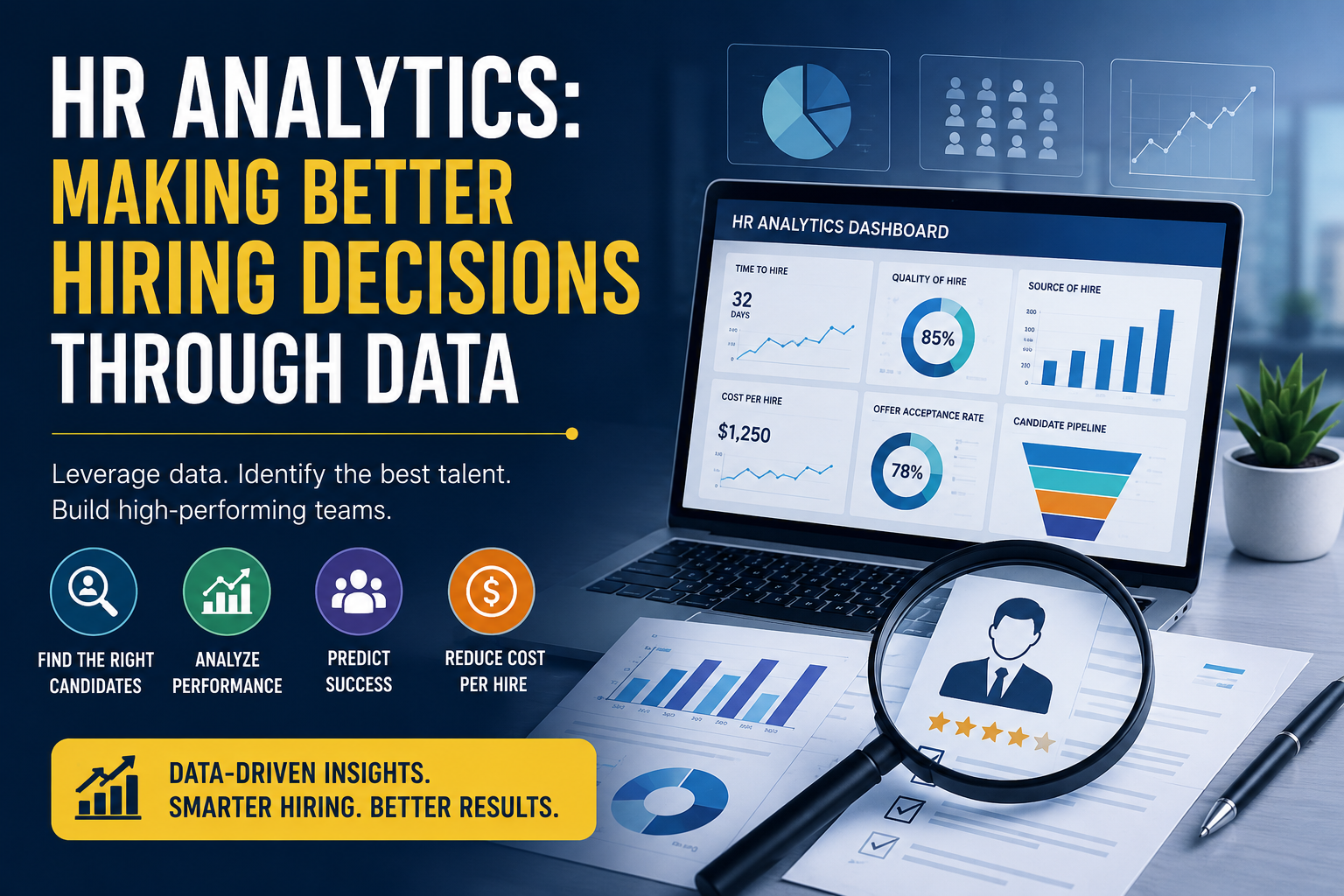
Key HR Analytics Metrics for Better Hiring Decisions
To make informed recruitment decisions, HR professionals must understand and track key hiring metrics.
1. Time to Hire
Time to Hire measures the number of days between a candidate applying and accepting a job offer.
Why It Matters
- Indicates recruitment efficiency
- Helps identify hiring bottlenecks
- Improves candidate experience
A shorter hiring process often results in better candidate engagement and reduced recruitment costs.
2. Cost per Hire
This metric calculates the total cost of recruiting a new employee.
It includes:
- Job advertisements
- Recruitment software
- Recruiter salaries
- Interview expenses
- Background verification costs
Why It Matters
Tracking cost per hire helps organizations optimize recruitment budgets and improve ROI.
3. Quality of Hire
Quality of Hire evaluates how successful new employees are after joining the organization.
Factors include:
- Performance ratings
- Productivity levels
- Retention rates
- Manager satisfaction
Why It Matters
Hiring quality employees contributes directly to business success.
4. Source of Hire
This metric identifies where successful candidates come from.
Examples:
- Job portals
- Employee referrals
- Company website
- Social media
- Recruitment agencies
Why It Matters
Knowing the best-performing recruitment channels allows organizations to invest resources more effectively.
5. Offer Acceptance Rate
This metric measures how many candidates accept job offers.
Why It Matters
A low acceptance rate may indicate:
- Salary issues
- Employer branding challenges
- Poor candidate experience
Organizations can use this data to improve recruitment strategies.
6. Employee Turnover Rate
Turnover rate measures how many employees leave the organization within a specific period.
Why It Matters
High turnover often signals hiring mismatches or workplace issues.
Analytics helps identify patterns and reduce employee attrition.
How HR Analytics Improves Hiring Decisions
Identifying Ideal Candidate Profiles
By analyzing data from high-performing employees, organizations can identify common characteristics such as:
- Skills
- Experience
- Education
- Personality traits
- Behavioral patterns
Recruiters can then use these insights to find candidates with similar success indicators.
Reducing Hiring Bias
Unconscious bias can affect hiring decisions.
HR Analytics introduces objectivity by focusing on measurable criteria rather than personal preferences.
Benefits include:
- Fair hiring practices
- Increased diversity
- Better candidate evaluation
This leads to more inclusive workplaces and stronger organizational performance.
Predicting Candidate Success
Predictive analytics uses historical data and statistical models to forecast future outcomes.
Recruiters can predict:
- Job performance
- Cultural fit
- Retention probability
- Leadership potential
This significantly improves hiring accuracy.
Enhancing Candidate Experience
Analytics helps identify areas where candidates may drop out during recruitment.
Organizations can:
- Simplify application processes
- Improve communication
- Reduce interview delays
- Enhance employer branding
A positive candidate experience strengthens the company's reputation.
The Role of Artificial Intelligence in HR Analytics
Artificial Intelligence (AI) is revolutionizing recruitment analytics.
AI-powered recruitment tools can:
- Screen resumes automatically
- Match candidates with job requirements
- Analyze interview responses
- Predict hiring success
- Detect hiring trends
Benefits include:
- Faster hiring
- Improved accuracy
- Reduced manual workload
- Better decision-making
As AI technology advances, its role in HR Analytics will continue to expand.
Benefits of HR Analytics for Organizations
Better Recruitment Quality
Data-driven hiring leads to stronger candidate selection and improved workforce performance.
Reduced Recruitment Costs
Analytics identifies cost-effective hiring channels and recruitment strategies.
Improved Employee Retention
Organizations can predict turnover risks and take proactive measures.
Faster Hiring Process
Analytics reveals bottlenecks and improves recruitment efficiency.
Enhanced Workforce Planning
Companies can forecast future hiring needs based on business growth and workforce trends.
Stronger Business Performance
Better hiring decisions lead to improved productivity, innovation, and profitability.
Challenges in Implementing HR Analytics
Despite its advantages, HR Analytics also presents challenges.
Data Quality Issues
Inaccurate or incomplete data can lead to poor decision-making.
Organizations must ensure data accuracy and consistency.
Privacy Concerns
Employee data must be collected and managed responsibly.
HR teams must comply with data protection regulations and maintain confidentiality.
Lack of Analytical Skills
Many HR professionals are unfamiliar with data analysis techniques.
This creates a growing demand for HR Analytics training and professional development.
Technology Integration
Organizations may face difficulties integrating multiple HR systems and databases.
Proper planning and technology selection are essential.
Skills Required for HR Analytics Professionals
To succeed in HR Analytics, professionals should develop the following skills:
Data Analysis
Understanding how to interpret recruitment and workforce data.
Statistical Knowledge
Basic statistical concepts help identify meaningful trends and patterns.
HR Expertise
Knowledge of recruitment, employee relations, and workforce management.
Excel and Reporting Tools
Proficiency in:
- Microsoft Excel
- Power BI
- Tableau
- HR Information Systems
Critical Thinking
The ability to convert data insights into actionable HR strategies.
Future of HR Analytics
The future of HR Analytics is extremely promising.
Emerging trends include:
Predictive Workforce Analytics
Organizations will increasingly forecast workforce requirements and talent shortages.
AI-Powered Recruitment
Artificial intelligence will automate more aspects of hiring and talent management.
Real-Time Workforce Insights
Advanced dashboards will provide instant access to HR performance data.
Personalized Employee Experiences
Data-driven insights will help create customized employee engagement and development programs.
Strategic HR Leadership
HR professionals will play a greater role in business strategy through data-backed decision-making.
As businesses continue embracing digital transformation, HR Analytics will become a core competency for HR professionals worldwide.
Why HR Analytics Training is Important for Career Growth
The demand for data-savvy HR professionals is growing rapidly.
Organizations are seeking HR executives who can:
- Analyze recruitment data
- Use HR software tools
- Interpret workforce trends
- Support strategic decision-making
An HR Analytics training course helps professionals gain practical knowledge of:
- Recruitment metrics
- HR dashboards
- Workforce reporting
- Data visualization
- Predictive analytics
These skills significantly improve employability and career advancement opportunities.
Conclusion
HR Analytics is transforming recruitment from a subjective process into a strategic, data-driven function. By leveraging workforce data, organizations can make smarter hiring decisions, reduce recruitment costs, improve employee retention, and build high-performing teams.
In an era where talent is a key competitive advantage, businesses can no longer rely solely on intuition when hiring employees. Data-driven recruitment provides the insights needed to identify the right candidates, optimize hiring processes, and achieve long-term organizational success.
For aspiring HR professionals, learning HR Analytics is no longer optional—it is becoming an essential skill. As technology continues to reshape the workplace, professionals who understand both human resources and data analysis will be better positioned for success in the evolving world of work.
Whether you are a student, job seeker, or working professional, investing in HR Analytics training can open doors to exciting career opportunities and help you become a valuable asset in the modern HR landscape.