Introduction
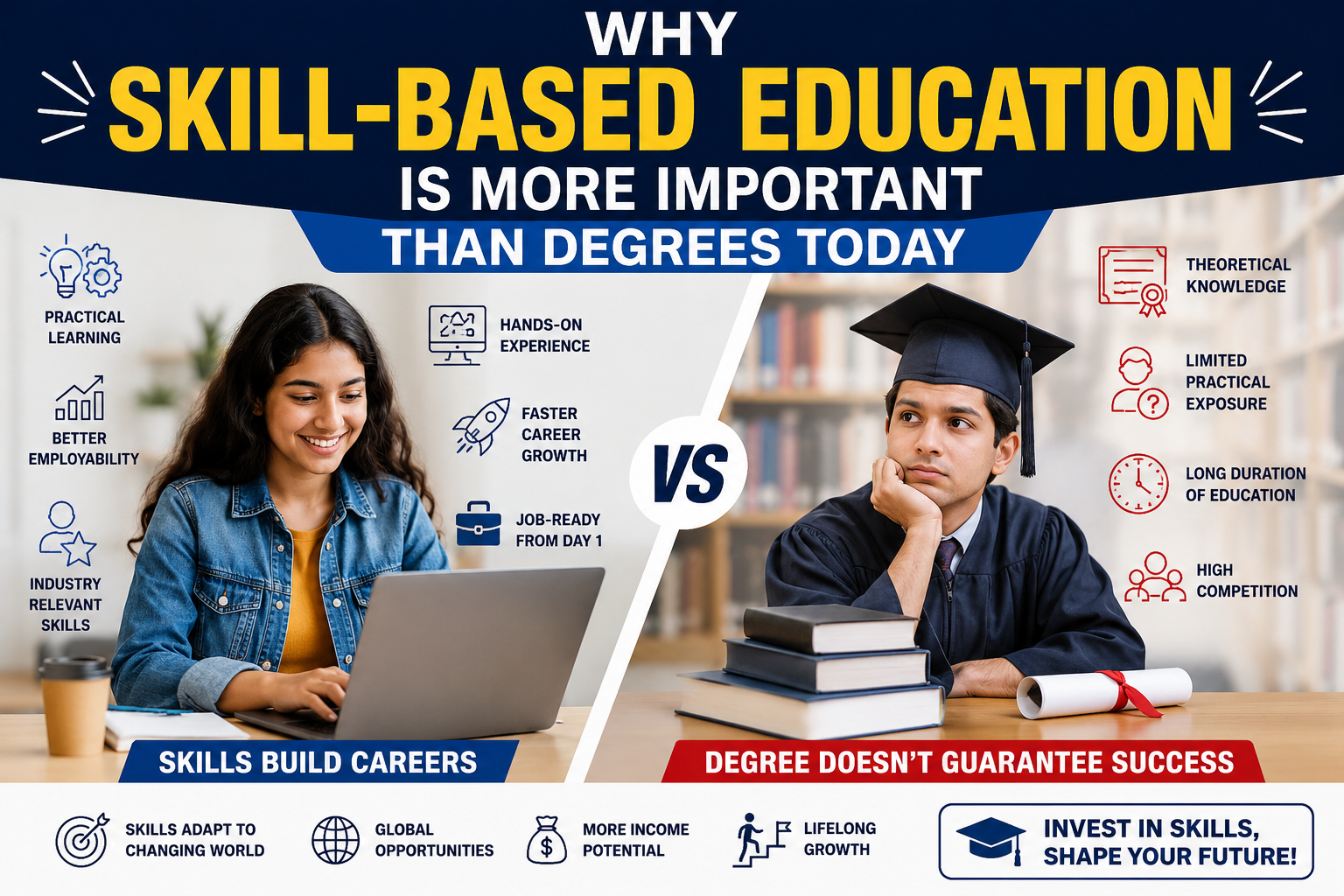
For decades, earning a college degree was considered the ultimate path to career success. Students spent years pursuing traditional education with the belief that a degree alone would guarantee a stable job and a successful future. However, the modern job market has changed dramatically. Today, employers are no longer looking only for degrees; they are looking for practical skills, real-world knowledge, adaptability, and problem-solving abilities.
In today’s competitive world, skill-based education has become more important than ever before. Companies want professionals who can perform tasks efficiently, use modern technologies, communicate effectively, and contribute immediately to the workplace. This shift has transformed how students, professionals, and organizations view education and career growth.
From web development and digital marketing to artificial intelligence and foreign languages, industries now prioritize skills over traditional academic qualifications. As technology continues to evolve rapidly, skill-based learning is helping individuals stay relevant, employable, and future-ready.
In this blog, we will explore why skill-based education is becoming more important than degrees, how it benefits students and professionals, and why practical learning is shaping the future of education and employment.
What is Skill-Based Education?
Skill-based education focuses on teaching practical abilities, industry-relevant knowledge, and hands-on experience that can be directly applied in real-world situations. Unlike traditional education systems that emphasize theoretical learning, skill-based education prepares individuals to perform specific tasks and solve practical problems.
This form of education includes:
- Technical skills
- Communication skills
- Leadership skills
- Digital skills
- Industry-specific training
- Soft skills
- Problem-solving abilities
- Practical project experience
Examples of skill-based courses include:
- Web Development
- Graphic Designing
- Digital Marketing
- Artificial Intelligence
- HR Training
- Data Analytics
- Foreign Language Courses
- Financial Management
- UI/UX Designing
- Cybersecurity
The primary goal of skill-based education is employability and career readiness.
The Changing Job Market
The global job market is evolving faster than ever. Automation, artificial intelligence, digital transformation, and technological innovation are changing how businesses operate. Many traditional jobs are disappearing, while new roles are emerging every year.
Today’s employers need candidates who can:
- Adapt quickly
- Learn continuously
- Use modern tools and technologies
- Solve real-world challenges
- Work efficiently in teams
- Communicate professionally
- Deliver practical results
A degree may demonstrate academic knowledge, but it does not always prove practical capability. This is why companies increasingly value skills, certifications, internships, and hands-on experience.
Major companies around the world are now hiring based on skills rather than just degrees. Many successful professionals today have built impressive careers through online courses, certifications, training programs, and practical experience instead of relying only on traditional education.
Why Skill-Based Education is More Important Than Degrees
1. Skills Make You Job-Ready
One of the biggest advantages of skill-based education is that it prepares students for real jobs. Traditional education often focuses heavily on theory, while skill-based learning teaches how to apply knowledge practically.
For example:
- A web development student learns to build real websites.
- A digital marketing student learns to run live campaigns.
- A graphic designer creates actual design projects.
- A language learner practices communication in real situations.
This practical exposure makes students confident and job-ready from day one.
2. Companies Prefer Skilled Candidates
Employers today want candidates who can contribute immediately without extensive training. Businesses are looking for people who already possess practical knowledge and technical expertise.
A candidate with strong practical skills often gets selected over someone who has only theoretical qualifications.
Companies now focus on:
- Portfolio quality
- Project experience
- Communication abilities
- Technical knowledge
- Problem-solving capability
- Certifications
- Practical understanding
This shift clearly shows why skills are becoming more valuable in the hiring process.
3. Skill-Based Learning Increases Employability
Unemployment among degree holders is increasing in many countries because many graduates lack industry-relevant skills. Skill-based education bridges this gap between education and employment.
When students learn practical skills, they become:
- More employable
- More confident
- Better prepared for interviews
- Capable of freelancing
- Ready for entrepreneurship
Skill-oriented training gives individuals a competitive advantage in the job market.
4. Technology is Changing Every Industry
Technology is transforming almost every profession. Industries now require professionals who can work with modern software, tools, and digital platforms.
Some of the most in-demand skills today include:
- Coding and programming
- Artificial Intelligence
- Data Science
- Digital Marketing
- Video Editing
- UI/UX Design
- Cloud Computing
- Cybersecurity
- Social Media Management
Traditional degree programs often struggle to update their curriculum quickly, while skill-based courses adapt much faster to industry changes.
This makes skill-based education more relevant in today’s fast-moving world.
The Rise of Online Learning and Certifications
The internet has completely transformed education. Today, students can learn almost any skill online from anywhere in the world.
Online learning platforms and training institutes provide:
- Flexible learning
- Affordable education
- Industry certifications
- Live projects
- Internship opportunities
- Practical assignments
Certifications have become highly valuable because they prove practical competency.
Many employers now recognize professional certifications as proof of expertise, especially in fields like:
- IT
- Marketing
- Finance
- Design
- Human Resources
- Artificial Intelligence
This shift has reduced the dependency on traditional degrees alone.
Skill-Based Education Encourages Entrepreneurship
Another major benefit of skill-based education is that it encourages entrepreneurship and self-employment.
A skilled individual can:
- Start freelancing
- Launch a startup
- Offer professional services
- Build an online business
- Create digital products
- Work remotely
For example:
- A web developer can build websites for clients.
- A digital marketer can manage social media businesses.
- A graphic designer can sell creative services online.
- A language expert can become a trainer or translator.
Skills create opportunities for financial independence.
Importance of Soft Skills in Career Growth
Technical skills are important, but soft skills are equally essential for long-term career success.
Skill-based education also focuses on:
- Communication skills
- Leadership qualities
- Teamwork
- Time management
- Public speaking
- Critical thinking
- Emotional intelligence
These skills improve workplace performance and help professionals grow into leadership roles.
In many cases, strong soft skills can make a candidate more valuable than academic qualifications alone.
Practical Learning Builds Confidence
Many students struggle during interviews because they lack practical exposure. Skill-based education solves this issue by giving students real-world experience.
Practical learning includes:
- Live projects
- Internships
- Case studies
- Simulations
- Group activities
- Presentations
- Industry training
This hands-on approach builds confidence and improves professional communication.
Students become more comfortable handling real tasks, clients, and workplace challenges.
Why Degrees Alone Are No Longer Enough
Degrees still hold value, especially in fields like medicine, engineering, law, and research. However, in many industries, a degree alone is no longer sufficient.
Today’s employers expect candidates to have:
- Industry knowledge
- Practical experience
- Digital literacy
- Communication skills
- Adaptability
- Technical competency
A degree may open doors, but skills help individuals succeed and grow.
This is why students should focus on combining education with skill development.
Industries Where Skills Matter More Than Degrees
Several industries now prioritize skills over formal degrees.
1. Digital Marketing
Companies hire based on campaign performance, SEO knowledge, and practical marketing abilities.
2. Web Development
Coding skills and project portfolios matter more than academic qualifications.
3. Graphic Designing
Creative skills and design portfolios are more important than degrees.
4. Content Writing
Writing quality, SEO knowledge, and creativity matter the most.
5. Video Editing
Practical editing skills and software expertise are highly valued.
6. Artificial Intelligence and Data Science
Real-world projects and technical proficiency are key hiring factors.
7. Freelancing and Remote Work
Clients care more about results and skills than educational background.
Benefits of Skill-Based Education for Students
Skill-based education offers numerous advantages:
Better Career Opportunities
Students gain industry-relevant expertise that improves employability.
Faster Learning
Skill-oriented courses are often shorter and more focused.
Cost-Effective Education
Many skill courses are affordable compared to traditional degrees.
Real-World Experience
Practical learning prepares students for actual job responsibilities.
Flexibility
Online and hybrid learning options provide convenience.
Continuous Growth
Professionals can upgrade their skills throughout their careers.
The Role of Training Institutes in Skill Development
Professional training institutes play a crucial role in bridging the gap between education and employment.
Institutes focused on practical learning help students:
- Learn industry-relevant skills
- Gain practical exposure
- Build portfolios
- Prepare for interviews
- Improve communication
- Receive career guidance
Modern training centers provide hands-on education aligned with industry requirements.
This approach helps students become career-ready and future-focused.
How Students Can Build Skills for the Future
Students should start developing skills as early as possible.
Here are some effective ways:
Take Professional Courses
Enroll in practical training programs related to your interests.
Work on Projects
Create real projects to improve experience and confidence.
Learn Online
Use digital platforms to gain new knowledge regularly.
Build a Portfolio
Showcase your work professionally.
Improve Communication Skills
Practice speaking, writing, and teamwork.
Stay Updated
Follow industry trends and emerging technologies.
Gain Internship Experience
Internships provide valuable workplace exposure.
The Future of Education
The future of education is shifting toward practical, flexible, and skill-oriented learning.
Educational institutions are increasingly focusing on:
- Industry collaboration
- Internship programs
- Project-based learning
- Digital education
- Professional certifications
- Hybrid learning models
The goal is no longer just earning a degree — it is becoming employable, adaptable, and future-ready.
Skill-based education will continue to grow as industries evolve and technology advances.
Conclusion
In today’s rapidly changing world, skill-based education has become more important than degrees alone. While degrees still have value, practical skills, real-world experience, and continuous learning are now essential for career success.
Employers want professionals who can solve problems, use modern technologies, communicate effectively, and contribute immediately to the workplace. Skill-based learning helps individuals become job-ready, confident, adaptable, and future-focused.
From web development and digital marketing to artificial intelligence and communication skills, practical education is opening doors to countless career opportunities.
Students who combine academic education with skill development gain a significant advantage in the modern job market. They become better prepared for employment, entrepreneurship, freelancing, and long-term career growth.
The future belongs to individuals who continue learning, upgrading their skills, and adapting to industry demands. In this new era, skills are not just important — they are essential for success.