Introduction
The workplace has undergone one of the biggest transformations in modern history. What once seemed impossible for many organizations — operating efficiently without a physical office — has now become a global reality. Remote work is no longer just a temporary arrangement or a trend driven by technology companies. It has become a long-term business strategy adopted by organizations across industries.
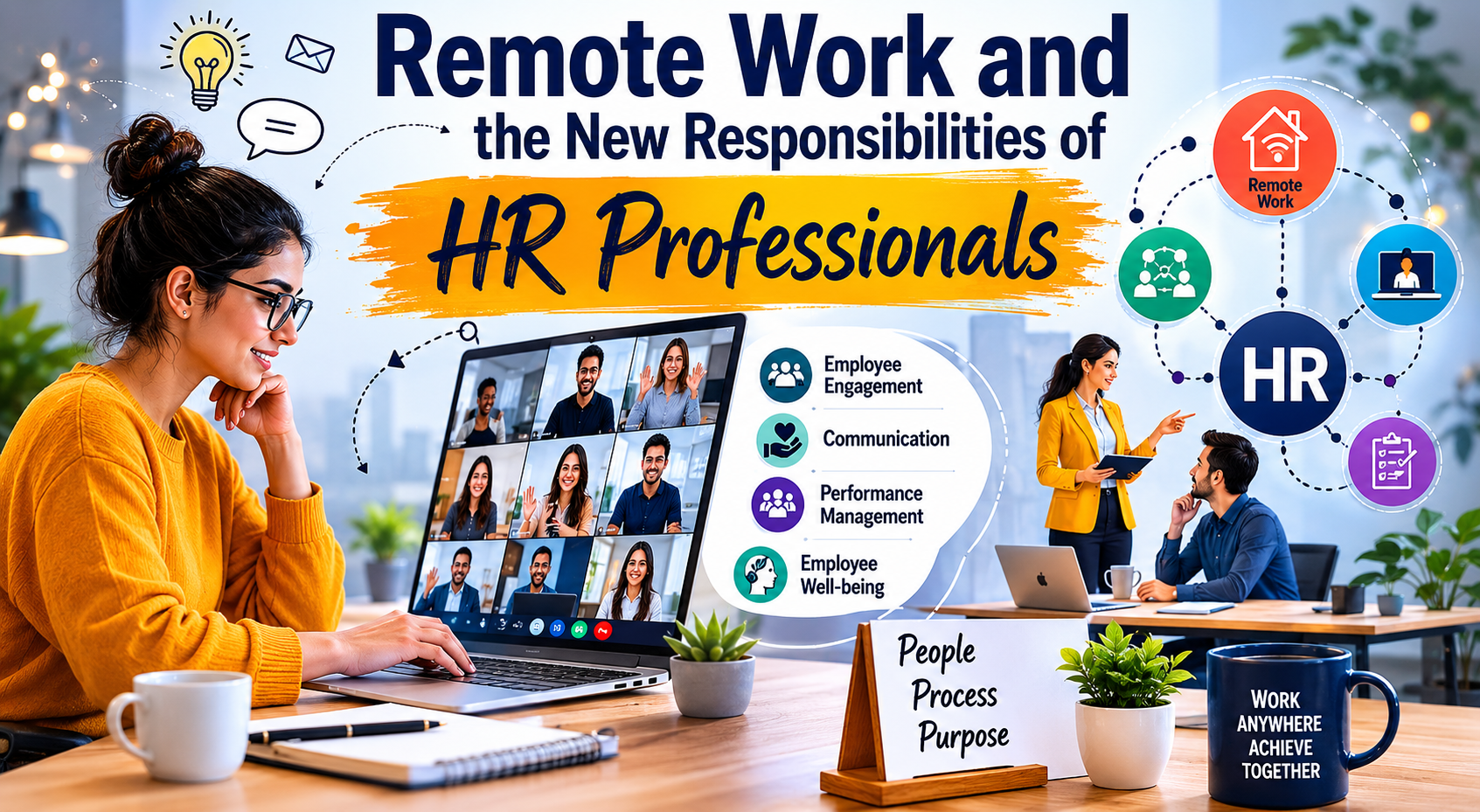
As businesses shifted toward remote and hybrid work models, the role of Human Resource (HR) professionals changed dramatically. HR is no longer limited to recruitment, payroll, and employee documentation. Today, HR professionals are responsible for managing digital work cultures, maintaining employee engagement, ensuring mental well-being, improving virtual communication, and creating policies suitable for remote environments.
This transformation has created new opportunities as well as new challenges. Companies now need HR professionals who understand technology, remote collaboration tools, employee psychology, and virtual workforce management.
In this blog, we will explore how remote work is changing organizations and the new responsibilities HR professionals must handle in the modern workplace.
Understanding Remote Work
Remote work refers to a working style where employees perform their duties outside a traditional office environment. Employees may work from home, co-working spaces, cafés, or even from different cities and countries.
Technology has made remote work possible through:
Video conferencing platforms
Cloud-based collaboration tools
Online project management systems
Digital communication applications
Virtual meeting software
Many companies now offer:
Fully remote jobs
Hybrid work models
Flexible work schedules
Work-from-anywhere policies
Remote work has changed employee expectations. Today’s workforce values flexibility, work-life balance, and freedom more than ever before.
Why Remote Work is Growing Rapidly
Several factors have contributed to the rise of remote work:
1. Technological Advancement
Fast internet, cloud computing, and collaboration tools like Zoom, Microsoft Teams, Slack, and Google Workspace have made remote communication easier.
2. Employee Demand for Flexibility
Employees prefer jobs that allow flexibility and better personal life management.
3. Cost Savings for Companies
Businesses can reduce office expenses, electricity costs, infrastructure costs, and travel expenses.
4. Access to Global Talent
Companies can hire skilled employees from different cities and countries instead of limiting recruitment to one location.
5. Increased Productivity
Many organizations have reported improved productivity because employees save commuting time and can work in comfortable environments.
The Evolution of HR in the Remote Work Era
Traditionally, HR professionals mainly handled:
Hiring
Attendance
Payroll
Employee records
Office discipline
Employee relations
However, remote work has expanded HR responsibilities significantly. HR professionals now act as:
Culture builders
Digital communication managers
Employee wellness coordinators
Technology facilitators
Remote leadership advisors
Virtual engagement specialists
The modern HR department plays a strategic role in helping organizations adapt to remote environments successfully.
New Responsibilities of HR Professionals in Remote Work
1. Managing Virtual Recruitment and Hiring
One of the biggest changes in HR is digital recruitment.
Today, HR professionals conduct:
Online interviews
Virtual assessments
Remote onboarding
Digital documentation
Online skill evaluations
Recruitment is now faster and more global. HR teams must learn how to identify talent without face-to-face interaction.
Skills Needed:
Video interviewing skills
Digital communication
Online assessment management
Candidate experience management
HR professionals must also ensure that candidates feel connected to the company culture even before joining.
2. Remote Employee Onboarding
Joining a company remotely can feel confusing for employees if onboarding is poorly managed.
HR professionals now create virtual onboarding programs that include:
Welcome sessions
Online orientation
Virtual team introductions
Training videos
Digital policy sharing
Online mentorship programs
A successful onboarding process helps employees feel comfortable and confident from day one.
Importance of Good Onboarding:
Reduces employee anxiety
Improves employee retention
Builds trust
Increases productivity faster
3. Maintaining Employee Engagement
Employee engagement has become one of the toughest challenges in remote work.
When employees work from home, they may feel:
Isolated
Disconnected
Unmotivated
Emotionally exhausted
HR professionals must develop creative engagement strategies.
Common Remote Engagement Activities:
Virtual team-building sessions
Online games and quizzes
Employee recognition programs
Virtual celebrations
Wellness challenges
Interactive webinars
Strong engagement improves morale and employee satisfaction.
4. Supporting Employee Mental Health
Remote work can create mental stress due to:
Loneliness
Burnout
Work-life imbalance
Continuous screen time
Lack of social interaction
Modern HR professionals are expected to prioritize employee well-being.
HR Responsibilities for Mental Wellness:
Organizing counseling sessions
Conducting stress management workshops
Encouraging breaks and flexible schedules
Creating wellness policies
Promoting healthy work habits
Mental health support is no longer optional — it is a business necessity.
5. Building a Strong Remote Work Culture
Company culture is difficult to maintain when employees rarely meet physically.
HR professionals must ensure employees still feel connected to organizational values.
Ways HR Builds Remote Culture:
Regular virtual meetings
Transparent communication
Recognition programs
Inclusive online activities
Leadership interaction sessions
A strong culture increases loyalty, teamwork, and motivation.
6. Performance Management in Remote Teams
Traditional performance tracking methods do not work effectively in remote environments.
HR professionals now focus more on:
Results
Productivity
Goal completion
Communication quality
Collaboration
Instead of monitoring office attendance, companies evaluate employee outcomes.
Modern HR Performance Strategies:
KPI-based evaluations
Weekly progress tracking
Digital performance dashboards
Continuous feedback systems
This approach creates a more productive and accountable workforce.
7. Managing Communication Challenges
Communication gaps are common in remote teams.
Misunderstandings may occur because employees are not physically present.
HR professionals help improve communication by:
Setting communication guidelines
Encouraging regular meetings
Promoting transparency
Training employees in virtual etiquette
Good communication prevents confusion and improves teamwork.
8. Training Employees for Digital Workplaces
Remote work requires employees to learn new digital skills.
HR departments now organize training in:
Virtual collaboration tools
Cybersecurity awareness
Online communication
Remote leadership
Time management
Continuous learning helps employees adapt to changing work environments.
9. Ensuring Cybersecurity Awareness
Remote employees often work using home internet networks and personal devices, increasing cybersecurity risks.
HR professionals collaborate with IT teams to educate employees about:
Data protection
Secure passwords
Phishing attacks
Safe internet practices
Protecting company information has become an important HR responsibility.
10. Promoting Work-Life Balance
One major problem in remote work is the disappearance of boundaries between personal and professional life.
Employees often work longer hours from home.
HR professionals must encourage healthy work habits such as:
Flexible schedules
Defined working hours
Break policies
Vacation usage
No-meeting hours
Balanced employees are more productive and happier.
Skills HR Professionals Need in the Remote Work Era
Modern HR professionals must upgrade their skills continuously.
Important Skills Include:
1. Digital Communication Skills
HR professionals must communicate clearly through emails, chats, and video meetings.
2. Emotional Intelligence
Understanding employee emotions is critical in remote environments.
3. Technology Knowledge
HR teams must know how to use HR software and collaboration tools effectively.
4. Leadership Skills
HR professionals now guide managers on leading remote teams successfully.
5. Problem-Solving Skills
Remote work creates unique challenges that require quick solutions.
6. Adaptability
HR professionals must adapt to changing business environments rapidly.
Challenges Faced by HR Professionals in Remote Work
While remote work offers many benefits, it also creates challenges.
1. Employee Isolation
Remote employees may feel disconnected from teams.
2. Monitoring Productivity
Tracking performance without micromanaging employees is difficult.
3. Communication Barriers
Virtual communication may lead to misunderstandings.
4. Maintaining Company Culture
Keeping employees emotionally connected to the organization requires continuous effort.
5. Managing Different Time Zones
Global teams often work in different time zones, making scheduling difficult.
Benefits of Remote Work for Organizations
Despite challenges, remote work provides several advantages.
1. Higher Employee Satisfaction
Flexible work improves happiness and reduces stress.
2. Reduced Operational Costs
Companies save money on office infrastructure.
3. Access to Wider Talent Pool
Businesses can hire skilled professionals globally.
4. Improved Employee Retention
Employees are more likely to stay with organizations offering flexibility.
5. Increased Productivity
Many remote employees perform better due to fewer workplace distractions.
The Future of HR in Remote and Hybrid Workplaces
Remote and hybrid work models are expected to continue growing in the future.
The HR department will become more technology-driven and employee-focused.
Future HR trends may include:
AI-powered recruitment
Virtual reality training
Advanced employee analytics
Digital wellness programs
Remote leadership development
Flexible workplace strategies
HR professionals who understand modern workplace trends will have excellent career opportunities.
Why HR Training is More Important Than Ever
The changing workplace demands highly skilled HR professionals.
Proper HR training helps students and professionals learn:
Recruitment strategies
Employee engagement methods
HR software tools
Communication skills
Workplace psychology
Leadership techniques
Practical HR training prepares individuals for real corporate challenges.
Institutes offering industry-focused HR training can help students become job-ready in today’s competitive market.
How Skill Excellent Can Help Future HR Professionals
Skill Excellent provides practical and career-focused HR training designed for modern workplace needs.
Students can learn:
Recruitment and talent acquisition
Corporate communication
Employee management
HR operations
Interview techniques
Professional development skills
With industry-oriented training, students gain the confidence needed to work in modern organizations successfully.
Conclusion:
Remote work has permanently transformed the corporate world. As organizations continue adopting flexible work models, the role of HR professionals has become more important than ever before.
Today’s HR professionals are not just administrators — they are strategic leaders responsible for employee engagement, workplace culture, mental wellness, digital communication, and organizational growth.
The future belongs to HR professionals who can combine human understanding with technological knowledge. Companies now need HR experts who can manage people effectively in both physical and virtual workplaces.
As remote work continues evolving, HR training and skill development will play a crucial role in preparing professionals for the future of work.
For students and professionals looking to build a successful HR career, learning modern HR practices is no longer optional — it is essential.