Introduction
In today’s competitive business world, company culture has become one of the most important factors behind organizational success. A strong company culture not only attracts talented employees but also improves productivity, teamwork, innovation, and employee retention. Employees no longer work only for salaries; they also seek workplaces where they feel respected, motivated, and connected.
This is where Human Resource (HR) professionals play a major role. HR professionals are not just responsible for recruitment and payroll management anymore. Modern HR departments are strategic partners that shape workplace values, employee behavior, communication systems, and overall work environments. They help create a culture where employees feel engaged, appreciated, and inspired to perform their best.
A strong company culture does not happen automatically. It is carefully built through leadership, communication, employee engagement, training, recognition, and trust. HR professionals act as the bridge between employees and management, ensuring that the company’s mission and values are reflected in everyday work life.
In this blog, we will explore how HR professionals build strong company culture, why culture matters, and the strategies HR teams use to create positive and successful workplaces.
What Is Company Culture?
Company culture refers to the shared values, beliefs, behaviors, attitudes, and work practices within an organization. It defines how employees interact with each other, how decisions are made, and how people feel while working in the company.
A company’s culture can include:
Workplace environment
Communication style
Leadership approach
Employee relationships
Company values
Work ethics
Team collaboration
Employee recognition
Diversity and inclusion
For example, some companies focus on innovation and creativity, while others prioritize discipline and structure. A healthy culture creates a positive atmosphere where employees feel motivated and connected to the organization’s goals.
Why Strong Company Culture Matters
A strong company culture benefits both employees and organizations. It directly impacts employee satisfaction, business growth, and brand reputation.
1. Improves Employee Engagement
Employees who feel valued and connected to the workplace are more engaged in their work. Engaged employees are more productive, motivated, and committed to organizational goals.
2. Increases Employee Retention
Toxic work environments often lead to high employee turnover. A positive company culture encourages employees to stay longer because they enjoy working in the organization.
3. Attracts Top Talent
Candidates today research company culture before applying for jobs. Businesses with strong workplace cultures attract skilled professionals more easily.
4. Boosts Productivity
When employees work in supportive environments, they collaborate better and perform more efficiently.
5. Strengthens Brand Reputation
Companies known for positive work culture gain better reputations in the market, helping them attract customers, investors, and employees.
The Role of HR Professionals in Building Company Culture
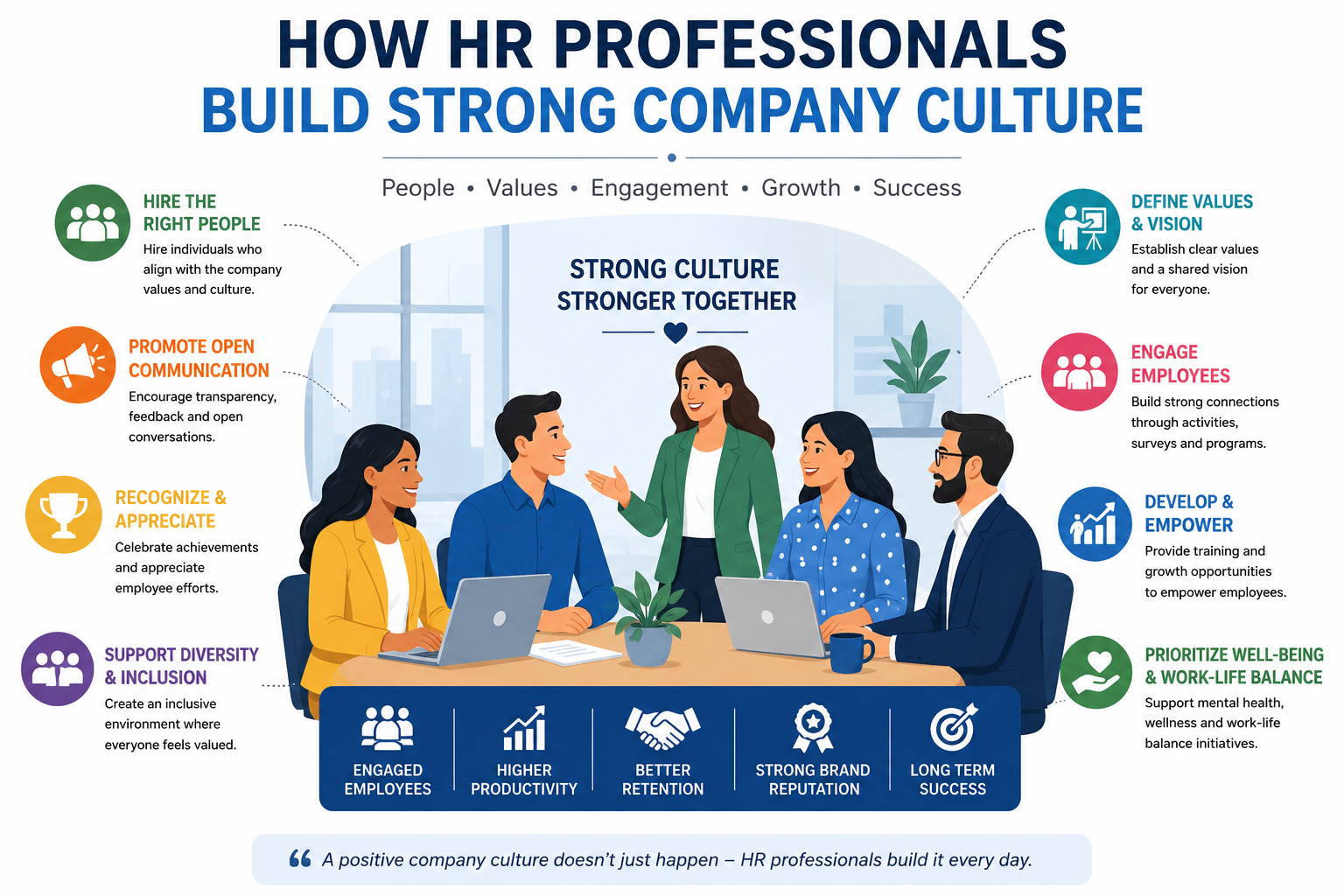
HR professionals are the driving force behind organizational culture. They influence how employees are hired, trained, managed, rewarded, and supported.
Their responsibilities include:
Defining workplace values
Hiring culturally fit employees
Promoting communication
Managing employee engagement
Resolving conflicts
Supporting employee growth
Encouraging diversity and inclusion
Maintaining employee satisfaction
Let’s explore the major ways HR professionals build strong company culture.
1. Hiring Employees Who Fit the Company Culture
Building a strong culture begins with hiring the right people. HR professionals carefully evaluate candidates not only based on skills but also on personality, attitude, and cultural fit.
For example, if a company values teamwork and collaboration, HR professionals look for candidates who can communicate effectively and work well with others.
How HR Achieves This
Conducting behavioral interviews
Assessing communication skills
Evaluating attitude and adaptability
Asking culture-related interview questions
Explaining company values during recruitment
Hiring employees who align with company values helps maintain a healthy and consistent work culture.
2. Creating Clear Company Values and Vision
Strong organizations have clearly defined values and missions. HR professionals help management communicate these values to employees.
Employees should understand:
What the company stands for
What behaviors are expected
What goals the organization wants to achieve
When employees share common values, teamwork and trust improve significantly.
Examples of Company Values
Integrity
Innovation
Respect
Accountability
Collaboration
Customer satisfaction
HR ensures these values are reflected in workplace policies, employee training, and daily operations.
3. Encouraging Open Communication
Communication is one of the most important parts of company culture. Poor communication often creates misunderstandings, stress, and employee dissatisfaction.
HR professionals create communication systems where employees can share ideas, feedback, and concerns freely.
HR Strategies for Better Communication
Regular team meetings
Employee feedback surveys
Open-door policies
One-on-one discussions
Anonymous suggestion systems
Open communication builds trust between employees and management.
4. Promoting Employee Engagement
Employee engagement refers to how emotionally connected employees feel toward their work and organization.
HR professionals organize activities and programs that increase employee involvement and workplace satisfaction.
Common Employee Engagement Activities
Team-building exercises
Office events and celebrations
Wellness programs
Employee appreciation activities
Interactive workshops
Recognition programs
Engaged employees feel motivated and contribute positively to company culture.
5. Recognizing and Rewarding Employees
Employees want their efforts to be appreciated. Recognition creates motivation and encourages employees to perform better.
HR professionals design reward systems that recognize employee achievements and contributions.
Examples of Employee Recognition
Employee of the Month awards
Performance bonuses
Public appreciation
Certificates and rewards
Promotion opportunities
A culture of appreciation increases morale and loyalty.
6. Supporting Diversity and Inclusion
Modern workplaces include employees from different backgrounds, cultures, genders, and experiences. HR professionals ensure that every employee feels respected and included.
Diversity and inclusion improve creativity, innovation, and collaboration.
HR Responsibilities in Diversity
Preventing workplace discrimination
Encouraging equal opportunities
Organizing diversity training
Promoting inclusive leadership
Supporting fair hiring practices
Inclusive workplaces create stronger and healthier company cultures.
7. Building Strong Leadership
Company culture is heavily influenced by leadership behavior. HR professionals train managers and leaders to create supportive and positive environments.
Employees observe leadership actions carefully. If leaders demonstrate respect, honesty, and professionalism, employees are more likely to follow those values.
Leadership Development Programs
HR professionals organize:
Leadership training
Communication workshops
Conflict management sessions
Emotional intelligence training
Team management programs
Strong leaders help maintain strong workplace culture.
8. Managing Workplace Conflicts
Conflicts are common in every workplace. However, unresolved conflicts can damage company culture.
HR professionals act as mediators to resolve disputes fairly and professionally.
Conflict Management Strategies
Listening to both sides
Encouraging respectful communication
Finding fair solutions
Maintaining confidentiality
Preventing workplace harassment
Quick and fair conflict resolution improves employee trust.
9. Providing Employee Training and Development
Employees value organizations that support their career growth. HR professionals provide learning opportunities that improve employee skills and confidence.
Training programs help employees adapt to changing business environments while feeling valued by the organization.
Types of Employee Training
Technical skills training
Soft skills development
Leadership training
Communication skills
Time management workshops
Learning-focused organizations usually have stronger company cultures.
10. Prioritizing Employee Well-Being
Modern HR departments understand that employee well-being is essential for long-term success.
Employees who feel mentally and physically healthy are more productive and positive.
HR Well-Being Initiatives
Mental health support
Flexible work policies
Wellness programs
Stress management sessions
Work-life balance initiatives
A caring workplace culture improves employee satisfaction and loyalty.
11. Encouraging Teamwork and Collaboration
HR professionals create opportunities for employees to work together and build stronger relationships.
Collaborative workplaces improve innovation and communication.
Teamwork Activities
Group projects
Team-building games
Cross-department collaboration
Brainstorming sessions
Corporate retreats
Strong teamwork creates unity and strengthens organizational culture.
12. Adapting Culture During Organizational Changes
Businesses constantly experience changes such as mergers, remote work, technological updates, and restructuring.
HR professionals help employees adapt smoothly during transitions.
HR Change Management Strategies
Clear communication
Employee support programs
Training sessions
Transparent leadership
Feedback collection
Adaptable company cultures survive challenges more effectively.
Challenges HR Professionals Face in Building Company Culture
Building strong company culture is not always easy. HR professionals face several challenges, including:
1. Resistance to Change
Some employees resist new policies or workplace practices.
2. Remote Work Challenges
Managing culture in hybrid or remote environments is more difficult.
3. Communication Gaps
Miscommunication can reduce employee trust and engagement.
4. Leadership Issues
Poor leadership behavior negatively affects company culture.
5. Employee Burnout
Overworked employees may become disengaged and less productive.
HR professionals continuously work to overcome these challenges through better strategies and communication.
How Technology Is Helping HR Build Better Culture
Technology has transformed HR operations and employee experiences.
Modern HR tools help organizations improve communication, engagement, and performance management.
Popular HR Technologies
HR management software
Employee engagement platforms
Virtual training systems
Performance tracking tools
AI-powered recruitment systems
Technology helps HR professionals create more connected and efficient workplaces.
Examples of Companies with Strong Culture
Many successful companies are known for their positive workplace culture.
1. Google
Google promotes innovation, creativity, employee freedom, and collaboration.
2. Microsoft
Microsoft focuses on learning, inclusivity, and employee empowerment.
3. Netflix
Netflix values responsibility, performance, and transparency.
These organizations invest heavily in HR strategies to maintain strong company cultures.
Future of Company Culture and HR
The future workplace will continue evolving due to technology, globalization, and changing employee expectations.
Future HR trends may include:
Greater focus on mental health
Hybrid work culture
AI-driven HR systems
Personalized employee experiences
Skills-based hiring
Continuous learning environments
HR professionals will remain central to shaping future workplace culture.
Conclusion
A strong company culture is one of the biggest competitive advantages for modern businesses. It improves employee satisfaction, productivity, teamwork, innovation, and organizational success.
HR professionals play a critical role in building and maintaining this culture. From hiring the right employees to promoting communication, employee engagement, diversity, leadership, and well-being, HR departments influence every aspect of workplace experience.
Organizations that invest in strong company culture create happier employees and stronger business performance. In today’s rapidly changing world, HR professionals are not just administrators — they are culture builders, employee advocates, and strategic business partners.
As companies continue evolving, the importance of HR in shaping positive workplace environments will only continue to grow.