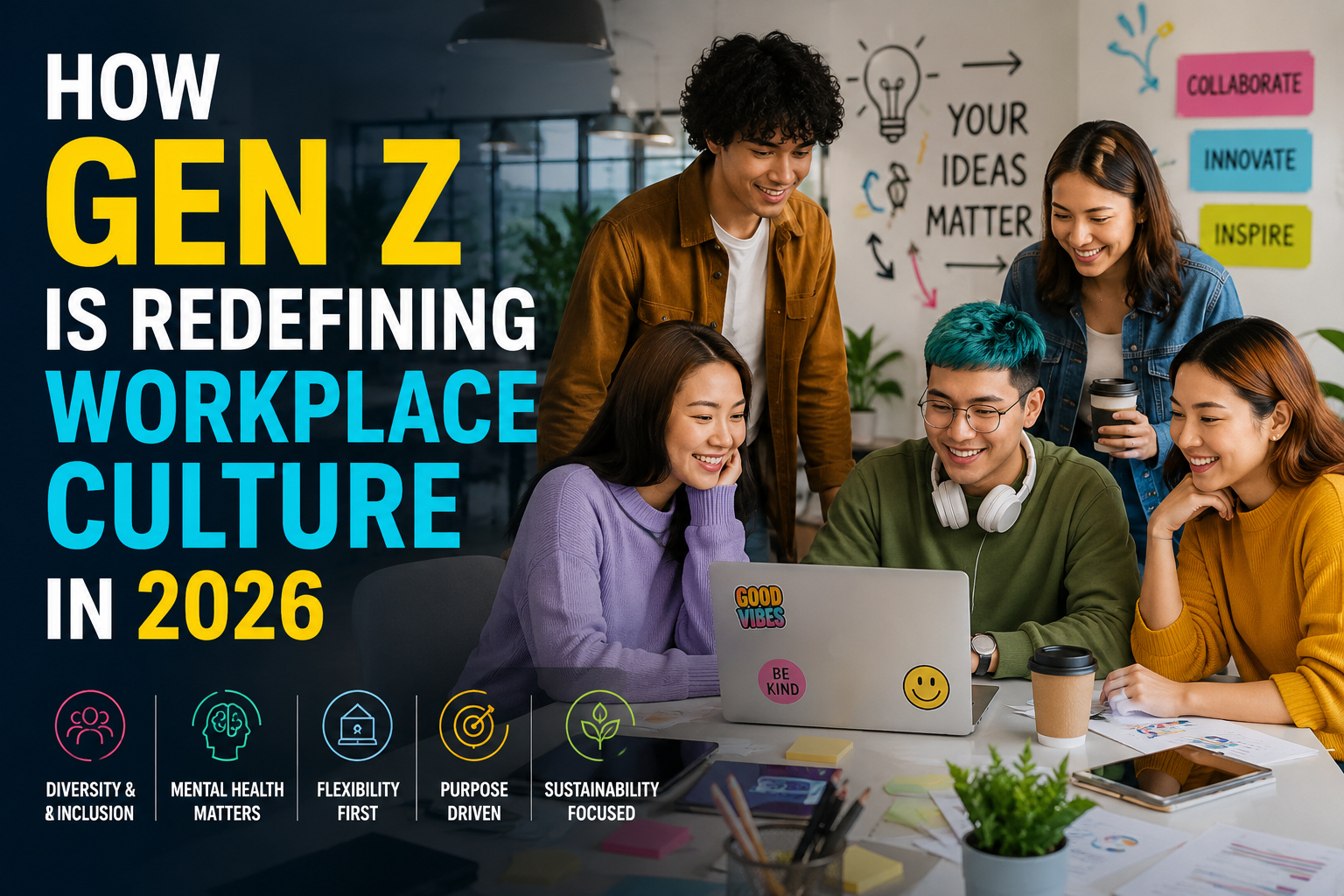
The workplace is evolving faster than ever before, and one generation is leading this transformation — Gen Z. Born between the late 1990s and early 2010s, Gen Z employees are entering the workforce with a completely different mindset compared to previous generations. They are digital-first, socially aware, highly adaptive, and deeply focused on work-life balance, career growth, and meaningful work.
As organizations continue to adapt to changing business environments, understanding Gen Z workplace culture has become essential for companies that want to attract and retain top talent. Unlike earlier generations, Gen Z employees value flexibility, transparency, inclusivity, mental health support, and purpose-driven careers more than traditional job perks.
In 2026, companies are no longer asking whether workplace culture should change. Instead, they are figuring out how quickly they can evolve to meet the expectations of Gen Z employees.
This blog explores how Gen Z is redefining workplace culture, the biggest workplace trends shaping the future of work, and how businesses can successfully adapt to this new era.
Understanding Gen Z Employees
Before understanding how Gen Z is changing workplace culture, it is important to understand who they are.
Gen Z is the first generation to grow up fully immersed in technology. Smartphones, social media, artificial intelligence, online learning, and digital communication have always been part of their lives. Because of this, they bring a unique perspective to the workplace.
Key Characteristics of Gen Z Employees
1. Digital Natives
Gen Z employees are highly comfortable with technology, automation tools, AI platforms, and digital collaboration software.
2. Purpose-Driven Mindset
They want careers that align with their personal values and social beliefs.
3. Preference for Flexibility
Gen Z values remote work, hybrid work culture, and flexible schedules.
4. Strong Focus on Mental Health
Mental well-being and healthy work environments are major priorities.
5. Continuous Learning
They actively seek upskilling opportunities and career development programs.
6. Diversity and Inclusion Awareness
Gen Z expects workplaces to be inclusive, respectful, and equitable.
These qualities are reshaping how companies hire, manage, and engage employees.
Why Workplace Culture is Changing in 2026
The traditional workplace model focused heavily on fixed schedules, hierarchy, and long-term job stability. However, Gen Z employees are challenging these old systems.
Today’s workforce values:
- Flexibility over rigid structures
- Growth over routine work
- Purpose over paycheck alone
- Collaboration over hierarchy
- Transparency over corporate formalities
- Mental wellness over burnout culture
As a result, workplace culture in 2026 is becoming more employee-centric than ever before.
Companies that fail to adapt may struggle with employee retention, engagement, and productivity.
How Gen Z is Redefining Workplace Culture
1. Gen Z is Prioritizing Work-Life Balance
One of the biggest changes Gen Z is bringing to workplace culture is the importance of work-life balance.
Previous generations often accepted long working hours and constant workplace pressure as part of career growth. Gen Z, however, believes productivity should not come at the cost of mental and physical health.
What Gen Z Wants
- Flexible work schedules
- Hybrid work options
- Paid mental health leaves
- Healthy work environments
- Reduced workplace stress
- Time for personal growth and hobbies
Companies are now redesigning policies to support healthier work cultures.
Impact on Businesses
Organizations that promote work-life balance often experience:
- Higher employee satisfaction
- Better productivity
- Lower turnover rates
- Improved employee engagement
- Stronger employer branding
The future of work is no longer about working harder. It is about working smarter.
2. The Rise of Hybrid and Remote Work Culture
Gen Z employees strongly prefer flexibility in where and how they work.
The pandemic accelerated remote work adoption, but Gen Z has fully embraced hybrid work culture as a permanent workplace model.
Instead of spending long hours commuting daily, employees now expect companies to offer flexible working arrangements.
Why Gen Z Prefers Hybrid Work
Better Productivity
Many employees feel more productive when they can work in comfortable environments.
Improved Mental Health
Flexible work arrangements reduce stress and burnout.
Better Time Management
Remote work helps employees manage personal and professional responsibilities more effectively.
Increased Independence
Gen Z values autonomy and trust in the workplace.
How Companies are Adapting
Businesses are investing in:
- Virtual collaboration tools
- Cloud-based systems
- Remote communication platforms
- Digital HR technologies
- Flexible attendance policies
The future workplace is becoming more location-independent than ever before.
3. Gen Z Demands Purpose-Driven Work
Salary is important, but Gen Z employees also want meaningful careers.
They prefer working for organizations that align with their values and contribute positively to society.
What Purpose Means for Gen Z
Gen Z employees care about:
- Sustainability
- Social impact
- Ethical business practices
- Diversity and inclusion
- Community contribution
- Environmental responsibility
They are more likely to leave organizations that fail to reflect these values.
The Importance of Employer Branding
Companies with strong employer branding and clear missions attract more Gen Z talent.
Modern employees research:
- Company culture
- Employee reviews
- Workplace policies
- Leadership transparency
- Social responsibility initiatives
Businesses that build authentic workplace cultures gain a significant competitive advantage.
4. Mental Health is Becoming a Workplace Priority
Gen Z is helping normalize conversations around mental health at work.
In traditional workplaces, mental health was often ignored or considered a personal issue. Today, employees expect organizations to actively support their well-being.
Mental Health Expectations from Employers
Gen Z employees value:
- Mental wellness programs
- Flexible schedules
- Stress management support
- Counseling services
- Open communication
- Supportive leadership
Why Mental Health Matters
Poor workplace mental health can lead to:
- Burnout
- Reduced productivity
- Low employee morale
- High turnover
- Increased absenteeism
Companies that prioritize employee wellness create healthier and more productive workplaces.
5. Gen Z is Accelerating Digital Transformation
Technology plays a central role in modern workplace culture.
Gen Z employees are highly comfortable with digital tools, automation, artificial intelligence, and online collaboration systems.
They expect workplaces to adopt modern technologies that improve efficiency and communication.
Technologies Gen Z Employees Prefer
- AI-powered HR systems
- Digital communication tools
- Project management software
- Virtual collaboration platforms
- Cloud-based work systems
- Learning management systems
Benefits of Digital Workplaces
Organizations that embrace digital transformation experience:
- Faster communication
- Better workflow management
- Improved employee collaboration
- Higher operational efficiency
- Enhanced remote work capabilities
The future workplace will continue becoming more technology-driven.
6. Continuous Learning and Upskilling are Essential
Gen Z employees value skill development more than job stability.
They understand that industries are rapidly evolving due to automation, artificial intelligence, and technological advancement.
As a result, they actively seek employers that support learning and career growth.
Popular Learning Areas in 2026
- Artificial intelligence
- Data analytics
- Digital marketing
- Leadership skills
- Communication skills
- Technical certifications
- Personal branding
- Project management
Why Upskilling Matters
Companies that invest in employee learning benefit from:
- Higher retention rates
- Better performance
- Improved innovation
- Stronger leadership pipelines
- Increased employee loyalty
Learning-focused organizations are becoming highly attractive to Gen Z professionals.
7. Gen Z is Promoting Diversity and Inclusion
Diversity and inclusion are no longer optional workplace initiatives.
For Gen Z employees, inclusive work culture is a basic expectation.
They want workplaces where everyone feels respected regardless of gender, background, identity, or culture.
What Inclusive Workplaces Include
- Equal opportunities
- Fair hiring practices
- Diverse leadership teams
- Respectful communication
- Inclusive policies
- Representation across departments
Benefits of Diversity in the Workplace
Research consistently shows that diverse workplaces often achieve:
- Better innovation
- Improved decision-making
- Higher creativity
- Stronger employee engagement
- Better business performance
Companies that build inclusive environments are more likely to attract younger talent.
8. Gen Z Prefers Transparent Leadership
Traditional corporate structures often relied on hierarchy and formal communication.
Gen Z employees prefer open communication and transparent leadership.
They want managers who:
- Communicate honestly
- Provide regular feedback
- Encourage collaboration
- Listen to employee opinions
- Support professional growth
The Shift Toward Collaborative Leadership
Modern workplace culture is moving away from rigid management styles.
Instead, leaders are expected to act as:
- Mentors
- Coaches
- Collaborators
- Problem-solvers
- Team supporters
This shift improves employee trust and workplace engagement.
9. Gen Z Values Recognition and Feedback
Unlike traditional annual performance reviews, Gen Z employees prefer continuous feedback.
They want regular communication about:
- Performance improvement
- Career growth
- Skill development
- Workplace contributions
Why Recognition Matters
Employees who feel valued are more likely to:
- Stay motivated
- Perform better
- Remain loyal to organizations
- Engage actively in projects
Simple appreciation and constructive feedback can significantly improve workplace morale.
10. Gen Z is Changing Recruitment Strategies
Recruitment itself is evolving because of Gen Z workplace expectations.
Today’s candidates evaluate employers just as much as employers evaluate candidates.
What Gen Z Looks for During Hiring
- Clear job descriptions
- Growth opportunities
- Flexible work policies
- Company culture transparency
- Learning opportunities
- Competitive compensation
- Positive employee reviews
Modern Recruitment Trends
Companies are increasingly using:
- AI recruitment tools
- Video interviews
- Skills-based hiring
- Social media recruitment
- Employer branding strategies
- Virtual onboarding systems
The hiring process is becoming faster, smarter, and more candidate-focused.
Challenges Companies Face While Adapting
Although Gen Z is driving positive workplace transformation, businesses also face several challenges.
Common Challenges
Resistance to Change
Some organizations still prefer traditional workplace structures.
Managing Hybrid Teams
Balancing remote and in-office teams requires strong communication systems.
Technology Adoption Costs
Digital transformation requires investment in software and infrastructure.
Generational Differences
Different generations may have different work expectations and communication styles.
Employee Retention
Gen Z employees are more willing to switch jobs if workplace expectations are not met.
Organizations must develop flexible strategies to address these challenges effectively.
How Businesses Can Attract and Retain Gen Z Talent
To build successful workplaces in 2026, organizations must understand what Gen Z truly values.
1. Create Flexible Work Policies
Offer hybrid and remote work opportunities whenever possible.
2. Invest in Employee Wellness
Support mental health, stress management, and healthy work environments.
3. Focus on Learning and Development
Provide training programs, certifications, and career advancement opportunities.
4. Build Inclusive Workplaces
Promote diversity, equality, and respectful workplace practices.
5. Improve Leadership Communication
Encourage transparency, collaboration, and regular feedback.
6. Embrace Technology
Adopt digital tools that improve efficiency and employee experience.
7. Strengthen Employer Branding
Showcase company culture, values, and employee success stories.
Organizations that prioritize these areas will remain competitive in attracting future talent.
The Future of Workplace Culture Beyond 2026
The influence of Gen Z will continue growing in the coming years.
As more Gen Z professionals move into leadership roles, workplace culture will become even more:
- Flexible
- Technology-driven
- Inclusive
- Employee-focused
- Purpose-oriented
- Innovation-driven
Future workplaces may also see:
- Four-day workweeks
- AI-assisted workflows
- Personalized employee experiences
- Virtual work environments
- Greater focus on sustainability
- Skills-based career growth
The workplace of the future will prioritize both business performance and employee well-being.
Why Companies Must Adapt Quickly
Ignoring Gen Z workplace expectations can negatively impact businesses.
Companies that fail to modernize workplace culture may struggle with:
- High employee turnover
- Reduced productivity
- Poor employer branding
- Difficulty attracting skilled professionals
- Lower employee engagement
On the other hand, organizations that embrace workplace transformation gain long-term advantages.
Benefits of Adapting to Gen Z Workplace Culture
- Stronger employee retention
- Better innovation
- Improved productivity
- Higher employee satisfaction
- Enhanced brand reputation
- Competitive hiring advantage
Businesses that evolve with workforce trends are more likely to succeed in the future.
Final Thoughts
Gen Z is not just entering the workforce — they are transforming it.
From hybrid work culture and digital transformation to mental health awareness and purpose-driven careers, Gen Z employees are redefining what modern workplace culture looks like.
Their expectations are encouraging organizations to become more flexible, inclusive, transparent, and employee-focused.
In 2026, workplace culture is no longer defined only by office spaces or corporate policies. It is defined by employee experience, meaningful work, collaboration, innovation, and well-being.
Companies that understand and embrace these changes will not only attract top Gen Z talent but also build stronger, more future-ready organizations.
The future of work belongs to businesses that prioritize people, purpose, and progress.
FAQs
What is Gen Z workplace culture?
Gen Z workplace culture focuses on flexibility, digital communication, mental health support, inclusivity, career growth, and meaningful work.
Why is Gen Z changing workplace culture?
Gen Z employees have different expectations regarding work-life balance, technology, leadership, and career development, which is influencing how companies operate.
What do Gen Z employees value most?
Gen Z values flexibility, growth opportunities, mental health support, inclusive workplaces, transparency, and purpose-driven careers.
How can companies attract Gen Z talent?
Companies can attract Gen Z talent by offering flexible work policies, career development opportunities, inclusive work cultures, and strong employer branding.
Why is hybrid work important for Gen Z?
Hybrid work offers flexibility, better work-life balance, improved productivity, and greater independence, which aligns with Gen Z work preferences.
Conclusion
The workplace is experiencing a major transformation, and Gen Z is leading the change. Their focus on flexibility, technology, wellness, inclusivity, and meaningful careers is shaping the future of work.
Organizations that adapt to these evolving expectations will create stronger workplace cultures, improve employee engagement, and achieve long-term success in the competitive business world.
As workplace culture continues evolving in 2026 and beyond, one thing is clear — Gen Z is redefining the way the world works.