Introduction
Learning German is more than just acquiring a new language—it’s unlocking a world of career opportunities. In 2026, the demand for German language professionals in India is steadily growing across industries such as IT, education, tourism, healthcare, and global business. Once you’ve completed your German language course, the big question arises: What’s next?
Should you choose freelancing, teaching, or a corporate job? Each path offers unique advantages, challenges, and growth potential. This guide will help you understand all three options so you can make the right career decision.
Why German Language Skills Are Valuable in 2026
Germany is one of the world’s leading economies and a major partner for India in trade, technology, and education. Many German companies operate in India, and there’s a consistent demand for professionals who can bridge the language gap.
Key reasons why German skills are in demand:
Growing Indo-German business collaborations
Increasing number of Indian students studying in Germany
Demand for multilingual professionals in global companies
Expansion of remote and freelance work opportunities
With certifications like A1 to C2, your proficiency level can significantly impact your career options and earning potential.
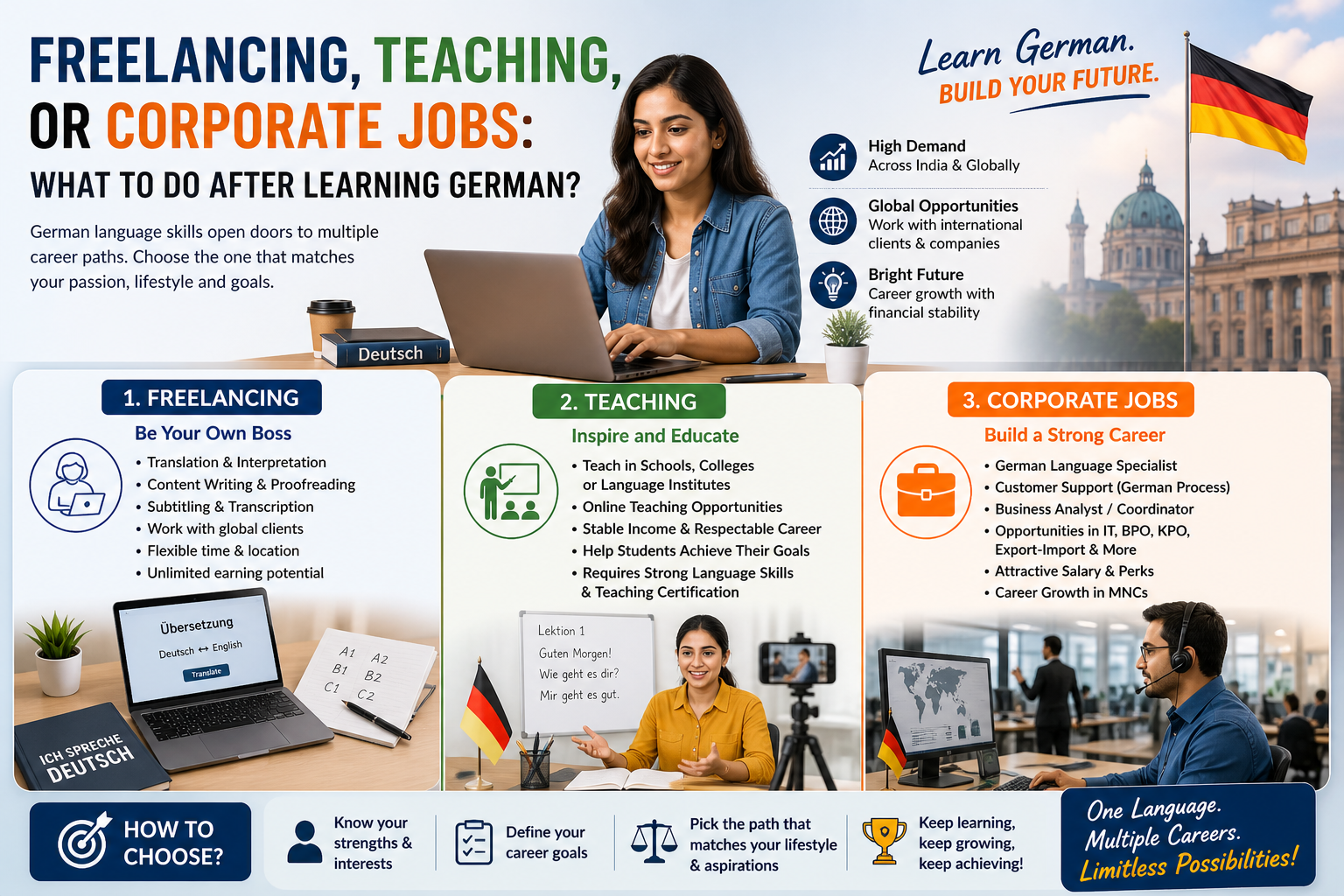
Option 1: Freelancing – Flexibility and Global Opportunities
Freelancing is becoming one of the most popular career paths for language professionals in 2026. It allows you to work independently and collaborate with clients from around the world.
🔹 Popular Freelance Roles
Translator (German to English/Hindi and vice versa)
Interpreter for meetings and events
Content writer or proofreader
Subtitle translator for media and OTT platforms
🔹 Benefits of Freelancing
Flexible working hours
Opportunity to work with international clients
Unlimited earning potential based on projects
Work-from-home convenience
🔹 Challenges to Consider
Income may not be stable initially
Requires self-marketing and networking
Deadlines can be demanding
Freelancing is ideal for individuals who prefer independence, have strong communication skills, and are comfortable managing their own workload.
Option 2: Teaching – A Stable and Respectable Career
If you enjoy sharing knowledge and helping others learn, teaching German can be a highly rewarding career.
🔹 Where You Can Teach
Schools and colleges
Language institutes
Online learning platforms
Private coaching or home tuition
🔹 Benefits of Teaching
Stable income and structured work schedule
High demand for qualified German trainers
Opportunity to build long-term career growth
Personal satisfaction from teaching others
🔹 Skills Required
Strong command of the language (usually B2 level or above)
Teaching certifications (like Goethe or equivalent)
Patience and communication skills
Teaching is a great choice for those who value job stability, enjoy mentoring, and want to build expertise in the language field.
Option 3: Corporate Jobs – High Growth and Professional Exposure
Corporate jobs offer structured career growth, financial stability, and exposure to global work environments. Many multinational companies (MNCs) actively seek German-speaking professionals.
🔹 Job Roles in Corporate Sector
German language specialist
Customer support executive (German process)
Business analyst or coordinator
Translator/interpreter in companies
Roles in IT, BPO, KPO, and export-import businesses
🔹 Benefits of Corporate Jobs
Fixed salary with additional perks
Career growth and promotions
Professional work environment
Exposure to international clients and projects
🔹 Requirements
German proficiency (B1–C1 depending on role)
Domain knowledge (IT, business, finance, etc.)
Good communication and teamwork skills
Corporate jobs are perfect for individuals looking for long-term growth, structured career paths, and financial security.
How to Choose the Right Career Path
Choosing between freelancing, teaching, and corporate jobs depends on your personal preferences, skills, and long-term goals.
Ask Yourself:
Do I prefer flexibility or stability?
Am I comfortable working independently or in a team?
Do I enjoy teaching and mentoring others?
What are my financial goals?
Tips to Succeed After Learning German
Regardless of the path you choose, here are some tips to maximize your success:
🔹 Keep Improving Your Language Skills
Aim to reach higher proficiency levels (B2, C1, or C2) to unlock better opportunities.
🔹 Gain Practical Experience
Internships, freelance projects, or part-time teaching can help you build confidence and a strong portfolio.
🔹 Build a Strong Network
Connect with professionals, join language communities, and attend events to discover opportunities.
🔹 Stay Updated
Follow industry trends and understand where German language skills are most in demand.
Conclusion
Learning German opens doors—but choosing the right path determines how far you go. Freelancing offers freedom, teaching provides stability, and corporate jobs ensure structured growth.
In 2026, the best approach is to align your career choice with your strengths, interests, and long-term goals. Whether you want independence, impact, or financial security, German language skills can help you achieve it all.
With the right strategy and continuous learning, your German proficiency can turn into a powerful career asset—helping you build a successful and future-ready professional journey.