Introduction
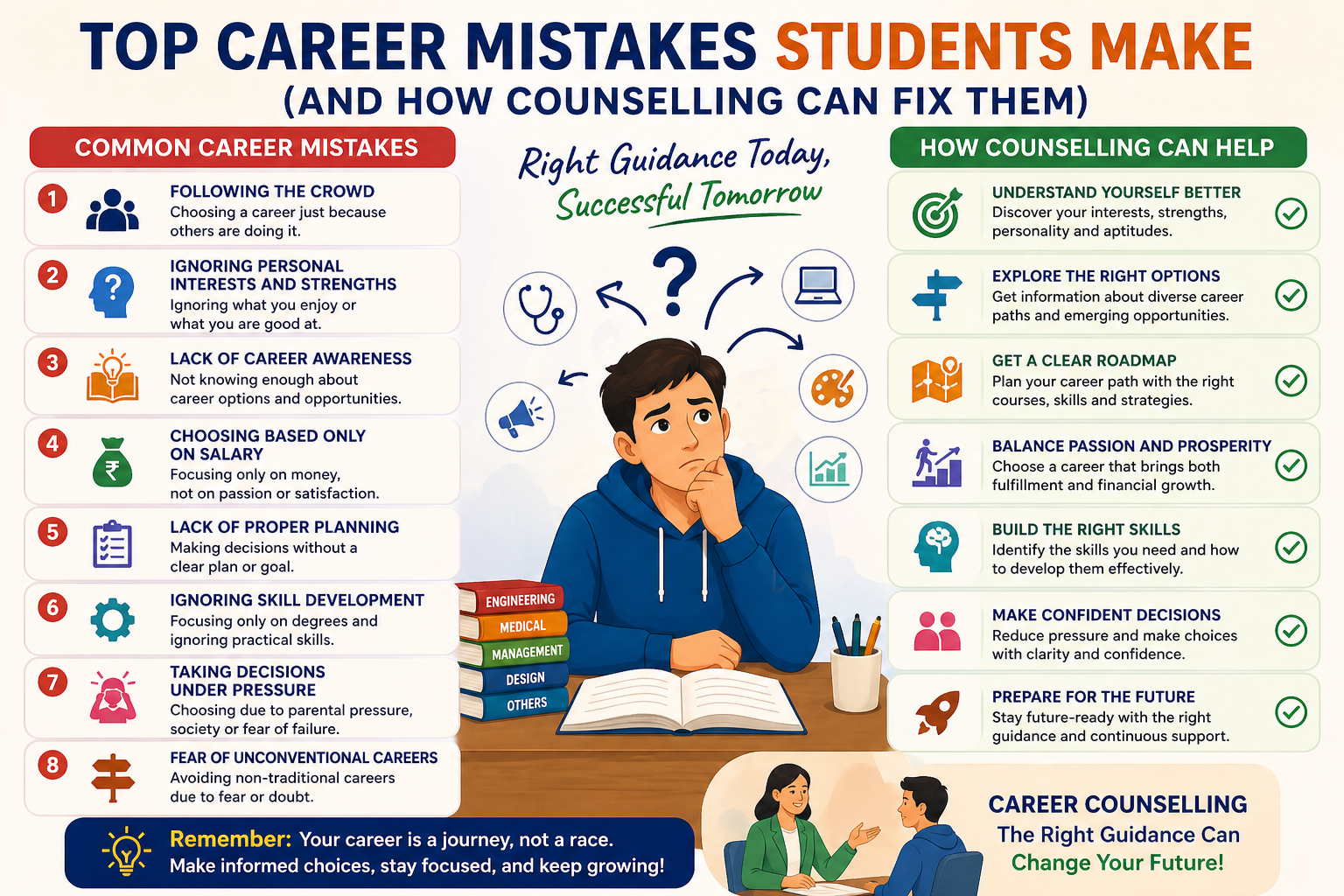
Choosing a career is one of the most important decisions in a student’s life. Yet, every year, thousands of students find themselves confused, stressed, or stuck in the wrong path—not because they lack potential, but because they make avoidable mistakes during the decision-making process. In today’s fast-changing world, where new careers are emerging and traditional paths are evolving, making informed choices has never been more important.
This is where career counselling plays a crucial role. It not only helps students avoid common mistakes but also guides them toward a path that aligns with their skills, interests, and long-term goals.
1. Following the Crowd
One of the most common mistakes students make is choosing a career simply because their friends are doing it. Whether it’s engineering, medical, or any trending course, many students follow the herd without considering their own strengths.
Why it’s a problem:
What works for someone else may not work for you. Every individual has different abilities, interests, and personality traits.
How counselling helps:
Career counselling uses aptitude tests and one-on-one guidance to identify what truly suits a student. It encourages independent thinking and helps students make personalized career choices rather than blindly following others.
2. Ignoring Personal Interests and Strengths
Many students ignore what they actually enjoy or are good at. Instead, they choose careers based on societal expectations or perceived “safe options.”
Why it’s a problem:
When passion and skills are ignored, students often lose motivation and struggle to perform well in their chosen field.
How counselling helps:
A career counsellor helps students discover their interests, strengths, and hidden talents. By aligning career choices with these factors, students are more likely to succeed and stay satisfied in the long run.
3. Lack of Career Awareness
Students often have limited knowledge about career options. They are only aware of a few popular professions, while hundreds of emerging and high-potential careers remain unexplored.
Why it’s a problem:
This lack of awareness limits opportunities and leads to poor decision-making.
How counselling helps:
Career counselling provides exposure to a wide range of career paths, including new-age roles in fields like digital marketing, data science, design, and more. It broadens a student’s perspective and opens doors to better opportunities.
4. Choosing Based Only on Salary
While financial stability is important, choosing a career solely based on salary can be a major mistake.
Why it’s a problem:
High-paying jobs often require specific skills and interest. Without them, students may feel stressed, dissatisfied, and eventually burnt out.
How counselling helps:
Counsellors guide students to find a balance between passion and earning potential. They help identify careers that are both fulfilling and financially rewarding.
5. Lack of Proper Planning
Many students make decisions without a clear plan. They don’t think about long-term goals, required skills, or future growth in their chosen field.
Why it’s a problem:
Without planning, students may face difficulties in achieving their career goals or may need to switch paths later.
How counselling helps:
Career counselling provides a structured roadmap. It helps students understand what steps to take, which courses to choose, and how to prepare for their future careers effectively.
6. Ignoring Skill Development
In today’s competitive world, degrees alone are not enough. However, many students focus only on academic qualifications and ignore practical skill development.
Why it’s a problem:
Employers today look for skills like communication, problem-solving, adaptability, and technical expertise.
How counselling helps:
Career counsellors emphasize the importance of skill-building and guide students toward relevant courses, certifications, and real-world experiences that enhance employability.
7. Taking Decisions Under Pressure
Parental pressure, societal expectations, and fear of failure often influence career decisions.
Why it’s a problem:
Decisions made under pressure may not align with a student’s true potential, leading to regret and dissatisfaction later.
How counselling helps:
A counsellor acts as a neutral guide, helping both students and parents understand what is best for the student. It creates a supportive environment for making informed and confident decisions.
8. Fear of Unconventional Careers
Many students hesitate to explore unconventional or creative career options due to fear of uncertainty.
Why it’s a problem:
This fear prevents students from pursuing careers where they might truly excel.
How counselling helps:
Career counselling provides clarity about emerging career opportunities, their scope, and growth potential. It helps students make informed decisions even in non-traditional fields.
The Role of Career Counselling in Today’s World
Career counselling is no longer a luxury—it is a necessity. With increasing competition and rapidly changing job markets, students need expert guidance to navigate their career paths effectively.
A good career counselling process includes:
1.Aptitude and psychometric assessments
2.Personalized career guidance
3.Information about courses and career options
4.Skill development recommendations
5.Continuous support and mentoring
Conclusion
Career mistakes are common, but they don’t have to define your future. With the right guidance, students can avoid these pitfalls and make smarter, more confident decisions.
Career counselling acts as a compass, helping students understand themselves better and choose a path that aligns with their goals and abilities. Instead of relying on guesswork or external pressure, students can take control of their future with clarity and confidence.
In the end, the right career is not just about earning a living—it’s about building a life you truly enjoy.