Introduction
The Most Confusing Yet Crucial Decision
Finishing Class 12 is a big milestone—but it also brings one of the toughest questions: “What next?” With countless options, advice from everyone around, and fear of making the wrong choice, students often feel overwhelmed.
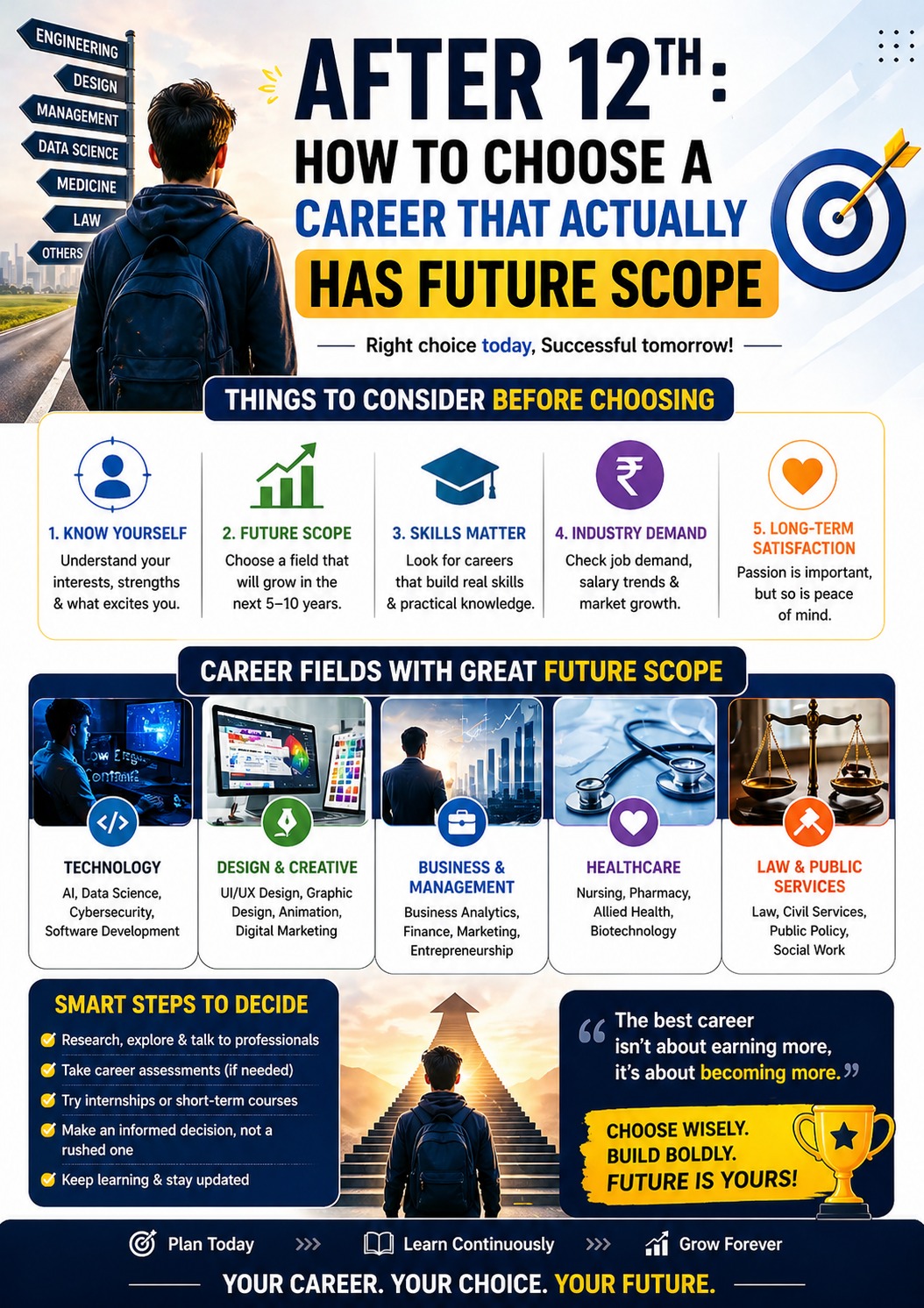
In 2026, choosing a career is no longer just about following traditional paths like engineering or medicine. It’s about selecting a direction that matches your skills, interests, and future demand. The right choice today can shape your entire future.
Why Choosing the Right Career Matters
A career is not just about earning money—it defines your lifestyle, growth, and satisfaction. Choosing the wrong path can lead to frustration, lack of motivation, and limited opportunities.
On the other hand, the right career choice can give you:
1.Long-term stability
2.Growth opportunities
3.Job satisfaction
4.Financial independence
Step 1: Understand Yourself First
Before looking at career options, start with self-analysis. Ask yourself:
What subjects do I enjoy the most?
What are my strengths and weaknesses?
Do I prefer creative work, technical work, or people-oriented roles?
Understanding yourself helps you avoid blindly following trends or peer pressure.
Step 2: Focus on Skills, Not Just Degrees
In today’s world, companies are focusing more on skills than just academic qualifications. A degree alone is not enough—you need practical knowledge and real-world abilities.
Some in-demand skill areas in 2026 include:
Digital Marketing
Web & App Development
Data Analysis
Communication & Language Skills
AI & Automation Basics
👉 The more skills you build, the better your career opportunities.
Step 3: Research Future Scope
Not every career has long-term growth. It’s important to choose a field that will remain relevant in the future.
Look for careers that are:
Growing in demand
Technology-driven
Globally relevant
Flexible and adaptable
For example, careers in technology, digital services, healthcare, and global communication are expected to grow rapidly.
Step 4: Explore Career Options After 12th
1. Technology & IT Careers
Fields like web development, software development, and cybersecurity offer high demand and good salaries.
2. Digital Marketing & Creative Fields
Social media marketing, content creation, and branding are booming career options.
3. Foreign Language Careers
Learning languages like German or French can open doors to international jobs and global companies.
4. Professional Courses
Courses in management, finance, or law provide structured career paths.
5. Skill-Based Short-Term Courses
Short-term certification programs can help you start earning early and gain practical experience.
Step 5: Take Guidance from Experts
Career counselling plays a crucial role in making the right decision. Experts can help you:
Identify your strengths
Understand career options
Choose the best path based on your goals
At Skill Excellent, students get proper guidance and industry-relevant training to make informed career choices.
Step 6: Gain Practical Exposure
Don’t just rely on theory—try to gain real-world experience.
Work on projects
Do internships
Take part in workshops
This helps you understand whether a career is right for you or not.
Common Mistakes to Avoid
🚫 Following friends or family blindly
🚫 Choosing a career only for money
🚫 Ignoring your interests and strengths
🚫 Not researching future scope
Avoiding these mistakes can save you from long-term regret.
Future Trends You Should Know
The job market is changing fast. Some key trends in 2026 include:
Rise of AI and automation
Growth of remote and freelance work
Increasing demand for digital skills
Importance of continuous learning
This means your career should be flexible and future-ready.
Conclusion:
Choose Smart, Not Safe
Choosing a career after 12th is not about picking the “safest” option—it’s about making a smart decision.
Focus on your skills, explore new opportunities, and stay updated with future trends. With the right guidance and mindset, you can build a career that is not only successful but also fulfilling.
Final Thought
“Don’t just choose a career—choose a future that grows with you.”