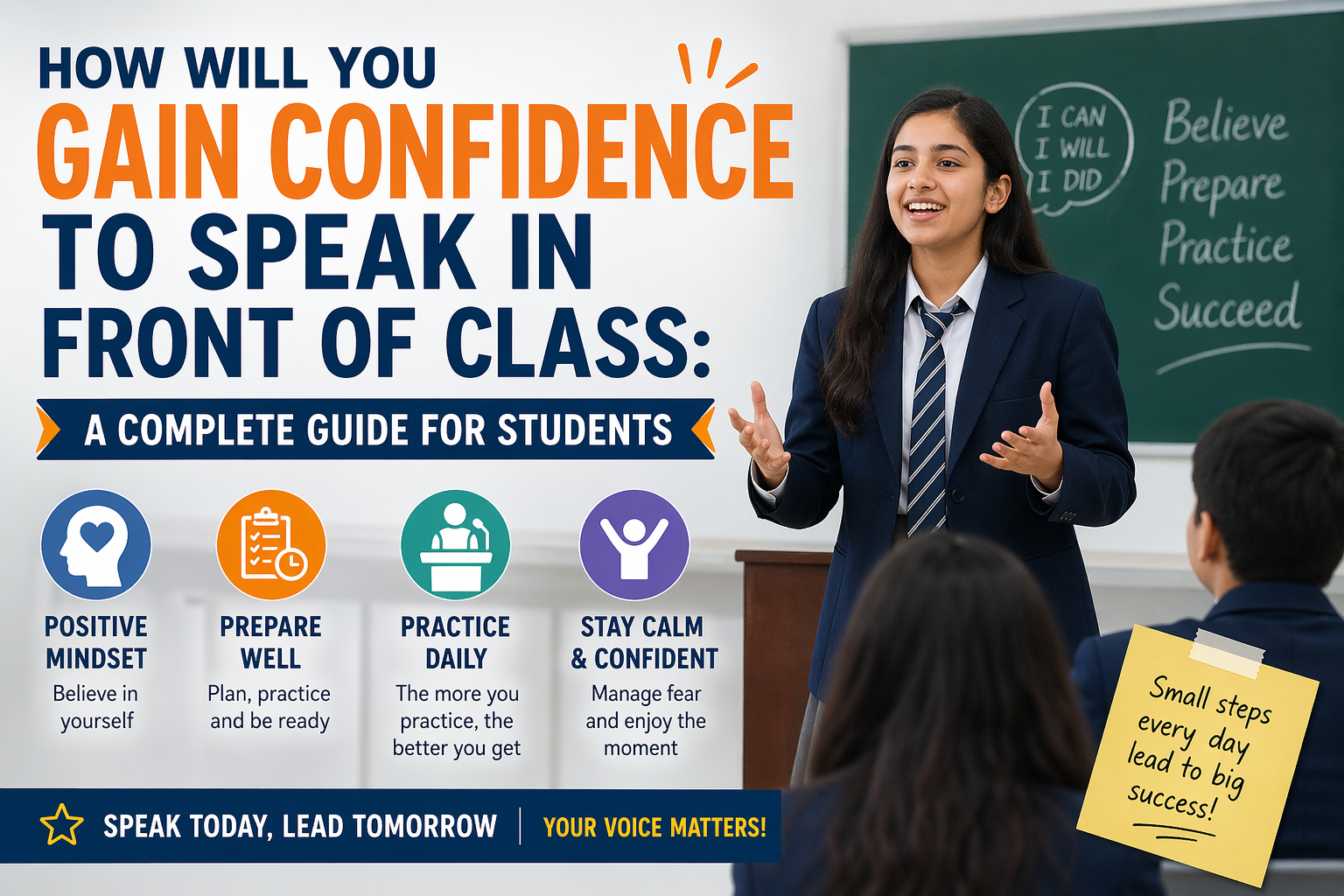
Introduction: Why Speaking in Class Feels So Hard
Standing in front of your class, with all eyes on you, can feel intimidating. Your heart races, your hands may shake, and suddenly even simple sentences seem difficult to say. If you’ve ever felt this way, you’re not alone. Many students struggle with confidence when speaking in front of others.
But here’s the truth: confidence is not something you are born with—it is something you build.
This blog will guide you step by step on how to gain confidence to speak in front of your class. Whether you’re a beginner or someone who gets nervous occasionally, these strategies will help you improve your speaking skills, overcome fear, and express yourself clearly.
Understanding the Fear of Speaking in Class
Before solving the problem, it’s important to understand it.
Fear of speaking in class often comes from:
Fear of making mistakes
Fear of being judged or laughed at
Lack of preparation
Low self-confidence
Overthinking
This fear is completely natural. Your brain sees public speaking as a “risk,” even though it’s not dangerous. The key is to train your mind to feel safe and confident in these situations.
Step 1: Change Your Mindset
Confidence starts in your mind. If you keep thinking, “I can’t do this” or “Everyone will laugh at me,” your fear will increase.
Replace Negative Thoughts with Positive Ones
Instead of saying:
“I’m not good at speaking”
Say:
“I am learning and improving every day”
Instead of:
“I will make mistakes”
Say:
“Mistakes help me grow”
Your mindset shapes your performance. A positive mindset creates confidence.
Step 2: Prepare Well Before Speaking
Preparation is the strongest weapon against fear.
How to Prepare:
Understand your topic clearly
Write key points (don’t memorize everything)
Practice your speech 2–3 times
Use simple and clear language
When you know what you’re going to say, your confidence automatically increases.
Step 3: Practice Speaking Daily
Confidence comes from practice—not from waiting.
Daily Practice Ideas:
Speak in front of a mirror
Record your voice and listen to it
Talk to friends or family in English
Read aloud for 10–15 minutes daily
At first, it may feel awkward. But slowly, your comfort level will grow.
Step 4: Start Small
You don’t need to give a big speech immediately.
Start with:
Answering small questions in class
Speaking one or two lines
Participating in group discussions
Small wins build big confidence. Each time you speak, your fear decreases.
Step 5: Focus on Message, Not Perfection
Many students hesitate because they want to speak perfectly.
But here’s the reality:
👉 No one speaks perfectly all the time.
Instead of focusing on:
Grammar mistakes
Accent
Vocabulary
Focus on:
Your message
Your idea
Your communication
People care more about what you say than how perfectly you say it.
Step 6: Improve Your Body Language
Your body language plays a huge role in confidence.
Tips for Confident Body Language:
Stand straight
Maintain eye contact
Smile slightly
Avoid crossing your arms
Use hand gestures naturally
Even if you don’t feel confident, acting confident will make you feel confident.
Step 7: Control Nervousness
Feeling nervous is normal. Even experienced speakers feel it.
Simple Techniques to Stay Calm:
Take deep breaths before speaking
Pause instead of rushing
Drink water
Start slowly
A calm start leads to a confident speech.
Step 8: Accept and Learn from Mistakes
Mistakes are part of learning.
Instead of thinking:
“I failed”
Think:
“I learned something new”
Every time you speak, you improve. Confidence grows through experience—not perfection.
Step 9: Visualize Your Success
Before speaking, close your eyes and imagine:
You speaking confidently
Your classmates listening
You finishing successfully
Visualization trains your brain for success.
Step 10: Build a Habit of Participation
Confidence is not built in one day. It is built daily.
Make It a Habit:
Speak at least once in every class
Volunteer for presentations
Join activities like debates or group discussions
The more you expose yourself to speaking, the stronger your confidence becomes.
Step 11: Learn from Others
Observe confident speakers in your class or online.
Notice:
How they speak
How they use body language
How they handle mistakes
Learning from others can give you practical ideas to improve.
Step 12: Develop Strong Communication Skills
Confidence and communication go hand in hand.
Improve Your Skills By:
Expanding your vocabulary
Listening to English conversations
Practicing sentence formation
Reading books and articles
The better your communication skills, the more confident you’ll feel.
Step 13: Stop Comparing Yourself to Others
Comparison kills confidence.
Everyone learns at their own pace. Instead of comparing:
Compare yourself to your past version
Ask yourself:
“Am I better than yesterday?”
If yes, you’re on the right path.
Step 14: Celebrate Small Achievements
Every step matters.
Celebrate when you:
Speak one sentence
Answer a question
Complete a presentation
These small achievements motivate you to keep going.
Step 15: Stay Consistent
Confidence is built through consistency.
Even if you feel:
Nervous
Uncomfortable
Unsure
Keep practicing.
Consistency turns fear into confidence.
Real-Life Example: A Student’s Journey
Imagine a student who never spoke in class. They were afraid of making mistakes and being judged.
One day, they decided to:
Speak one line daily
Practice in front of a mirror
Ignore small mistakes
At first, it was difficult. But after a few weeks:
Their fear reduced
Their confidence increased
They started enjoying speaking
This transformation is possible for anyone—including you.
Common Mistakes to Avoid
Avoid these common mistakes:
Waiting to feel “perfect” before speaking
Memorizing everything
Speaking too fast
Avoiding eye contact
Giving up after one bad experience
Remember: growth takes time.
Benefits of Speaking Confidently in Class
When you gain confidence, you will:
Express your ideas clearly
Perform better academically
Build strong communication skills
Develop leadership qualities
Prepare for future opportunities
Confidence in class helps you in life.
Conclusion: Your Confidence Journey Starts Today
Gaining confidence to speak in front of your class is not impossible—it’s a skill you can develop with practice, patience, and the right mindset.
Start small. Stay consistent. Believe in yourself.
You don’t need to be perfect. You just need to begin.
The next time your teacher asks a question, take a deep breath… and speak.
Because every confident speaker was once a nervous beginner.