Introduction
The role of Human Resources
has evolved dramatically in the last decade. HR is no longer limited to
administrative tasks like hiring, payroll, and employee records. In 2026, HR
professionals are expected to be strategic partners who use technology and data
to improve workforce performance, enhance employee experience, and support
business growth.
With the rapid adoption of
digital tools, automation, and artificial intelligence, HR professionals must
develop strong HR tech skills to stay relevant and competitive. Learning these
skills not only improves efficiency but also helps HR teams make smarter
decisions and manage talent more effectively.
Below are the essential HR
tech skills every HR professional should learn in 2026.
Understanding HR Technology Platforms (HRIS &
HRMS)
One of the most important
skills for HR professionals today is the ability to work with HR technology
platforms such as HRIS (Human Resource Information Systems) and HRMS (Human
Resource Management Systems). These systems help organizations manage employee
information, payroll, attendance, recruitment, and performance management in a
centralized digital platform.
HR professionals should
understand how to operate these systems efficiently, analyze employee data, and
generate reports that help management make informed decisions. Familiarity with
HR platforms allows HR teams to streamline operations and reduce manual
workload.
People Analytics and Data Interpretation
Data-driven HR is becoming
the future of human resource management. People analytics helps HR
professionals understand workforce trends, employee performance, retention
rates, and recruitment effectiveness.
In 2026, HR professionals
must learn how to collect, interpret, and use data to support decision-making.
Skills such as analyzing workforce data, identifying patterns, and predicting
employee behavior are becoming highly valuable.
For example, data analytics
can help HR identify why employees leave a company, which departments have the
highest productivity, and which recruitment strategies bring the best
candidates.
AI and Automation in HR
Artificial Intelligence (AI)
is transforming the way HR departments operate. Many organizations now use
AI-powered tools for resume screening, candidate matching, employee engagement
surveys, and HR chatbots.
HR professionals should
understand how AI works and how it can improve HR processes. Learning how to
use AI tools can save time, improve hiring accuracy, and enhance employee
support.
Automation also reduces
repetitive tasks like scheduling interviews, sending onboarding documents, and
responding to employee queries. This allows HR professionals to focus on
strategic tasks like talent development and employee engagement.
Digital Recruitment and Talent Acquisition Tools
Recruitment has become
highly digital in recent years. HR professionals now use online job portals,
recruitment management systems, and social media platforms to attract and hire
talent.
Understanding digital
recruitment tools is essential for modern HR professionals. This includes
skills such as using applicant tracking systems (ATS), managing recruitment
campaigns, screening candidates digitally, and conducting virtual interviews.
Digital recruitment tools
help HR teams find the right candidates faster and improve the overall hiring
experience.
Learning Management Systems (LMS)
Employee training and
development are key responsibilities of HR departments. In 2026, organizations
rely heavily on Learning Management Systems (LMS) to provide online training,
track employee learning progress, and manage corporate training programs.
HR professionals should
learn how to use LMS platforms to design training modules, monitor learning
outcomes, and promote continuous skill development.
By leveraging digital
learning tools, HR can ensure employees remain skilled and ready for future
workplace challenges.
HR Cybersecurity and Data Privacy Awareness
With increasing
digitalization, employee data security has become extremely important. HR
departments handle sensitive information such as employee records, salary
details, and personal data.
HR professionals must
understand cybersecurity basics and data privacy regulations to protect
organizational information. This includes secure data handling, password
protection practices, and awareness of data protection laws.
Ensuring data privacy builds
employee trust and protects organizations from legal and security risks.
Employee Experience Technology
Employee experience has
become a major focus for organizations. HR teams now use digital platforms to
track employee engagement, collect feedback, and improve workplace
satisfaction.
Modern HR tools help conduct
employee surveys, measure engagement levels, and provide insights into employee
well-being. HR professionals should know how to use these tools to create a
positive and productive work environment.
Technology helps HR teams
listen to employees and take proactive steps to improve workplace culture.
Conclusion
The future of HR is closely
connected with technology. In 2026, HR professionals who understand digital
tools, data analytics, and AI-powered platforms will have a significant
advantage in their careers.
Developing HR tech skills
enables professionals to improve recruitment, enhance employee engagement,
streamline HR processes, and support strategic business decisions. As
organizations continue to adopt digital solutions, HR professionals must
continuously upgrade their technical knowledge and stay updated with new HR
technologies.
Investing in HR technology
skills today will not only strengthen HR careers but also help organizations
build a more efficient, innovative, and future-ready workforce.
Skillexcellent
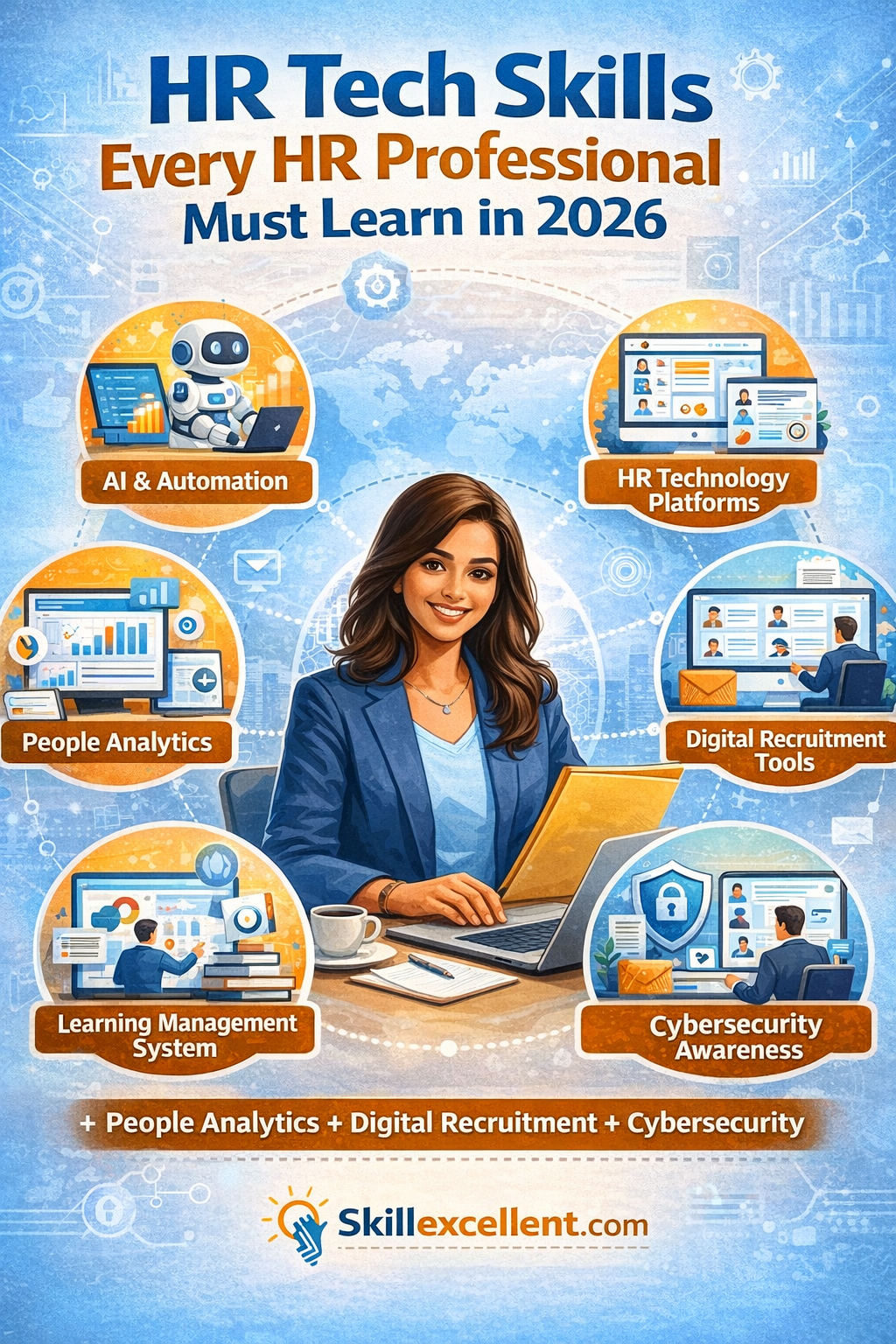
HR Tech Skills Every HR Professional Must Learn in 2026
April 20, 2026
•
5 min read
Key Highlights
With the rapid adoption of digital tools, automation, and artificial intelligence, HR professionals must develop strong HR tech skills to stay relevant and competitive. Learning these skills not only improves efficiency but also helps HR teams make smarter decisions and manage talent more effectively.
Related Topics
#skill development
#HR training course
#manpower
#Recruitment
Enjoyed this article?
Share it with your network and explore more insights!