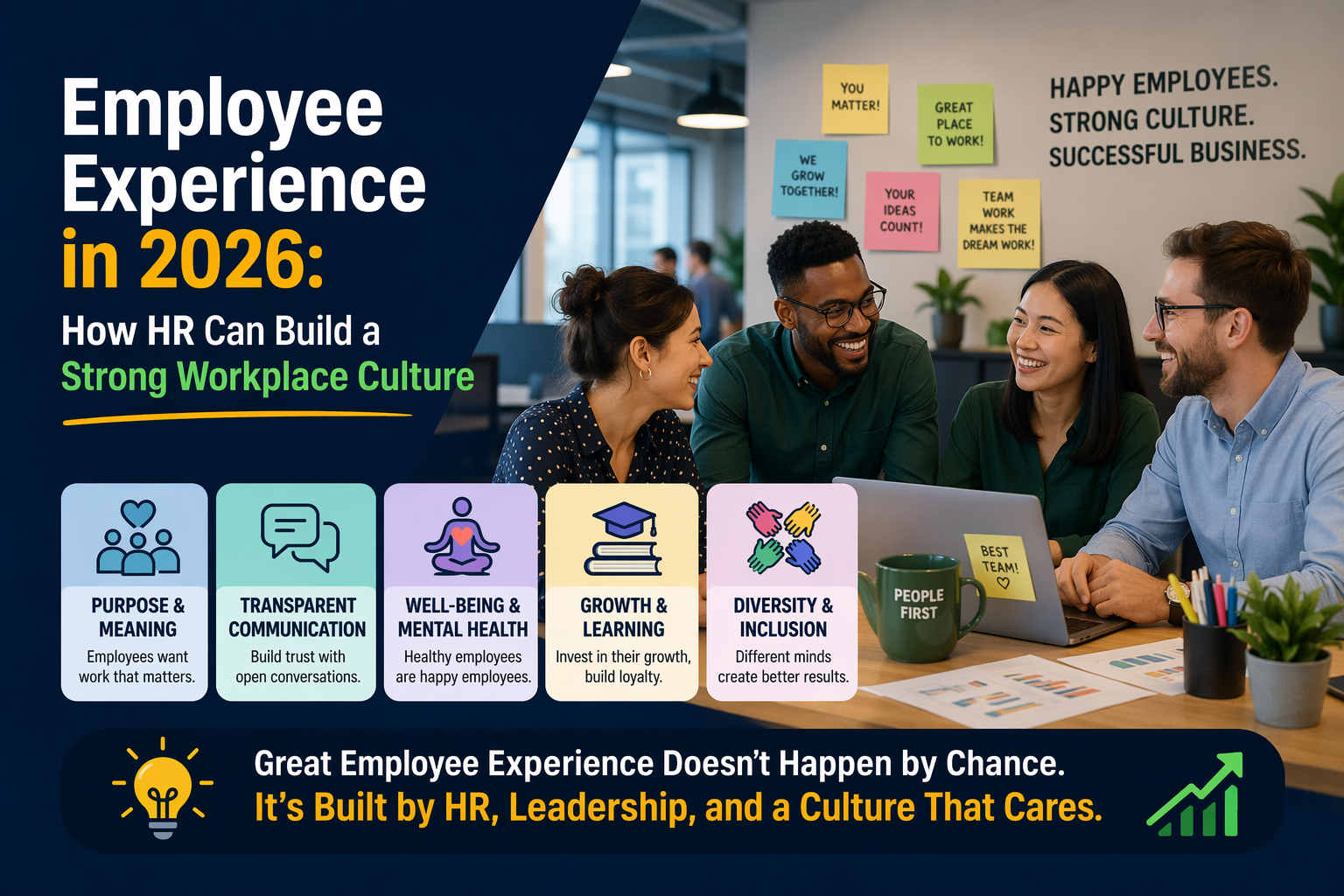
Introduction:
The workplace is evolving faster than ever. By 2026, organizations are no longer judged solely by their products or services—but by how they treat their employees. The concept of Employee Experience (EX) has become a core business strategy, not just an HR buzzword.
Employee experience refers to everything an employee feels, sees, and experiences throughout their journey in a company—from hiring to exit. In today’s competitive world, companies that prioritize EX are outperforming others in productivity, retention, and employer branding.
So, how can HR professionals build a strong workplace culture in 2026?
In this blog, we’ll explore:
What employee experience really means
Why it matters more than ever
Key HR strategies to improve EX
Future trends shaping workplace culture
- What is Employee Experience (EX)?
Employee Experience (EX) is the sum of all interactions an employee has with an organization. It includes:
Work environment
Company culture
Technology and tools
Leadership style
Growth opportunities
In simple terms, EX answers one question:
👉 “How does it feel to work here?”
Why Employee Experience Matters in 2026?
1. Talent is More Selective Than Ever
In 2026, employees are not just looking for jobs—they are looking for meaningful work, flexibility, and growth. A poor experience can lead to quick resignations.
2. High Competition for Skilled Professionals
Top talent has multiple options. Companies with better employee experience attract and retain the best people.
3. Direct Impact on Productivity
Happy employees are more engaged, creative, and productive.
4. Employer Branding is Everything
Platforms like LinkedIn and Glassdoor make workplace culture highly visible. A strong EX builds a positive brand image.
Key Elements of a Strong Workplace Culture:
To build a powerful employee experience, HR must focus on these core pillars:
1. Purpose-Driven Work Culture
Employees want to feel that their work matters.
HR Strategy:
Clearly communicate company vision and mission
Align employee roles with business goals
Recognize contributions regularly
- 2. Transparent Communication
Lack of communication leads to confusion and distrust.
HR Strategy:
Encourage open feedback
Conduct regular team meetings
Use internal communication tools effectively
- 3. Employee Well-being & Mental Health
Mental health is a top priority in 2026.
HR Strategy:
Offer wellness programs
Provide flexible working hours
Encourage work-life balance
- 4. Growth & Learning Opportunities
Employees stay longer where they grow.
HR Strategy:
Provide training and upskilling programs
Create clear career paths
Encourage continuous learning
- 5. Inclusive & Diverse Culture
Diversity drives innovation.
HR Strategy:
Promote equal opportunities
Build inclusive policies
Conduct bias-awareness training
- Top HR Strategies to Improve Employee Experience in 2026
1. Personalization of Employee Experience
Just like customer experience, employee experience should be personalized.
Example:
Flexible work options based on individual needs
Customized learning paths
- 2. Use of HR Technology
Technology plays a huge role in improving EX.
Tools HR Should Use:
HRMS systems
AI-based recruitment tools
Employee feedback platforms
Benefit:
Automation reduces manual work and improves efficiency.
3. Focus on Employee Journey Mapping
HR should map every stage of the employee journey:
Recruitment
Onboarding
Development
Retention
Exit
Why it matters:
It helps identify pain points and improve experiences at every stage.
4. Strong Onboarding Process
First impressions matter.
Best Practices:
Smooth onboarding experience
Clear role expectations
Mentorship programs
- 5. Continuous Feedback Culture
Annual reviews are outdated.
HR Strategy:
Real-time feedback
Regular check-ins
Employee surveys
- 6. Recognition & Rewards System
Recognition boosts motivation.
Ideas:
Employee of the month
Peer recognition programs
Performance-based rewards
- 7. Flexible Work Models
Remote and hybrid work are the new normal.
HR Must:
Provide remote-friendly policies
Ensure work-life balance
Use collaboration tools effectively
- Role of Leadership in Employee Experience:
HR alone cannot build a strong culture—leaders play a key role.
What Leaders Must Do:
Lead by example
Show empathy
Support employee growth
Build trust
👉 A good leader can transform the entire workplace experience.
Challenges HR Will Face in 2026:
1. Managing Remote Teams
Maintaining culture in remote setups is difficult.
2. Balancing Technology & Human Touch
Too much automation can reduce personal connection.
3. Employee Burnout
High expectations can lead to stress and burnout.
4. Retention Issues
Employees are switching jobs faster than ever.
Future Trends in Employee Experience (2026 & Beyond):
1. AI-Powered HR
AI will help in:
Recruitment
Performance tracking
Employee engagement
- 2. Hyper-Personalized Workplaces
Companies will tailor experiences for each employee.
3. Focus on Emotional Intelligence (EQ)
Soft skills will become more important than technical skills.
4. Work-Life Integration (Not Just Balance)
Employees will integrate work into their lifestyle.
5. Experience-Driven Organizations
Companies will compete based on employee experience, not just salary.
How to Measure Employee Experience:
HR must track EX using:
Employee Engagement Surveys
eNPS (Employee Net Promoter Score)
Retention Rate
Absenteeism Rate
Productivity Metrics
👉 What gets measured gets improved.
Best Practices for HR Professionals
Always listen to employees
Stay updated with HR trends
Focus on long-term culture building
Use data to make decisions
Be proactive, not reactive
- Conclusion:
Employee experience is no longer optional—it is essential.
In 2026, organizations that focus on building a strong workplace culture will:
Attract top talent
Improve employee satisfaction
Increase productivity
Build a strong employer brand
HR professionals must evolve from traditional roles to experience designers.
👉 The future of HR is not just about managing people—it’s about creating meaningful experiences.