1. Introduction
The world of Human Resources (HR) is evolving faster than ever before. Gone are the days when HR was limited to hiring, payroll, and administrative tasks. In 2026, HR has transformed into a strategic, technology-driven function that plays a crucial role in shaping business success.
Organizations today expect HR professionals to contribute directly to growth, innovation, and employee satisfaction. With the rise of digital transformation, artificial intelligence (AI), and hybrid work environments, HR roles have become more dynamic and impactful.
👉 Hook: HR is no longer just about hiring—it’s about driving business growth.
To stay relevant and competitive in this rapidly changing landscape, HR professionals must continuously upgrade their skills. Those who fail to adapt risk falling behind in an increasingly competitive job market.
2. The Changing Landscape of HR in 2026
🔹 Digital Transformation in HR
Digital transformation has revolutionized HR processes. From recruitment to employee engagement, technology is now deeply embedded in every HR function. Cloud-based platforms and digital tools have streamlined operations, improved efficiency, and enhanced decision-making.
🔹 Rise of AI and Automation
Artificial Intelligence is no longer a futuristic concept—it is now a core part of HR. AI is used for resume screening, candidate matching, employee engagement analysis, and even predictive workforce planning.
Automation has reduced repetitive tasks like payroll processing, onboarding workflows, and attendance tracking, allowing HR professionals to focus on strategic initiatives.
🔹 Data-Driven Decision Making
Modern HR relies heavily on data. HR professionals now use analytics to measure employee performance, engagement, retention rates, and productivity. Decisions are no longer based on intuition—they are backed by real-time data insights.
🔹 Remote and Hybrid Workforce
The rise of remote and hybrid work models has reshaped workplace dynamics. HR professionals must now manage distributed teams, ensure collaboration, and maintain company culture across different locations.
3. Why Upskilling is Crucial for HR Professionals
🔸 Rapid Changes in Job Requirements
HR job roles are evolving continuously. Skills that were relevant five years ago may no longer be sufficient today.
🔸 Increasing Competition
The HR job market is becoming highly competitive. Employers prefer candidates who possess modern, tech-driven skills.
🔸 Aligning HR with Business Goals
HR is now expected to contribute to organizational growth. Professionals must understand business strategies and align HR initiatives accordingly.
🔸 Continuous Learning is a Necessity
In 2026, learning is not optional—it’s essential. Upskilling ensures career growth, adaptability, and long-term success.
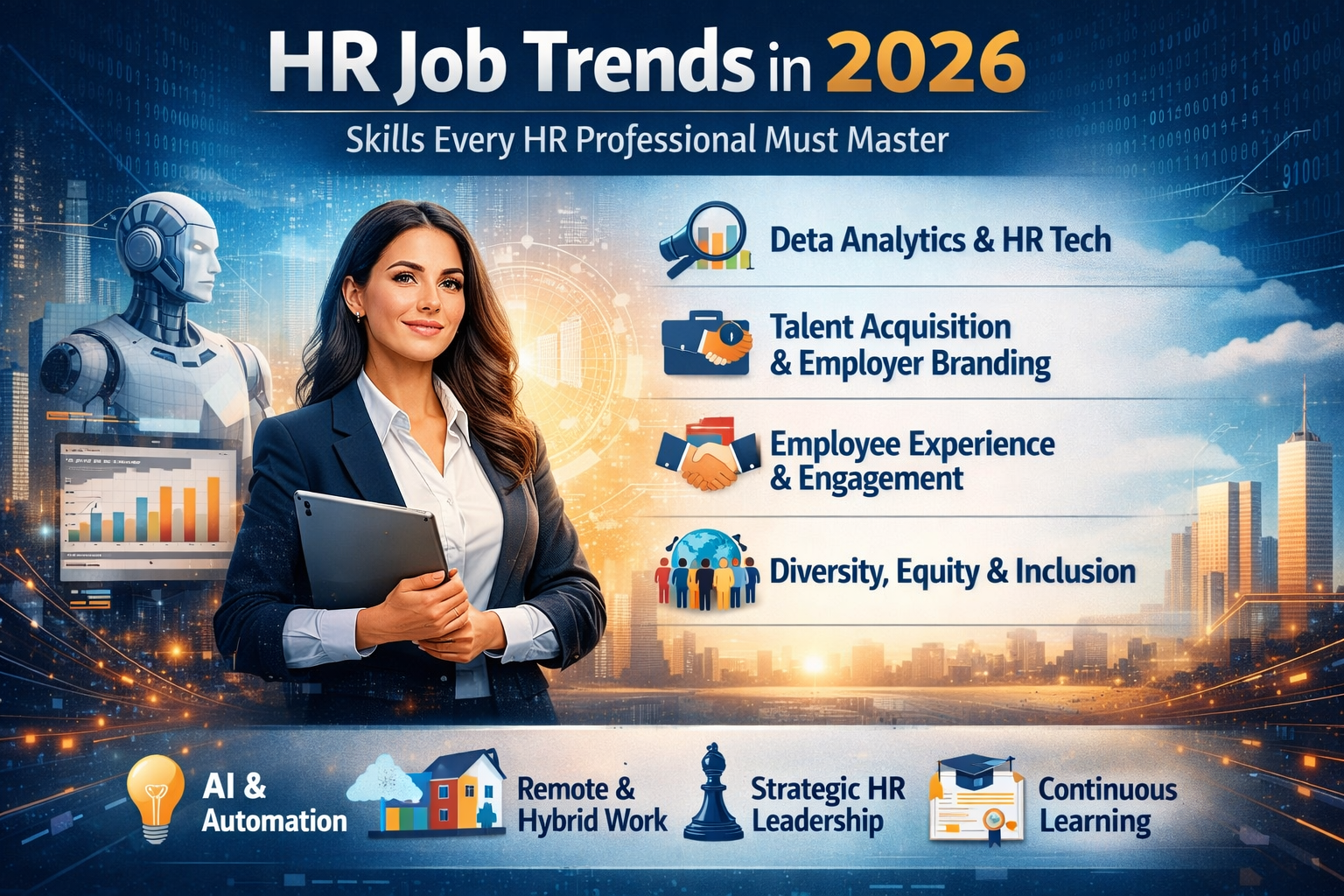
4. Top Skills Every HR Professional Must Master in 2026
a. Data Analytics & HR Metrics
Data is the backbone of modern HR.
Understanding key metrics like employee turnover, retention rates, and engagement levels
Using data to improve hiring and employee performance
Learning HR analytics tools and dashboards
👉 HR professionals who can interpret data effectively will have a significant advantage.
b. AI & HR Technology Proficiency
Technology is reshaping HR functions.
Familiarity with AI-powered recruitment tools
Automation of onboarding, payroll, and performance management
Knowledge of HR software like ATS (Applicant Tracking Systems) and HRMS
👉 Being tech-savvy is no longer optional—it’s mandatory.
c. Talent Acquisition & Employer Branding
Hiring has become more strategic.
Implementing modern recruitment strategies
Building a strong employer brand
Using social media platforms like LinkedIn for hiring
👉 Companies are competing for top talent, and employer branding plays a key role in attracting the best candidates.
d. Employee Experience & Engagement
Employee satisfaction is a top priority.
Creating a positive and inclusive workplace culture
Measuring employee engagement through surveys and feedback
Implementing retention strategies
👉 Happy employees lead to higher productivity and better business outcomes.
e. Communication & Interpersonal Skills
HR is all about people.
Effective communication with diverse teams
Conflict resolution and problem-solving
Active listening and empathy
👉 Strong interpersonal skills help build trust and improve workplace relationships.
f. Strategic Thinking & Business Acumen
HR must align with business goals.
Understanding organizational strategies
Workforce planning and talent management
Making data-driven decisions
👉 HR professionals are now strategic partners, not just support functions.
g. Adaptability & Change Management
Change is constant in today’s workplace.
Managing organizational changes effectively
Supporting employees during transitions
Being flexible in dynamic environments
👉 Adaptability is one of the most critical skills in 2026.
h. Diversity, Equity & Inclusion (DEI) Awareness
Workplaces are becoming more diverse.
Promoting inclusive hiring practices
Eliminating bias in recruitment and promotions
Building a culture of equality and respect
👉 DEI is not just a trend—it’s a necessity for modern organizations.
5. Emerging HR Roles in 2026
As HR evolves, new roles are emerging:
HR Data Analyst – Focuses on analyzing workforce data
People Experience Manager – Enhances employee satisfaction
HR Tech Specialist – Manages HR technologies and tools
Learning & Development Strategist – Designs training programs
👉 These roles highlight the shift of HR towards specialization and technology.
6. Tools & Platforms HR Professionals Should Learn
To stay competitive, HR professionals must be familiar with:
Applicant Tracking Systems (ATS)
HRMS (Human Resource Management Systems)
Employee engagement tools
AI-based recruitment platforms
👉 Knowledge of these tools increases efficiency and improves decision-making.
7. How to Develop These Skills
📚 Online Courses & Certifications
Platforms like Coursera, LinkedIn Learning, and Udemy offer HR-related courses.
🎓 Workshops & Webinars
Participating in industry events helps stay updated with trends.
💼 Practical Experience
Internships and real-world projects provide hands-on learning.
🤝 Networking
Connecting with HR professionals helps gain insights and opportunities.
8. Benefits of Mastering These Skills
🚀 Better Career Opportunities
Skilled HR professionals are in high demand.
💰 Higher Salary Potential
Advanced skills lead to better compensation.
🔒 Job Security
Upskilling ensures long-term career stability.
📈 Organizational Impact
HR professionals can directly contribute to business growth.
9. Future Outlook: What’s Next for HR?
The future of HR looks promising and exciting.
Increased integration of AI and automation
Greater focus on employee well-being and mental health
HR becoming a core driver of business strategy
👉 HR professionals will play a key role in shaping the future of work.
10. Conclusion
The HR landscape in 2026 is dynamic, technology-driven, and highly strategic. To stay relevant, HR professionals must continuously upgrade their skills and adapt to new trends.
From data analytics and AI proficiency to communication and strategic thinking, mastering these skills is essential for success in modern HR roles.
👉 Final CTA:
Start upgrading your HR skills today to stay ahead in 2026 and beyond.