1. Introduction
Have you ever felt nervous while speaking English? Maybe your mind goes blank, your heart beats faster, and suddenly even simple words become difficult. You’re not alone. Millions of people around the world face this exact challenge.
English is no longer just a language—it’s a global skill. Whether it’s for career growth, education, business, or daily communication, English fluency opens doors to countless opportunities. From job interviews to social interactions, confident English speaking can completely transform your life.
The good news? You don’t need years to become confident. With the right strategy, mindset, and consistency, you can achieve noticeable improvement in just 30 days.
This blog will guide you step-by-step from hesitation to fluency with a practical and proven roadmap.
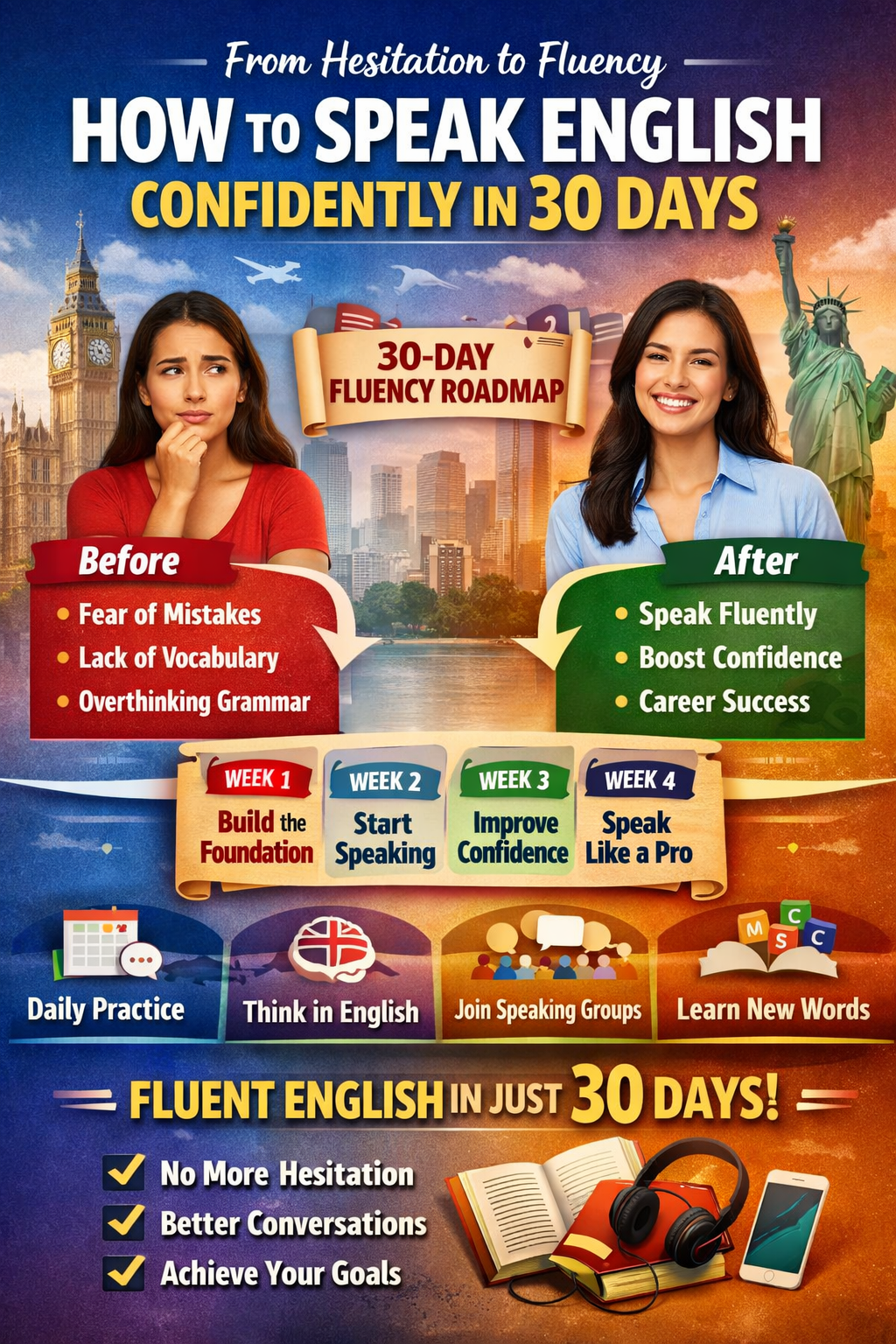
2. Why Do People Hesitate to Speak English?
Before solving the problem, it’s important to understand the root causes.
1. Fear of Making Mistakes
Most learners hesitate because they fear being judged. They think, “What if I say something wrong?” But mistakes are a natural part of learning.
2. Lack of Vocabulary
When you don’t have enough words, expressing thoughts becomes difficult. This leads to pauses, confusion, and loss of confidence.
3. Overthinking Grammar Rules
Many people believe they must speak perfect English. This leads to overthinking every sentence, which kills fluency.
4. No Speaking Environment
If you don’t have people around you to practice English, it becomes harder to improve.
👉 The truth is: Fluency doesn’t come from perfection—it comes from practice.
3. The 30-Day Fluency Roadmap (Overview)
To make your journey simple and effective, we’ll divide it into 4 weeks:
Week 1: Build the Foundation
Week 2: Start Speaking Without Fear
Week 3: Improve Fluency & Confidence
Week 4: Speak Like a Pro
Key Principle
👉 Focus on consistency over perfection
Even 30–60 minutes daily can create massive improvement if done consistently.
4. Week 1: Build the Foundation
This week is all about building basic confidence and familiarity.
1. Learn Basic Vocabulary and Phrases
Start with commonly used words and daily expressions like:
How are you?
What are you doing?
I agree / I disagree
2. Practice Simple Sentences
Don’t aim for complex grammar. Start small:
I am going to school
I like coffee
She is my friend
3. Start Thinking in English
This is a game-changer. Instead of thinking in your native language and translating, try thinking directly in English:
“I am hungry”
“I need to study”
4. Listen to English Daily
Watch videos, podcasts, or shows. Focus on:
Pronunciation
Sentence structure
Tone
👉 Even if you don’t understand everything, your brain is learning.
5. Week 2: Start Speaking Without Fear
Now it’s time to break the biggest barrier—speaking fear.
1. Practice in Front of a Mirror
Talk to yourself daily:
Introduce yourself
Describe your day
Share your thoughts
This builds confidence and reduces hesitation.
2. Record Your Voice
Listen to your recordings and identify:
Pronunciation mistakes
Pauses
Confidence level
3. Learn Daily Conversations
Practice real-life situations:
Ordering food
Asking directions
Talking to friends
4. Stop Worrying About Grammar
Focus on communication, not perfection.
👉 “I go yesterday” is okay if your message is clear.
6. Week 3: Improve Fluency & Confidence
By now, you should feel slightly comfortable. Let’s level up.
1. Join Conversation Groups
Practice with:
Friends
Online communities
Language partners
2. Practice Real-Life Scenarios
Simulate situations like:
Job interviews
Meetings
Introductions
3. Learn Connectors
Use words like:
And
But
Because
However
Example:
I was tired but I still worked
4. Increase Speaking Time
Push yourself to speak 30–60 minutes daily.
👉 Fluency improves with volume.
7. Week 4: Speak Like a Pro
Now it’s time to polish your skills.
1. Focus on Pronunciation
Work on:
Clear sounds
Word stress
Sentence rhythm
2. Learn Idioms and Expressions
Examples:
Break the ice
Piece of cake
Hit the nail on the head
These make your English sound natural.
3. Practice Storytelling
Talk about:
Your experiences
Your day
Your opinions
4. Simulate Professional Conversations
Practice:
Interviews
Presentations
Business communication
8. Daily Habits to Boost English Speaking
Consistency is everything. Follow these daily habits:
1. Think in English (10–15 Minutes)
Train your brain to process English naturally.
2. Speak Daily (15–30 Minutes)
Even if it’s just with yourself.
3. Learn 5–10 New Words
Use them in sentences immediately.
4. Watch English Content
Use subtitles to understand better.
9. Common Mistakes to Avoid
Avoid these mistakes if you want faster progress:
❌ Translating from Your Native Language
It slows down your thinking.
❌ Fear of Making Mistakes
Mistakes = Learning.
❌ Focusing Too Much on Grammar
Fluency first, perfection later.
❌ Lack of Consistency
Skipping practice kills momentum.
10. Tools & Resources to Accelerate Learning
Here are some powerful tools:
Language Learning Apps
Duolingo
HelloTalk
Cambly
YouTube Channels & Podcasts
English speaking practice channels
Daily conversation videos
Speaking Partners
Find people online or offline to practice with.
AI Tools
Use AI for:
Conversation practice
Grammar correction
Vocabulary building
11. How to Stay Motivated for 30 Days
Staying motivated is the real challenge.
1. Set Small Goals
Example:
“Today I will speak for 15 minutes”
2. Track Progress
Keep a journal or checklist.
3. Reward Yourself
Completed 7 days? Treat yourself.
4. Stay Positive
Progress may feel slow, but it’s happening.
12. Expected Results After 30 Days
If you follow this plan consistently, you will notice:
✅ Improved confidence
✅ Better sentence formation
✅ Reduced hesitation
✅ Ability to handle basic conversations
You may not become perfect—but you will definitely become fearless.
13. Conclusion
Fluency is not about speaking perfect English—it’s about speaking confidently.
The biggest difference between fluent and non-fluent speakers is not knowledge—it’s practice and mindset.
👉 Start today
👉 Speak daily
👉 Don’t fear mistakes
Remember:
“You don’t need perfect English to speak confidently. You just need the courage to start.”