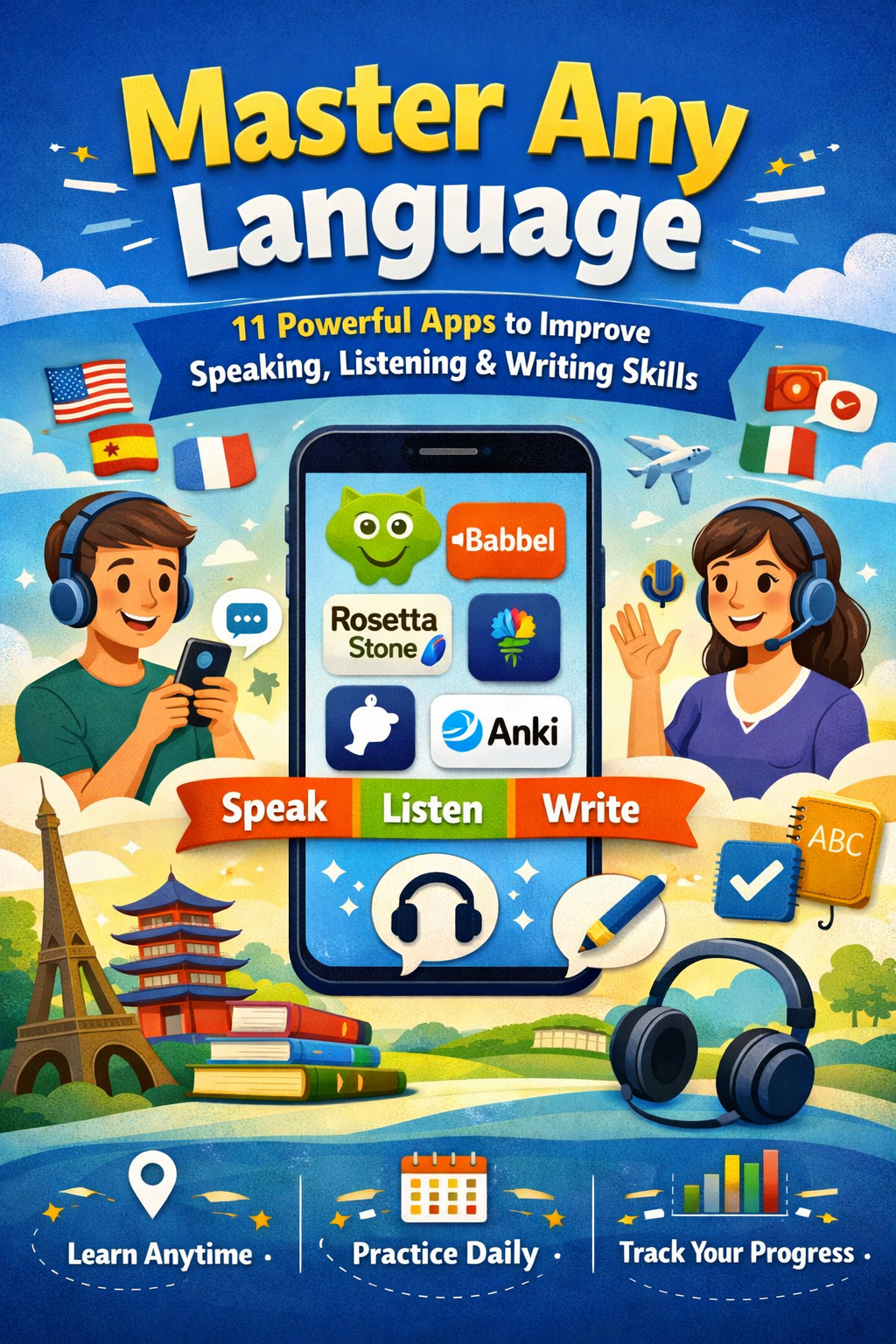
Introduction:
In today’s
hyper-connected world, learning a new language is no longer just a hobby—it’s a
powerful life skill. Whether you want to study abroad, travel the world, grow
your career, or connect with people from different cultures, language learning
opens doors you didn’t even know existed.
With globalization
accelerating and remote work becoming the norm, being multilingual is a huge
advantage. Companies are actively seeking individuals who can communicate
across borders. But despite the benefits, many learners struggle with common
challenges like:
- Lack of speaking fluency
- Poor listening comprehension
- Difficulty in writing accurately
- Fear of making mistakes
The good news?
Technology has completely transformed how we learn languages. Thanks to mobile
apps, language learning is now आसान (easy), flexible, engaging, and accessible to
anyone with a smartphone.
In this comprehensive
guide, you’ll discover:
- Why language learning apps are so
effective - Key features to look for in the
best apps - 11 powerful apps to improve
speaking, listening, and writing skills - Practical tips to learn faster and
avoid common mistakes
Let’s dive in 🚀
Why Use Apps for
Language Learning?
Learn Anytime, Anywhere
Gone are the days when
you needed to attend physical classes. With language learning apps, you can
practice while traveling, during breaks, or even before sleeping.
Interactive &
Engaging Learning
Modern apps use
gamification, AI, and voice recognition to make learning fun. Instead of boring
textbooks, you get:
- Quizzes
- Games
- Speaking exercises
- Real-time feedback
Personalized Learning
Paths
Most apps adapt to your
level and pace. Whether you’re a beginner or advanced learner, you get
customized lessons tailored to your needs.
Faster Progress
Compared to traditional
methods, apps provide:
- Instant corrections
- Daily practice reminders
- Continuous exposure
This leads to faster
improvement in speaking, listening, and writing skills.
Key Features to Look
for in a Language Learning App:
Before choosing an app,
make sure it includes these essential features:
1. Speech Recognition
Helps you improve
pronunciation by giving real-time feedback.
2. Native Speaker Audio
Listening to native
speakers enhances your accent and comprehension.
3. Writing Practice
& Corrections
Look for apps that
allow writing exercises with feedback.
4. Progress Tracking
Analytics help you stay
motivated and track improvement.
5. Community
Interaction
Apps with native
speakers or live conversations boost confidence.
11 Powerful Apps to
Master Any Language:
Here are the best
language learning apps to improve speaking, listening, and writing skills:
1 Duolingo:
One of the most popular
language learning apps worldwide, Duolingo makes learning fun through gamified
lessons.
Key Features:
- Bite-sized lessons
- Streak-based motivation
- Vocabulary & sentence structure
focus
Best For: Beginners who want to build a daily habit.
2 Babbel:
Babbel focuses on
real-life conversations, making it ideal for practical language use.
Key Features:
- Dialogue-based learning
- Strong grammar explanations
- Speaking-focused exercises
Best For: Learners who want real-world communication skills.
3 Rosetta Stone:
Known for its immersive
approach, Rosetta Stone teaches without translation.
Key Features:
- Full immersion method
- Native pronunciation training
- Listening-focused exercises
Best For: Serious learners aiming for fluency.
4 HelloTalk:
HelloTalk connects you
with native speakers worldwide.
Key Features:
- Text, voice, and video chat
- Language correction tools
- Cultural exchange
Best For: Real conversation practice.
5 Tandem:
Tandem offers
one-on-one conversations with language partners.
Key Features:
- Voice & video calls
- Personalized conversations
- Native speaker interaction
Best For: Improving speaking confidence.
6 Memrise:
Memrise uses real-life
videos of native speakers.
Key Features:
- Video-based learning
- Vocabulary building
- Fun interface
Best For: Listening and vocabulary.
7 Busuu:
Busuu offers structured
lessons with community feedback.
Key Features:
- Writing exercises
- Native speaker corrections
- Certificates
Best For: Writing and structured learning.
8 Elsa Speak:
Elsa Speak uses AI to
improve pronunciation.
Key Features:
- Accent training
- Real-time feedback
- Speech analysis
Best For: English pronunciation improvement.
9 Anki:
Anki uses a powerful
spaced repetition system (SRS).
Key Features:
- Long-term memory retention
- Custom flashcards
- Efficient vocabulary learning
Best For: Vocabulary mastery.
10 LingQ:
LingQ focuses on
learning through real content.
Key Features:
- Podcasts & articles
- Reading + listening combo
- Context-based learning
Best For: Intermediate and advanced learners.
11 Pimsleur:
Pimsleur is
audio-focused and ideal for learning on the go.
Key Features:
- Listening-based learning
- Speaking repetition
- No screen needed
Best For: Busy learners and commuters.
How to Use These Apps
Effectively:
Using apps alone isn’t
enough—you need the right strategy.
Set Daily Goals
Practice at least 15–30
minutes every day. Consistency beats intensity.
Combine Multiple Apps
Use:
- One for vocabulary (Anki)
- One for speaking (HelloTalk/Tandem)
- One for structure (Babbel/Busuu)
Practice Speaking Daily
Even if you’re a
beginner, start speaking from day one.
Track Your Progress
Use app analytics to
stay motivated and measure growth.
Common Mistakes to
Avoid:
1. Using Only One App
No single app covers
everything.
2. Ignoring Speaking
Practice
Fluency comes from
speaking, not just reading.
3. Inconsistency
Skipping days slows
down progress.
4. Not Applying in Real
Life
Use your language in
real conversations.
Tips to Master
Speaking, Listening & Writing Faster:
Speak from Day One
Don’t wait to be
perfect—start immediately.
Listen Daily
Watch movies, listen to
podcasts, and consume content in your target language.
Write Every Day
Practice:
- Journals
- Notes
- Messages
Think in the Language
Train your brain to
process thoughts directly in the new language.
Conclusion:
Learning a new language
doesn’t have to be difficult anymore. With the right tools and strategy, anyone
can become fluent.
Apps like Duolingo, Babbel,
and HelloTalk have made language learning आसान, flexible, and highly effective.
But remember—apps are
just tools. Real success comes from:
- Consistent practice
- Real conversations
- Daily exposure
Final Thought:
Fluency is not a destination—it’s a journey. Keep learning, keep practicing,
and most importantly, enjoy the process