Introduction:
In today’s fast-paced and highly competitive business environment, simply “doing your job” is no longer enough. Organizations are no longer satisfied with employees who just complete tasks—they are actively seeking individuals who can think strategically, contribute ideas, and drive measurable impact. This shift has given rise to the concept of strategic contribution, a key driver of modern business growth.
Strategic contribution refers to the ability of individuals to go beyond routine execution and actively participate in shaping outcomes that align with organizational goals. It is about adding value, not just completing assignments.
Traditionally, roles were task-based. Employees were expected to follow instructions, complete predefined responsibilities, and stick to their job descriptions. However, with the rise of digital transformation, globalization, and rapidly changing market dynamics, businesses now demand more—they demand thinking, innovation, and ownership.
Today, success is no longer defined by how much work you do, but by how much impact you create. This is why strategic contribution matters more than ever in business growth.
What is Strategic Contribution?
Simple Definition
Strategic contribution can be defined as:
The ability to align your work with business goals, contribute ideas, and make decisions that drive long-term value.
It involves thinking beyond immediate tasks and focusing on outcomes that matter to the organization.
Operational Work vs Strategic Contribution
Aspect Operational Work Strategic Contribution
Focus Tasks Outcomes
Approach Reactive Proactive
Thinking Short-term Long-term
Value Execution Impact
Role Follower Contributor
Example:
• Operational: Running a marketing campaign
• Strategic: Designing a campaign that improves customer retention and ROI
Examples Across Departments
Marketing
• Operational: Posting content on social media
• Strategic: Analyzing customer behavior and creating targeted campaigns
HR
• Operational: Hiring employees
• Strategic: Building a culture that improves retention and productivity
Finance
• Operational: Managing accounts
• Strategic: Forecasting financial risks and optimizing investments
IT
• Operational: Maintaining systems
• Strategic: Driving digital transformation initiatives
The Changing Business Landscape:
1 Rise of Digital Transformation
Businesses today are powered by technology. Automation, AI, and data analytics have transformed how companies operate. Routine tasks are increasingly being automated, leaving humans to focus on strategic thinking and decision-making.
2 Increased Competition
Markets are more competitive than ever. Companies are not just competing locally but globally. To survive, businesses must continuously innovate and improve, which requires strategic contribution from every employee.
3 Faster Decision Cycles
Decisions that once took weeks now need to be made in hours. Organizations require employees who can:
• Analyze situations quickly
• Provide insights
• Take calculated risks
4 Agility and Innovation
Modern businesses thrive on agility—the ability to adapt quickly. Strategic contributors help organizations:
• Respond to change faster
• Identify new opportunities
• Stay ahead of competitors
5 Shift from Routine Work to Strategic Thinking
Today, businesses prioritize:
• Problem-solving over task completion
• Innovation over repetition
• Value creation over activity
Key Reasons Why Strategic Contribution Matters:
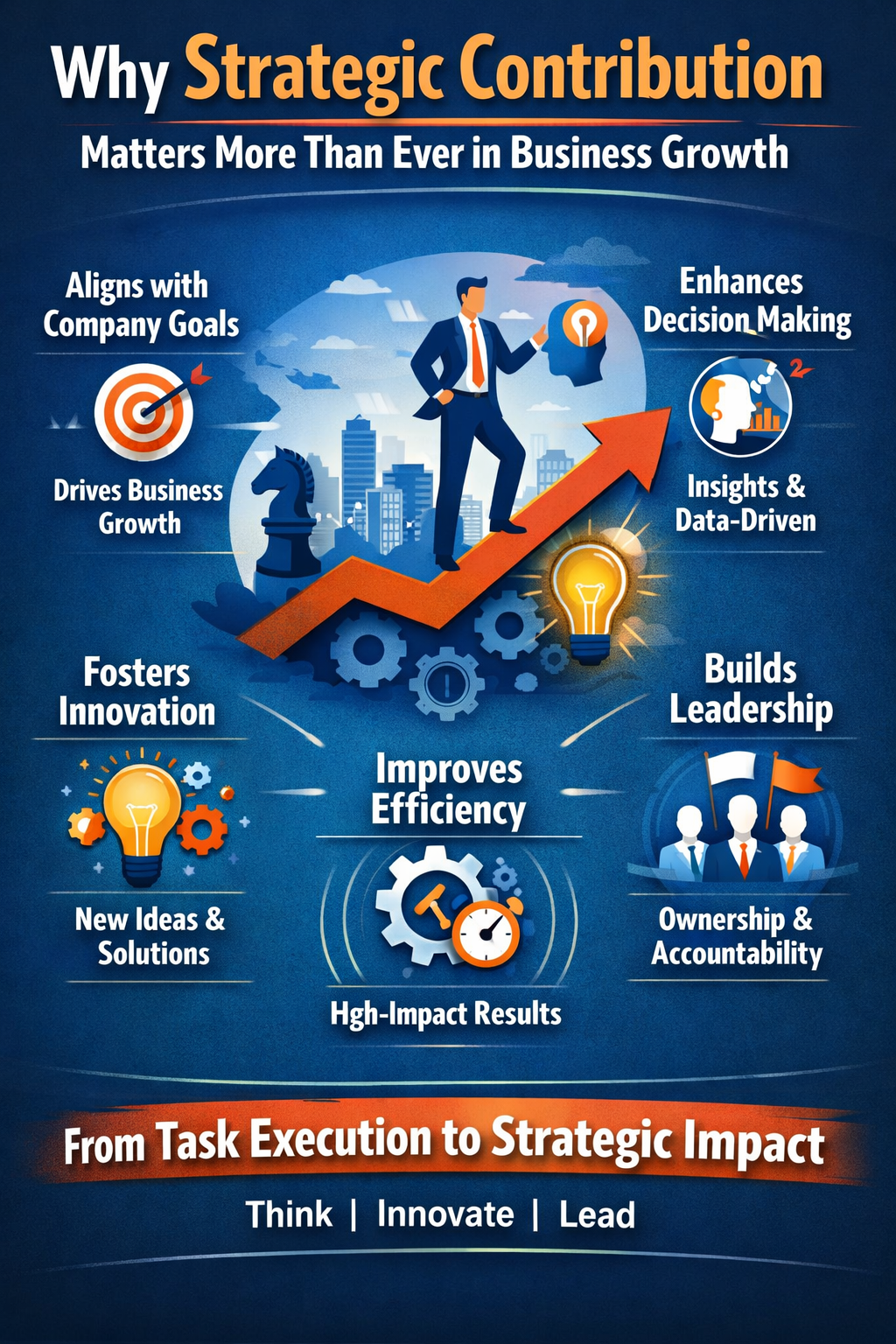
1 Drives Business Growth
Strategic contribution directly impacts business growth by aligning individual efforts with company objectives.
• Employees focus on high-impact activities
• Better alignment leads to improved ROI
• Long-term strategies ensure sustainable growth
When employees understand the “why” behind their work, they contribute more effectively.
2 Enhances Decision-Making
Organizations benefit when employees contribute ideas instead of just executing instructions.
• Encourages data-driven decisions
• Promotes proactive problem-solving
• Reduces dependency on top-level management
Strategic contributors act as decision enablers, not just executors.
3 Encourages Innovation
Innovation is the backbone of business success.
Strategic contribution:
• Brings fresh perspectives
• Encourages creative thinking
• Solves problems in new ways
Companies that foster strategic thinking are more likely to innovate and lead the market.
4 Builds Leadership at Every Level
Leadership is no longer limited to managers.
Strategic contribution helps:
• Employees think like leaders
• Take ownership of outcomes
• Develop accountability
This creates a culture where everyone contributes to success.
5 Improves Organizational Efficiency
Strategic thinking eliminates unnecessary work.
• Focus on high-impact tasks
• Reduces wasted time and resources
• Improves productivity
Efficiency is not about doing more—it’s about doing what matters most.
Strategic Contribution in Different Roles:
Marketing
Strategic marketers:
• Analyze customer behavior
• Design targeted campaigns
• Optimize conversion rates
They focus on results, not just reach.
HR
Strategic HR professionals:
• Plan workforce needs
• Build strong company culture
• Improve employee engagement
They align people strategy with business goals.
Finance
Strategic finance teams:
• Forecast future trends
• Manage risks
• Optimize investments
They help organizations make smarter financial decisions.
IT
Strategic IT professionals:
• Drive digital transformation
• Implement scalable solutions
• Enhance cybersecurity
They enable innovation through technology.
Skills Required for Strategic Contribution:
To become a strategic contributor, individuals need to develop key skills:
1 Critical Thinking
Ability to analyze situations and make informed decisions.
2 Business Understanding
Knowledge of how the organization operates and generates revenue.
3 Data Analysis
Using data to derive insights and support decisions.
4 Communication & Collaboration
Sharing ideas clearly and working across teams.
5 Problem-Solving Mindset
Focusing on solutions rather than problems.
How Individuals Can Become Strategic Contributors:
1 Understand Company Goals
Know:
• What the company wants to achieve
• How your role contributes
Alignment is the foundation of strategic contribution.
2 Think Beyond Job Descriptions
Don’t limit yourself to assigned tasks.
Ask:
• How can I add more value?
• What can be improved?
3 Focus on Outcomes
Shift mindset from:
• “What do I need to do?”
to
• “What result should I achieve?”
4 Upskill Continuously
Learn:
• New technologies
• Industry trends
• Business strategies
Continuous learning is essential.
5 Take Initiative and Ownership
Be proactive:
• Suggest ideas
• Solve problems
• Take responsibility
Ownership builds trust and impact.
How Organizations Can Encourage Strategic Contribution:
1 Promote a Culture of Innovation:
Encourage employees to:
• Share ideas
• Experiment
• Take calculated risks
2 Provide Training and Development:
Offer:
• Skill-building programs
• Leadership training
• Strategic thinking workshops
3 Encourage Cross-Functional Collaboration:
Break silos:
• Promote teamwork
• Enable knowledge sharing
4 Recognize and Reward Strategic Thinking:
Acknowledge employees who:
• Contribute ideas
• Drive results
• Show initiative
Recognition motivates others to follow.
Real-World Example:
Consider a growing e-commerce company facing declining sales.
Problem:
Low customer retention
Operational Approach:
Run more ads
Strategic Contribution:
A marketing analyst:
• Analyzes customer data
• Identifies drop-off points
• Suggests personalized email campaigns
Result:
• Increased retention by 25%
• Improved ROI
• Reduced customer acquisition cost
This example shows how strategic thinking drives real business growth.
Conclusion:
In the modern business world, strategic contribution is no longer optional—it is essential.
Organizations need individuals who:
• Think beyond tasks
• Focus on outcomes
• Drive innovation
The future of work belongs to those who can combine execution with strategic thinking.
Whether you are an employee, manager, or entrepreneur, the message is clear:
Stop just working. Start contributing strategically.
Because in today’s competitive landscape, those who think strategically don’t just survive—they lead.
Skillexcellent
Why Strategic Contribution Matters More Than Ever in Business Growth
March 30, 2026
•
5 min read
Key Highlights
In today’s fast-paced and highly competitive business environment, simply “doing your job” is no longer enough. Organizations are no longer satisfied with employees who just complete tasks—they are actively seeking individuals who can think strategically, contribute ideas, and drive measurable impact. This shift has given rise to the concept of strategic contribution, a key driver of modern business growth.
Related Topics
#webdevelopment.
Enjoyed this article?
Share it with your network and explore more insights!