Introduction:
Choosing a career is one of the most important decisions in a student’s life. It doesn’t just determine what you study—it shapes your lifestyle, income, personal growth, and long-term happiness. Yet, for many students, this decision is made under confusion, pressure, or incomplete information.
In today’s fast-changing world, students are exposed to countless career options—engineering, digital marketing, content creation, data science, entrepreneurship, and more. While having options is empowering, it also makes decision-making overwhelming. Many students feel pressured by parents, influenced by peers, or distracted by trends on social media.
The truth is: making mistakes while choosing a career is completely normal. What matters is recognizing those mistakes early and taking the right steps to fix them. This blog will help you understand the most common career mistakes students make and provide practical solutions to guide you toward a more fulfilling and successful career path.
Why Choosing the Right Career Matters:
Long-Term Career Satisfaction
When you choose a career aligned with your interests and strengths, work doesn’t feel like a burden. Instead, it becomes something you enjoy and look forward to. Job satisfaction leads to higher productivity, better performance, and overall happiness.
Financial Stability and Growth
A well-chosen career offers not just a stable income but also opportunities for growth. When your skills match industry demand, you can earn better salaries, get promotions, and achieve financial independence.
Mental Health and Work-Life Balance
Being stuck in a career you dislike can lead to stress, burnout, and dissatisfaction. On the other hand, the right career helps maintain a healthy balance between work and personal life, improving mental well-being.
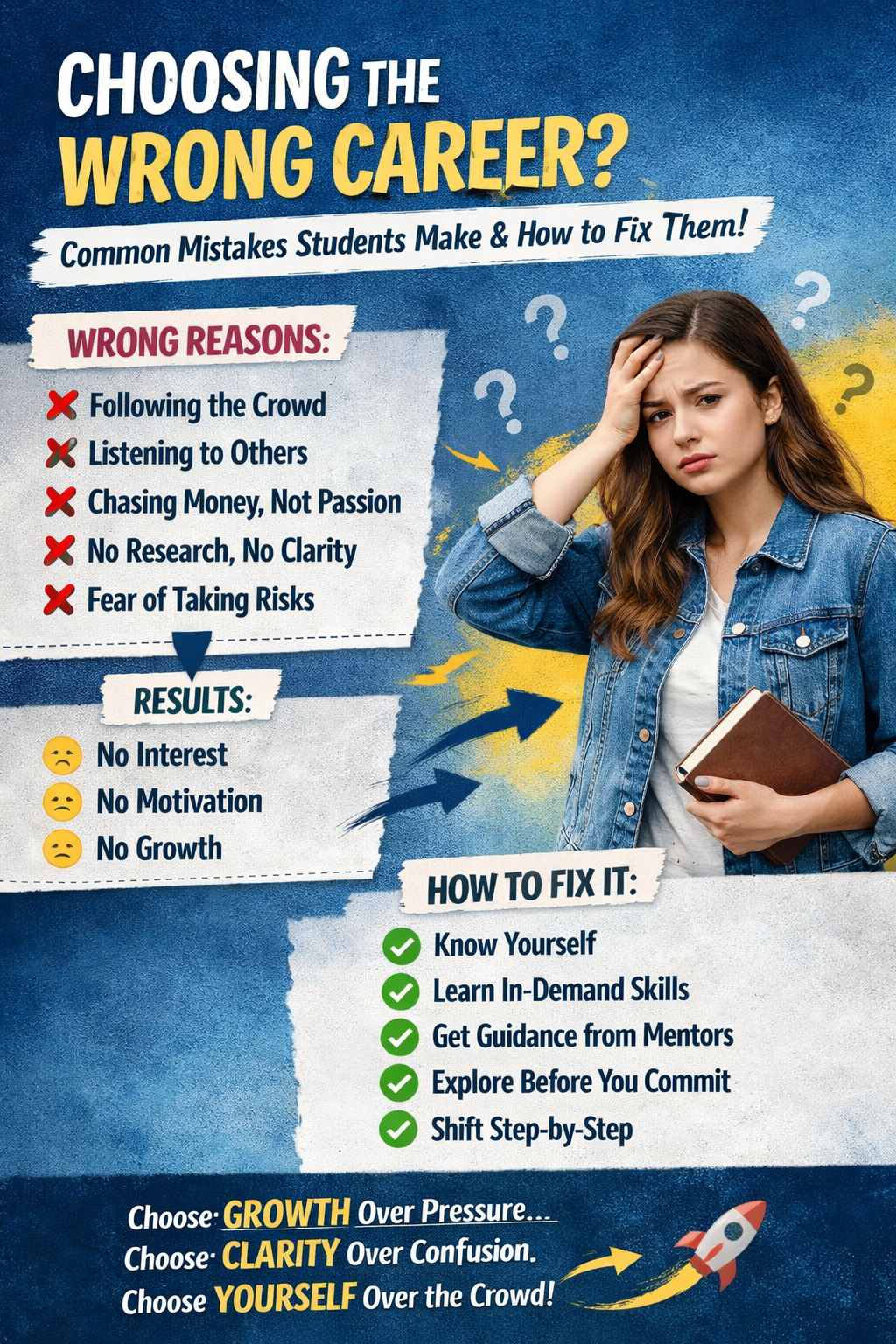
Common Mistakes Students Make While Choosing a Career:
1 Following the Crowd:
One of the biggest mistakes students make is choosing a career just because their friends are doing it or because it’s trending. For example, many students blindly follow fields like engineering, medicine, or coding without understanding if it suits them.
Why it’s a problem:
Everyone has different interests, abilities, and goals. What works for someone else may not work for you.
Fix:
Focus on self-assessment. Ask yourself:
What subjects do I enjoy?
What activities make me lose track of time?
What are my natural strengths?
Choose a path based on your individuality, not the crowd.
2 Lack of Self-Awareness:
Many students don’t truly understand themselves—their strengths, weaknesses, personality traits, and interests. This leads to poor career decisions.
Why it’s a problem:
Without self-awareness, you may end up in a career that doesn’t match your abilities or personality.
Fix:
Take aptitude and personality tests
Reflect on your interests and achievements
Seek career counseling
Self-awareness is the foundation of the right career choice.
3 Ignoring Skill Development:
Some students choose a career without developing the necessary skills required for that field. For example, choosing digital marketing without learning SEO, social media, or analytics.
Why it’s a problem:
Without relevant skills, it becomes difficult to succeed—even in a good career.
Fix:
Start building skills early
Take online courses
Do internships and practical projects
Skills are more important than just degrees in today’s world.
4 Choosing Based Only on Salary:
Many students choose careers just because they are “high-paying,” ignoring their interests or passion.
Why it’s a problem:
High salary cannot compensate for long-term dissatisfaction. You may feel unhappy, stressed, or unfulfilled.
Fix:
Find a balance between:
Passion (what you love)
Skills (what you’re good at)
Market demand (what pays well)
A sustainable career lies at the intersection of these three.
5 Lack of Research:
Students often choose careers without proper research about job roles, growth opportunities, and industry demand.
Why it’s a problem:
You may enter a field with limited growth or opportunities without realizing it.
Fix:
Research career scope
Watch industry-related content
Talk to professionals already working in the field
The more informed you are, the better your decision will be.
6 Parental or Societal Pressure:
Many students choose careers based on their parents’ expectations or societal norms.
Why it’s a problem:
This can lead to frustration and lack of motivation, as you’re not following your own interests.
Fix:
Communicate openly with parents
Explain your interests and goals
Show them practical career options and growth potential
Respect their advice, but make your own informed decision.
7 Fear of Taking Risks:
Some students avoid new or unconventional careers because they feel unsafe or uncertain.
Why it’s a problem:
You may miss out on opportunities in emerging fields like AI, content creation, or startups.
Fix:
Start small (side projects, freelancing)
Test your interest before fully committing
Take calculated risks
Growth always lies outside your comfort zone.
Signs You May Have Chosen the Wrong Career:
Not sure if you’re on the wrong path? Here are some common signs:
Lack of interest in your studies or work
Constant stress or dissatisfaction
Feeling stuck with no growth opportunities
No excitement about future prospects
Comparing yourself negatively with others
If you relate to these signs, it might be time to reassess your career choice.
How to Fix a Wrong Career Choice:
The good news is: it’s never too late to change your career path. Here’s how you can fix it:
1 Self-Assessment:
Start by understanding yourself:
What are your interests?
What are your strengths?
What kind of lifestyle do you want?
Clarity about yourself leads to clarity in career decisions.
2 Upskilling & Reskilling:
If your current career isn’t working, learn new skills that are in demand.
Examples:
Digital marketing
Coding and web development
Graphic design
Data analysis
Use platforms like online courses, certifications, and workshops to upgrade your skills.
3 Seek Career Guidance:
Don’t try to figure everything out alone.
Get help from:
Mentors
Career counselors
Industry experts
Their experience can save you time and prevent costly mistakes.
4 Explore Career Options:
Before making a full switch, explore different options:
Internships
Freelancing
Part-time jobs
Personal projects
This helps you test your interest without taking big risks.
5.Make a Gradual Transition:
Avoid sudden career changes unless absolutely necessary.
Smart approach:
Learn new skills alongside your current path
Build a portfolio
Switch step-by-step
This reduces risk and increases success chances.
Tips for Students to Choose the Right Career:
Here are some practical tips to make better career decisions:
Start Early Exploration
Don’t wait until the last moment. Explore different fields during school years.
Stay Updated with Industry Trends
The job market is constantly evolving. Stay informed about in-demand careers and future opportunities.
Focus on Practical Learning
Theoretical knowledge alone is not enough. Gain hands-on experience through projects and internships.
Build a Strong Network
Connect with professionals, attend webinars, and join communities. Networking opens doors to opportunities.
Be Flexible and Open-Minded
Your first choice doesn’t have to be your final choice. Be open to learning and adapting.
Conclusion:
Choosing a career is a journey, not a one-time decision. Mistakes are a natural part of this journey. What matters is how quickly you recognize them and take action to correct them.
Remember:
You are not alone—many students face the same confusion
It’s okay to change your path
Continuous learning and adaptability are key to success
Instead of stressing over making the “perfect” decision, focus on making an informed decision. Trust yourself, explore your options, and take small steps toward a career that truly aligns with your passion and potential.
Your career is not just about earning money—it’s about building a life you’re proud of.