Introduction
Recruitment is one of the most important functions of Human Resource Management. It refers to the process of identifying, attracting, and selecting qualified candidates to fill job vacancies within an organization. The success of any organization largely depends on hiring the right people with the right skills at the right time. Effective recruitment ensures that companies build a strong workforce that contributes to productivity, innovation, and long-term business growth.
In the past, organizations relied heavily on traditional recruitment methods such as newspaper advertisements, employment exchanges, and word-of-mouth referrals. While these methods were effective in earlier times, they often limited the reach of organizations and slowed down the hiring process.
However, with the rise of digital technologies, social media, and online platforms, recruitment strategies have evolved significantly. Today, companies use modern and technology-driven hiring methods that allow them to reach a larger pool of talent quickly and efficiently.
Modern recruitment sources provide several advantages such as:
Faster hiring processes
Access to global talent
Better candidate screening
Cost-effective recruitment strategies
Improved employer branding
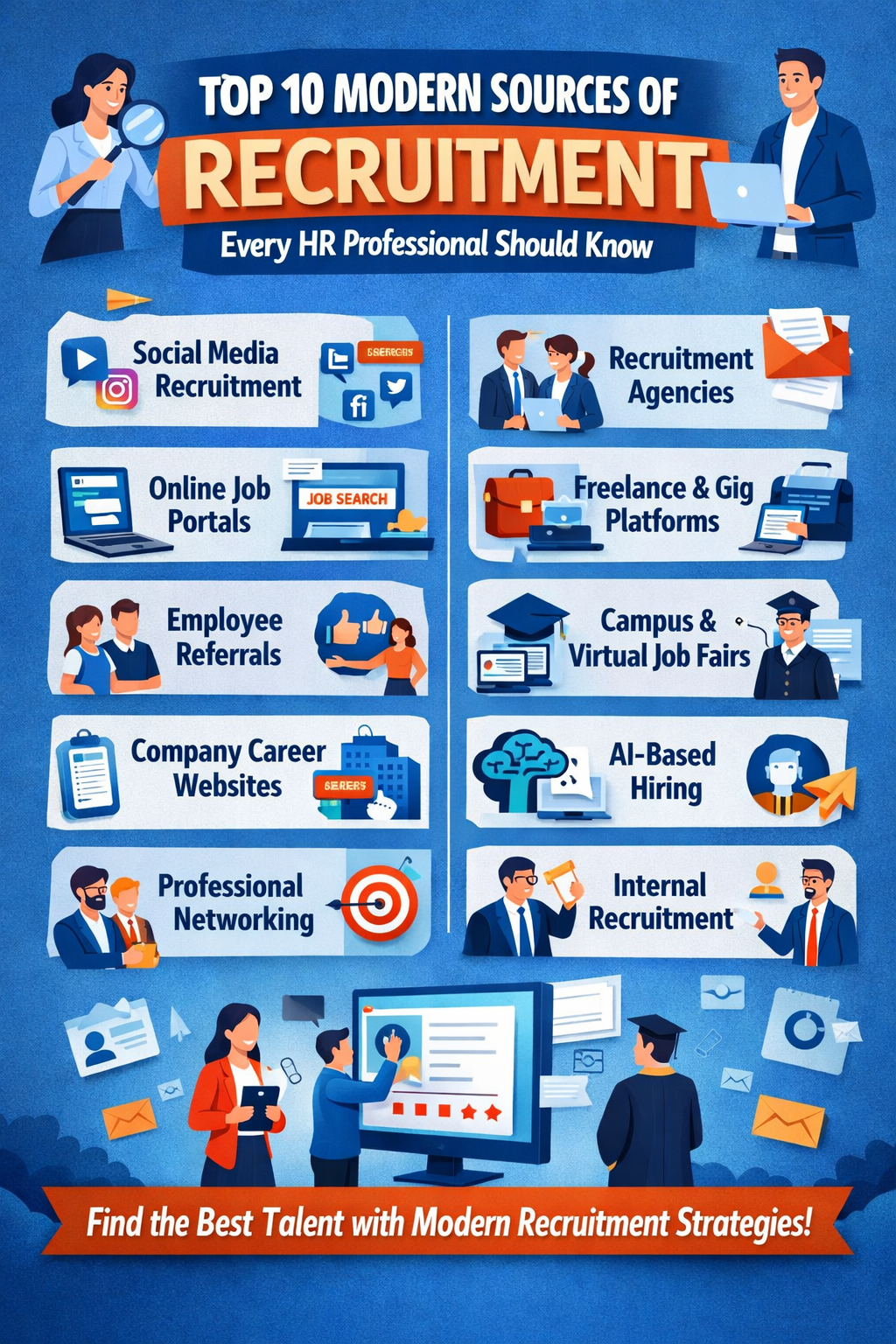
For HR professionals, understanding and utilizing modern sources of recruitment has become essential in today’s competitive job market. This article explores the Top 10 Modern Sources of Recruitment Every HR Professional Should Know and how these methods help organizations attract the best talent.
1. Social Media Recruitment
Social media has become one of the most powerful tools for recruitment in the modern workplace. Platforms such as LinkedIn, Facebook, Instagram, and Twitter allow organizations to connect with potential candidates directly.
Today, millions of professionals actively use social media platforms to explore job opportunities, build professional networks, and learn about organizations. HR professionals can leverage these platforms to reach both active and passive job seekers.
Popular Social Media Platforms for Recruitment
LinkedIn
Facebook
Instagram
Twitter
YouTube
Among these, LinkedIn is considered the most powerful platform for professional recruitment because it allows recruiters to search for candidates based on skills, experience, location, and industry.
Benefits of Social Media Recruitment
Wider talent reach across the globe
Faster communication with candidates
Cost-effective hiring method
Strong employer branding opportunities
Ability to target specific skills and industries
Social Media Branding for Recruitment
HR professionals should focus on building a strong employer brand through social media by:
Sharing company culture and employee stories
Posting job openings regularly
Engaging with potential candidates
Showcasing company achievements and events
A strong social media presence makes organizations more attractive to job seekers.
2. Online Job Portals
Online job portals have revolutionized the recruitment industry by connecting employers and job seekers on a single platform. These websites allow organizations to post job vacancies and receive applications from thousands of candidates.
Popular Online Job Portals
Some widely used job portals include:
Naukri
Indeed
Glassdoor
Monster
Shine
These platforms simplify the recruitment process by allowing HR professionals to filter candidates based on qualifications, experience, location, and skills.
How Job Portals Simplify Recruitment
Online job portals provide several tools for recruiters, including:
Resume databases
Automated application tracking
Candidate filtering tools
Employer branding features
Benefits for Employers and Job Seekers
For employers:
Access to a large pool of candidates
Faster recruitment process
Easy job posting and candidate management
For job seekers:
Easy job search
Direct application to companies
Access to multiple job opportunities
Online job portals remain one of the most effective digital recruitment sources used by organizations worldwide.
3. Employee Referral Programs
Employee referral programs are one of the most trusted and effective sources of recruitment. In this method, existing employees recommend potential candidates from their professional networks for open positions.
Many companies encourage employee referrals by offering referral bonuses or incentives when a referred candidate gets hired.
Why Employee Referrals Work Well
Employees generally recommend candidates they trust and believe are suitable for the job. As a result, referral candidates often have:
Better cultural fit
Higher job performance
Longer retention rates
Advantages of Employee Referral Programs
Faster hiring process
Reduced recruitment costs
Higher quality candidates
Improved employee engagement
Tips to Build an Effective Referral Program
Offer attractive referral rewards
Make the referral process simple
Encourage employees to participate
Provide regular updates on referral status
Organizations such as Google, Microsoft, and Amazon rely heavily on employee referrals for hiring skilled professionals.
4. Company Career Websites
A company's official website is another powerful recruitment source. Most organizations now maintain a dedicated careers page where they publish job openings and provide information about their work culture.
Importance of Career Pages
A career page allows organizations to:
Attract direct applicants
Build employer branding
Provide detailed job descriptions
Share company values and culture
Candidates often visit company websites to learn more about the organization before applying for a job.
Best Practices for an Effective Career Portal
To attract top talent, companies should design their career pages with:
Clear job listings
Easy application process
Mobile-friendly design
Employee testimonials
Company culture videos
A well-designed career website improves the candidate experience and encourages more applicants.
5. Recruitment Agencies and Talent Consultants
Recruitment agencies play an important role in helping organizations find the right candidates quickly. These agencies specialize in sourcing, screening, and shortlisting candidates based on the company’s requirements.
Many organizations partner with talent consultants to fill specialized or senior-level positions.
Role of Recruitment Agencies
Recruitment agencies assist companies in:
Finding qualified candidates
Conducting initial interviews
Screening resumes
Managing the hiring process
Benefits of Outsourcing Recruitment
Saves time for HR teams
Access to specialized talent pools
Faster hiring for urgent roles
Expertise in industry-specific recruitment
When Companies Should Use Recruitment Consultants
Organizations often hire recruitment consultants when:
Hiring for niche skills
Recruiting for senior leadership roles
Expanding to new markets
Recruitment agencies act as strategic hiring partners for many organizations.
6. Professional Networking Platforms
Professional networking platforms allow recruiters to connect with industry professionals and build relationships with potential candidates.
Networking is a powerful recruitment strategy because it helps HR professionals engage with talented individuals who may not actively be looking for jobs.
Importance of Professional Networks
Professional networks help recruiters:
Discover passive candidates
Build long-term talent pipelines
Stay updated with industry trends
Networking Strategies for HR Professionals
HR professionals can build strong networks by:
Participating in industry events
Joining professional groups
Attending webinars and conferences
Engaging in online professional communities
Networking plays a key role in modern recruitment strategies.
7. Freelance and Gig Platforms
The rise of the gig economy has created new opportunities for companies to hire freelancers and independent professionals for short-term projects.
Freelance platforms allow organizations to hire skilled professionals from around the world.
Popular Freelance Platforms
Some well-known platforms include:
Upwork
Fiverr
Freelancer
Toptal
Advantages of Gig-Based Hiring
Access to global talent
Flexible workforce management
Cost-effective hiring
Faster project completion
Many companies use freelance platforms for tasks such as:
Graphic design
Content writing
Software development
Digital marketing
Gig-based hiring provides flexibility and scalability for businesses.
8. Campus Recruitment and Virtual Job Fairs
Campus recruitment is a popular strategy used by organizations to hire fresh graduates and young talent directly from educational institutions.
Many companies collaborate with universities and colleges to conduct campus placement drives.
Campus Recruitment Methods
On-campus placement drives
Internship programs
Pre-placement talks
Campus job fairs
Rise of Virtual Job Fairs
With advancements in technology, many organizations now conduct virtual job fairs and online campus recruitment programs.
Virtual hiring events allow companies to interact with students through:
Online interviews
Webinars
Virtual networking sessions
Benefits for Companies and Students
For companies:
Early access to talented graduates
Opportunity to build employer branding among students
For students:
Direct job opportunities after graduation
Exposure to industry professionals
Campus recruitment helps organizations build a pipeline of future talent.
9. AI-Based Recruitment Tools
Artificial Intelligence (AI) is transforming the recruitment industry by automating several hiring tasks and improving decision-making.
AI-based recruitment tools help HR professionals analyze large volumes of candidate data quickly and accurately.
Applications of AI in Recruitment
AI technologies are used for:
Automated resume screening
Candidate matching
Chatbots for candidate communication
Interview scheduling
Predictive hiring analytics
Benefits of AI Recruitment Tools
Saves time for recruiters
Reduces human bias in hiring
Improves candidate matching accuracy
Enhances overall recruitment efficiency
AI-powered hiring systems are becoming increasingly popular among modern organizations.
10. Internal Recruitment and Talent Databases
Internal recruitment refers to filling job vacancies by promoting or transferring existing employees within the organization.
Companies also maintain internal talent databases to track employees’ skills, performance, and career interests.
Methods of Internal Recruitment
Promotions
Internal job postings
Employee transfers
Succession planning
Benefits of Internal Hiring
Motivates employees
Reduces recruitment costs
Faster hiring process
Employees already understand company culture
Internal recruitment also helps organizations retain experienced employees and strengthen employee loyalty.
Conclusion
Recruitment strategies have evolved significantly with the advancement of technology and digital platforms. Modern recruitment methods enable organizations to reach a wider pool of candidates and streamline the hiring process.
The top modern sources of recruitment include:
Social media recruitment
Online job portals
Employee referral programs
Company career websites
Recruitment agencies and talent consultants
Professional networking platforms
Freelance and gig platforms
Campus recruitment and virtual job fairs
AI-based recruitment tools
Internal recruitment and talent databases
Each of these recruitment sources plays a crucial role in helping organizations attract, evaluate, and hire the right talent.
In today’s competitive job market, HR professionals must adopt multiple recruitment channels rather than relying on a single method. By combining modern recruitment strategies with technology-driven hiring tools, organizations can improve their hiring efficiency and build a strong workforce.
Ultimately, effective recruitment is not just about filling vacancies — it is about finding the right people who can drive innovation, productivity, and long-term success for the organization.