Introduction
Choosing a career after completing the 12th grade is one of the most important decisions in a student’s life. At this stage, students stand at the gateway of their professional journey, where the decisions they make can significantly influence their future career path, financial stability, and personal satisfaction.
However, making the right career decision after 12th is not always easy. Many students feel confused and overwhelmed because they are expected to choose a career direction at a young age without having complete knowledge about the vast range of opportunities available today. The traditional options such as engineering, medicine, and government jobs are no longer the only paths available. Today’s world offers hundreds of career opportunities across different industries, making the decision even more challenging.
This is where professional career counselling becomes extremely valuable. Career counselling helps students understand their strengths, interests, and abilities while guiding them toward the most suitable career options. With the help of expert guidance, students can make informed decisions and build a successful career path.
In this comprehensive guide, we will explore why career counselling after 12th is more important than ever, how it helps students choose the right career, and why professional guidance can make a huge difference in shaping a student’s future.
Why Students Feel Confused After 12th
After completing the 12th grade, many students struggle to decide what they want to do next. Several factors contribute to this confusion.
Lack of Awareness About Career Options
One of the biggest reasons behind career confusion is the lack of awareness about available career options. Many students only know about a few traditional career paths such as:
Engineering
Medicine
Government jobs
Banking
Teaching
However, the modern job market offers careers in fields like digital marketing, data science, animation, UI/UX design, cybersecurity, artificial intelligence, and entrepreneurship. Without proper exposure, students may miss opportunities that perfectly match their interests and abilities.
Pressure from Parents and Society
In many families, career decisions are influenced by parental expectations and societal pressure. Parents often encourage their children to choose careers that are traditionally considered stable or prestigious.
For example, a student interested in creative fields like design, writing, or filmmaking may be pushed toward engineering or medicine because those careers are perceived as safer.
This pressure can lead students to choose careers that do not align with their passion or skills.
Influence of Friends’ Decisions
Another common factor is the influence of friends. Many students choose the same course or college as their friends simply because they feel comfortable staying together.
However, every student has different interests, strengths, and goals. Following friends blindly can lead to dissatisfaction and lack of motivation later in life.
Limited Exposure to Emerging Career Fields
The modern job market is constantly evolving. New industries and technologies are creating career opportunities that did not exist a decade ago.
Students often lack exposure to these emerging fields because:
Schools focus mostly on academic subjects
Students do not receive career guidance early enough
Information about modern careers is not widely available
As a result, students may end up choosing outdated career paths that may not offer strong growth in the future.
Fear of Making the Wrong Decision
Many students fear that choosing the wrong career path could ruin their future. This fear can lead to hesitation, anxiety, and confusion.
Because career choices after 12th can influence higher education and long-term career growth, students often feel immense pressure to make the "perfect" decision.
This is why professional career counselling plays a crucial role in helping students navigate this critical stage.
The Changing Career Landscape
The world of work has changed dramatically over the past decade. Technology, globalization, and digital transformation have created a completely new career landscape.
Rapid Growth of New Industries
Industries are evolving rapidly, and new sectors are emerging every year. Many careers today require specialized skills that were not even taught in traditional education systems earlier.
Some of the fastest-growing industries include:
Technology
Digital marketing
Artificial intelligence
Cybersecurity
E-commerce
Content creation
Fintech
These industries are creating millions of job opportunities worldwide.
Emerging Career Fields
Some of the most popular emerging careers include:
Artificial Intelligence Specialist
Data Scientist
Cybersecurity Analyst
Digital Marketing Expert
UI/UX Designer
Game Developer
Cloud Computing Engineer
Blockchain Developer
These careers require specific skills, training, and knowledge, which students may not know about without professional guidance.
Rise of Skill-Based Careers
Modern industries value skills and practical knowledge more than just academic degrees. Companies are increasingly hiring professionals who possess relevant skills rather than only focusing on traditional qualifications.
For example:
Digital marketers need SEO, content marketing, and analytics skills
Data scientists require programming and statistical analysis skills
Designers need creativity and design software expertise
This shift toward skill-based careers means students must carefully plan their education and training.
Traditional Career Paths Are No Longer the Only Option
In the past, students believed success was limited to a few professions. But today, success can come from many career paths.
People are building successful careers in:
Content creation
Entrepreneurship
Online businesses
Freelancing
Creative industries
This wide variety of opportunities makes career guidance more important than ever.
What Is Professional Career Counselling?
Definition of Career Counselling
Career counselling is a professional guidance process that helps students understand their interests, skills, personality, and career goals in order to choose the most suitable career path.
It involves expert advice, career assessments, and personalized planning.
How Professional Counsellors Guide Students
Professional career counsellors help students by:
Understanding their strengths and weaknesses
Exploring career options that match their interests
Providing information about courses and colleges
Helping them plan long-term career strategies
Counsellors also help students develop confidence in their career decisions.
Use of Psychometric Tests and Career Assessments
Many professional counsellors use psychometric tests to evaluate a student's:
Personality traits
Interests
Aptitude
Cognitive abilities
These assessments provide scientific insights into which career paths are most suitable for a student.
Personalized Guidance
Every student is unique. Career counselling provides personalized guidance based on individual characteristics, ensuring that students choose careers aligned with their strengths and passions.
Benefits of Professional Career Counselling
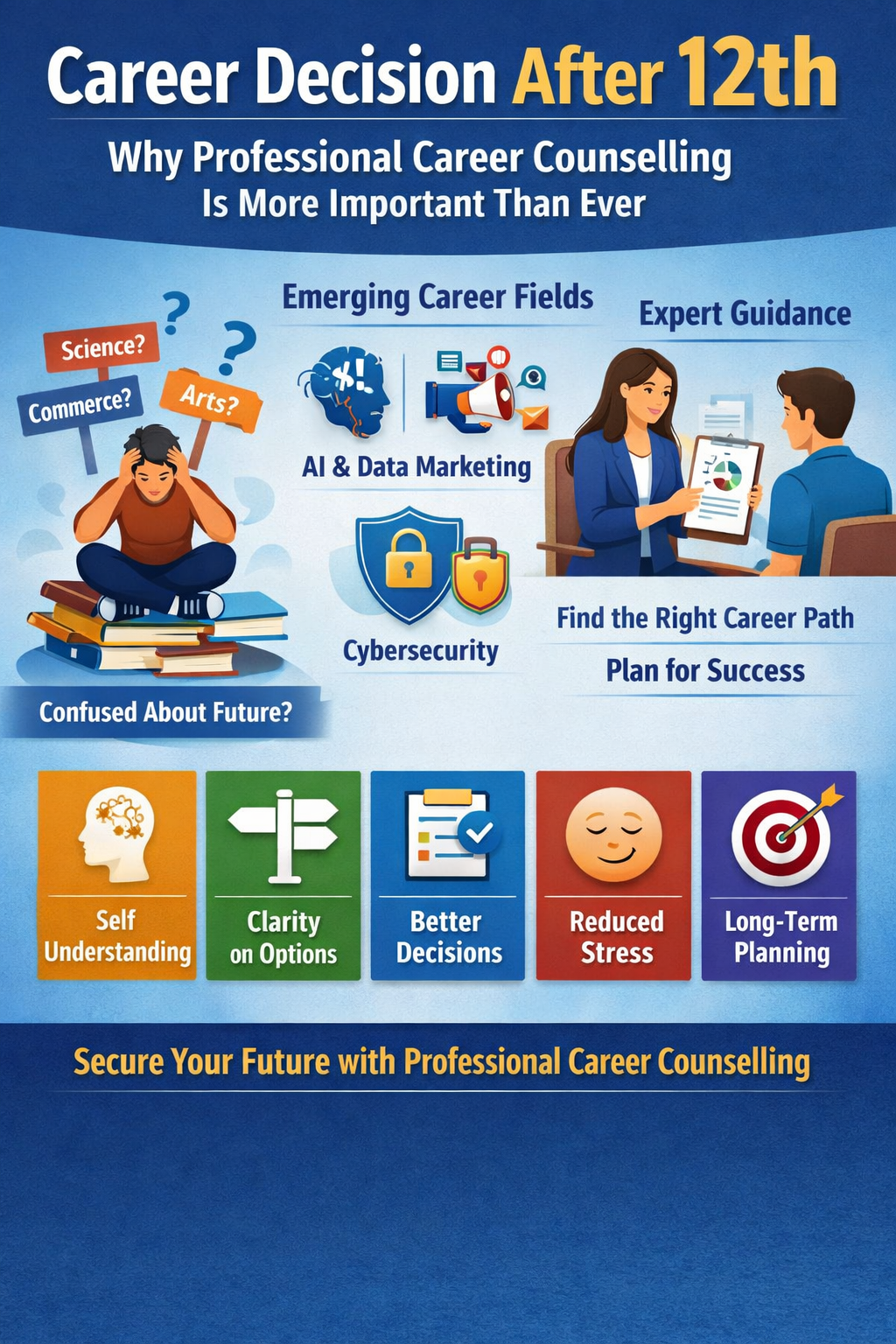
1. Self-Understanding
One of the biggest benefits of career counselling is that it helps students understand themselves better.
Through assessments and discussions, students can identify:
Their strengths
Interests
Talents
Personality traits
This self-awareness is essential for choosing a career that suits them.
2. Clarity in Career Options
Career counsellors expose students to a wide range of career options that they may not have considered before.
Students gain knowledge about:
Different industries
Career roles
Educational pathways
Skill requirements
This clarity helps students make informed decisions.
3. Better Decision-Making
Career counselling helps students align their career choices with their personal goals and abilities.
Instead of making decisions based on pressure or confusion, students can make well-informed choices.
4. Reduced Stress and Anxiety
Career uncertainty can cause significant stress for students and parents.
Professional guidance helps remove confusion and provides clear direction, which reduces anxiety and builds confidence.
5. Long-Term Career Planning
Career counselling is not just about choosing a course after 12th. It also helps students plan their long-term career development.
This includes:
Choosing the right degree
Identifying required skills
Planning internships and certifications
Setting career milestones
Such planning increases the chances of long-term success.
Common Career Mistakes Students Make After 12th
Many students make avoidable mistakes while choosing their careers.
Choosing a Career Due to Peer Pressure
Selecting a career simply because friends are choosing it can lead to dissatisfaction and lack of interest later.
Selecting a Field Only Based on Salary
High salaries can be attractive, but choosing a career solely for money may lead to burnout if the work does not match personal interests.
Following Trends Blindly
Some students choose trending careers without understanding the skills required.
For example, many students say they want to become data scientists or AI engineers without knowing the level of mathematical and technical expertise required.
Lack of Proper Research
Many students select courses without researching:
Career opportunities
Industry demand
Required skills
Future growth potential
Proper research is essential before making such important decisions.
How Career Counselling Helps Students Choose the Right Path
Professional career counselling plays a crucial role in helping students identify the best path for their future.
Identifying Suitable Career Fields
Counsellors analyze a student’s interests, aptitude, and personality to recommend suitable career options.
Guidance on Courses and Colleges
Students receive guidance on:
Best courses for their chosen career
Top colleges and universities
Admission requirements
This helps students avoid confusion during the college selection process.
Creating a Clear Career Roadmap
Career counselling provides a step-by-step career roadmap, which includes:
Education planning
Skill development
Internships
Professional certifications
Such planning gives students a clear vision of their future.
Understanding Job Opportunities
Students also learn about future job prospects, industry demand, and salary expectations, helping them make practical career decisions.
When Should Students Seek Career Counselling?
During Class 10 or 11
Ideally, students should seek career counselling during class 10 or 11 when they are choosing their academic stream.
Early guidance helps them select subjects aligned with their career goals.
After 12th Grade
Career counselling after the 12th grade is extremely beneficial before choosing a college or degree program.
When Students Feel Confused
Students should seek career guidance whenever they feel uncertain about their career direction.
Tips for Students to Make Better Career Decisions
Students can follow these tips to make smarter career decisions.
Explore Different Career Options
Research various career paths and understand the skills required for each.
Understand Personal Strengths
Identify your strengths, interests, and passions before selecting a career.
Talk to Professionals and Mentors
Guidance from experienced professionals can provide valuable insights.
Focus on Skill Development
Skills play a crucial role in career success. Students should invest time in learning practical skills.
Think Long-Term
Always consider the future growth potential of a career before making a decision.
Conclusion
Choosing the right career after 12th is one of the most important decisions a student will ever make. With the increasing number of career options and the rapidly changing job market, making the right choice has become more challenging than ever.
This is why professional career counselling has become extremely important in today’s world. Career counselling helps students understand themselves, explore various career opportunities, and make informed decisions based on their strengths and interests.
Instead of choosing careers based on pressure, trends, or limited knowledge, students can benefit from expert guidance and build a clear roadmap for their future.
With the right career guidance, students can not only choose the right profession but also achieve long-term career satisfaction, growth, and success.