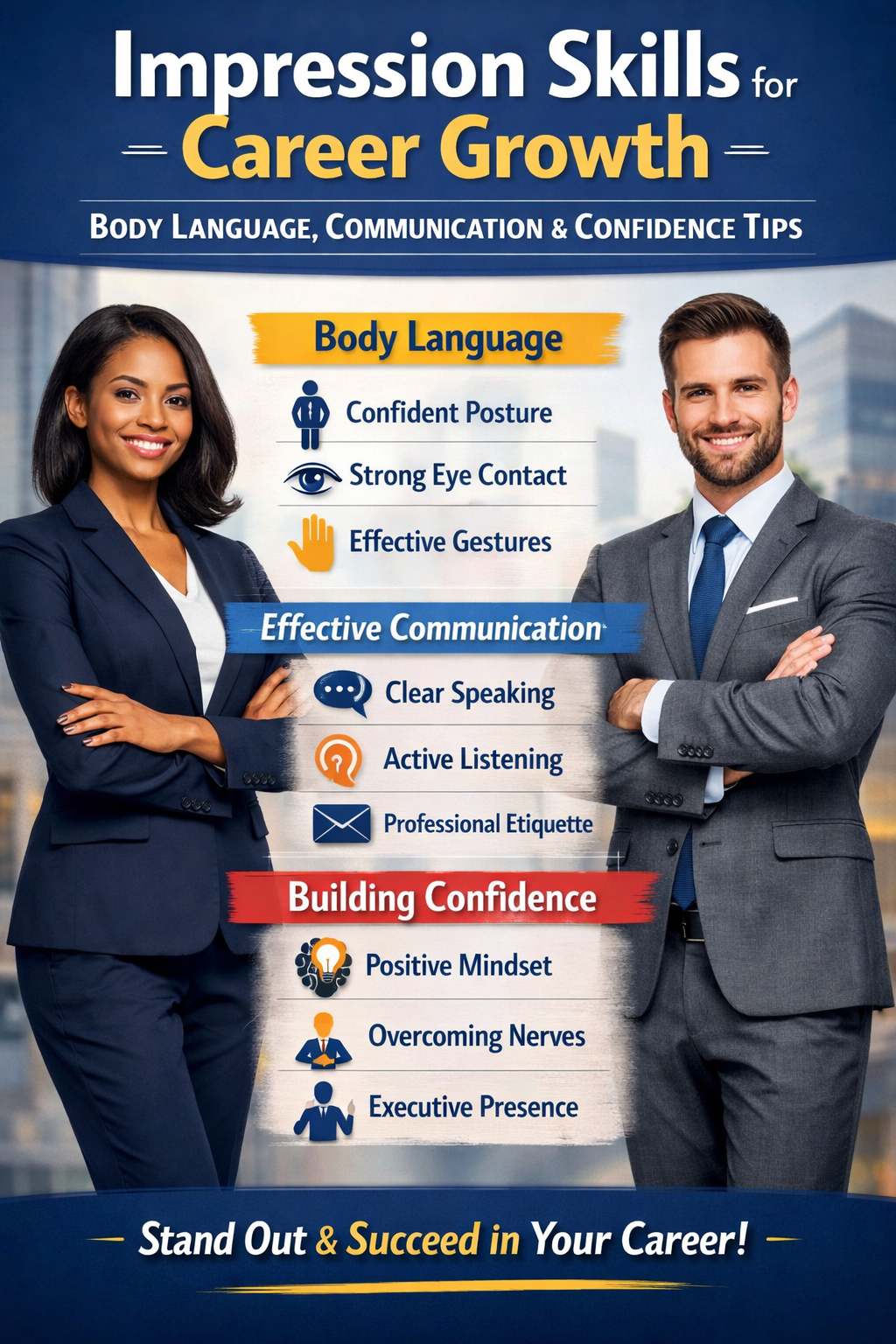
In today’s highly competitive professional world, technical knowledge alone is no longer enough to ensure career success. Whether you are a student, job seeker, working professional, or business leader, impression skills play a crucial role in shaping your career journey. The way you present yourself, communicate with others, and demonstrate confidence can open doors to better opportunities, promotions, leadership roles, and professional recognition.
From the moment you walk into a job interview to the way you conduct yourself in meetings, every action contributes to the image you create. This blog explores the importance of impression skills for career growth, focusing on body language, communication skills, and confidence-building techniques that can help you stand out professionally.
1️⃣ Introduction: Why Impression Skills Matter in Professional Life
First impressions form quickly. According to psychological studies, people take only 7 to 10 seconds to create a perception about someone they meet for the first time. In these few seconds, your posture, facial expressions, voice tone, and overall confidence speak louder than your words.
The Psychology of First Impressions
Human brains are wired to make quick judgments. When we meet someone new, we instantly evaluate their trustworthiness, competence, confidence, and friendliness. These judgments often remain long-lasting. This means that your first impression can strongly influence hiring decisions, promotions, leadership opportunities, and professional relationships.
How Impression Skills Influence Career Success
Strong impression skills help you:
Perform better in job interviews
Build stronger professional relationships
Improve leadership presence
Gain respect and credibility
Enhance communication impact
Increase confidence in public speaking
Strengthen networking outcomes
In short, impression skills act as powerful career accelerators.
Overview: Body Language, Communication & Confidence
This blog will cover:
What impression skills are
How body language shapes perception
Communication strategies for strong professional impact
Confidence-building methods
Practical daily tips to enhance your impression skills
2️⃣ What Are Impression Skills?
Definition of Impression Skills
Impression skills refer to the combination of behaviors, communication patterns, physical presence, emotional intelligence, and confidence that influence how others perceive you professionally.
These skills include:
Positive body language
Effective communication
Emotional awareness
Professional etiquette
Confident behavior
First Impression vs Long-Term Professional Image
While first impressions are formed quickly, long-term professional image is built over time. Your consistency in communication, work ethics, behavior, and professionalism determines how colleagues, clients, and leaders view you in the long run.
| First Impression | Long-Term Image |
|---|---|
| Created in seconds | Built over months/years |
| Based on appearance & body language | Based on behavior & performance |
| Emotion-driven | Trust-driven |
Why Technical Skills Alone Are Not Enough
In modern workplaces, soft skills + impression skills + technical skills = career success. Employers today prioritize professionals who can:
Communicate ideas effectively
Collaborate with teams
Build client trust
Represent organizations professionally
Without strong impression skills, even the most technically skilled individuals may struggle to grow.
3️⃣ The Power of Body Language in Career Growth
Body language accounts for nearly 55% of communication impact. What you say matters, but how you say it through body language matters more.
A. Posture & Presence
Your posture reflects confidence, authority, and self-belief.
Standing and Sitting Confidently
Keep your shoulders relaxed and back
Maintain a straight spine
Avoid slouching or leaning excessively
Avoiding Closed Body Language
Do not cross arms
Avoid hiding hands
Keep body open and relaxed
Power Poses & Executive Presence
Power poses like standing tall with shoulders open increase confidence hormones and reduce stress. Developing executive presence allows you to command respect naturally.
B. Eye Contact & Facial Expressions
Maintaining Balanced Eye Contact
Eye contact builds trust and engagement. Maintain eye contact for 3–5 seconds while speaking or listening.
Importance of a Genuine Smile
A natural smile communicates warmth, friendliness, and confidence.
Reading Others’ Body Language
Understanding others’ posture, expressions, and gestures helps improve empathy, negotiation, and leadership skills.
C. Hand Gestures & Personal Space
Using Natural Gestures While Speaking
Hand gestures help express enthusiasm and clarity.
Avoiding Distracting Movements
Excessive fidgeting
Pen tapping
Hair touching
Respecting Professional Boundaries
Maintain proper physical distance in meetings, interviews, and workplace settings.
4️⃣ Communication Skills That Create Strong Impressions
Communication is the backbone of impression skills. Effective communication enhances clarity, trust, influence, and leadership.
A. Verbal Communication
Speaking Clearly and Confidently
Clear articulation ensures your message is understood. Practice pronunciation, sentence flow, and voice control.
Tone, Pitch & Pace Control
Maintain calm tone
Moderate pace
Avoid monotony
Avoiding Filler Words
Reduce usage of “uh”, “um”, “like”, “you know”, etc. These weaken professional credibility.
B. Non-Verbal Communication
Voice Modulation
Vary pitch and emphasis to make your speech engaging.
Active Listening Techniques
Nod occasionally
Maintain eye contact
Ask clarifying questions
Showing Engagement in Conversations
Lean slightly forward, maintain attentive posture, and avoid distractions.
C. Professional Language & Etiquette
Email & Meeting Etiquette
Use professional greetings
Keep emails concise
Respect time limits
Maintain meeting discipline
Workplace Communication Dos & Don’ts
Dos:
Be respectful
Stay positive
Speak clearly
Don’ts:
Interrupt
Gossip
Use informal language
Handling Difficult Conversations Professionally
Use emotional intelligence, empathy, and calm responses when addressing conflicts.
5️⃣ Confidence: The Core of Impression Skills
Confidence is the foundation of professional presence. Without confidence, even excellent communication and body language fall flat.
A. Building Self-Confidence
Preparation & Knowledge Mastery
Confidence grows with preparation. Know your subject thoroughly.
Positive Self-Talk Techniques
Replace self-doubt with affirmations such as:
I am capable
I am prepared
I can handle this
Skill Development Strategies
Continuous learning builds competence and confidence.
B. Overcoming Nervousness
Breathing Techniques
Deep breathing helps regulate stress and anxiety.
Visualization Methods
Imagine successful performance before interviews or presentations.
Mock Interviews & Practice
Simulated practice boosts comfort and fluency.
C. Developing Executive Presence
Dressing Appropriately
Dress according to professional standards. Proper attire boosts confidence and credibility.
Grooming & Personal Presentation
Neat grooming enhances professional appeal.
Consistency in Behavior & Values
Consistency builds trust and leadership identity.
6️⃣ Impression Skills in Different Career Situations
Job Interviews
Confident posture
Clear communication
Professional appearance
Positive attitude
Client Meetings
Polite behavior
Active listening
Empathy
Professional language
Team Presentations
Engaging delivery
Visual clarity
Confident speaking
Networking Events
Strong introductions
Friendly body language
Effective conversation starters
Leadership Roles
Executive presence
Emotional intelligence
Clear vision communication
7️⃣ Common Mistakes That Damage Professional Impression
Many professionals unknowingly damage their impression due to small behavioral errors.
Poor posture
Weak handshake
Avoiding eye contact
Speaking too fast
Negative body language
Overconfidence or arrogance
Underconfidence or nervous behavior
Unprofessional email tone
Avoiding these mistakes can instantly enhance your professional image.
8️⃣ Practical Tips to Improve Impression Skills Daily
Daily Posture Check
Monitor posture during work hours.
Mirror Practice
Practice facial expressions, smiles, and speaking clarity.
Record & Review Presentations
Self-review helps identify improvement areas.
Seek Feedback from Mentors
Constructive feedback enhances growth.
Join Public Speaking Groups
Organizations like Toastmasters help build confidence and communication mastery.
9️⃣ Conclusion: Impression Skills Are Career Accelerators
Impression skills—body language, communication, and confidence—are no longer optional in today’s career landscape. They influence how people perceive your competence, leadership potential, and trustworthiness.
By mastering these skills, you can:
Build strong professional relationships
Accelerate career growth
Improve leadership impact
Enhance networking success
Boost confidence and self-belief