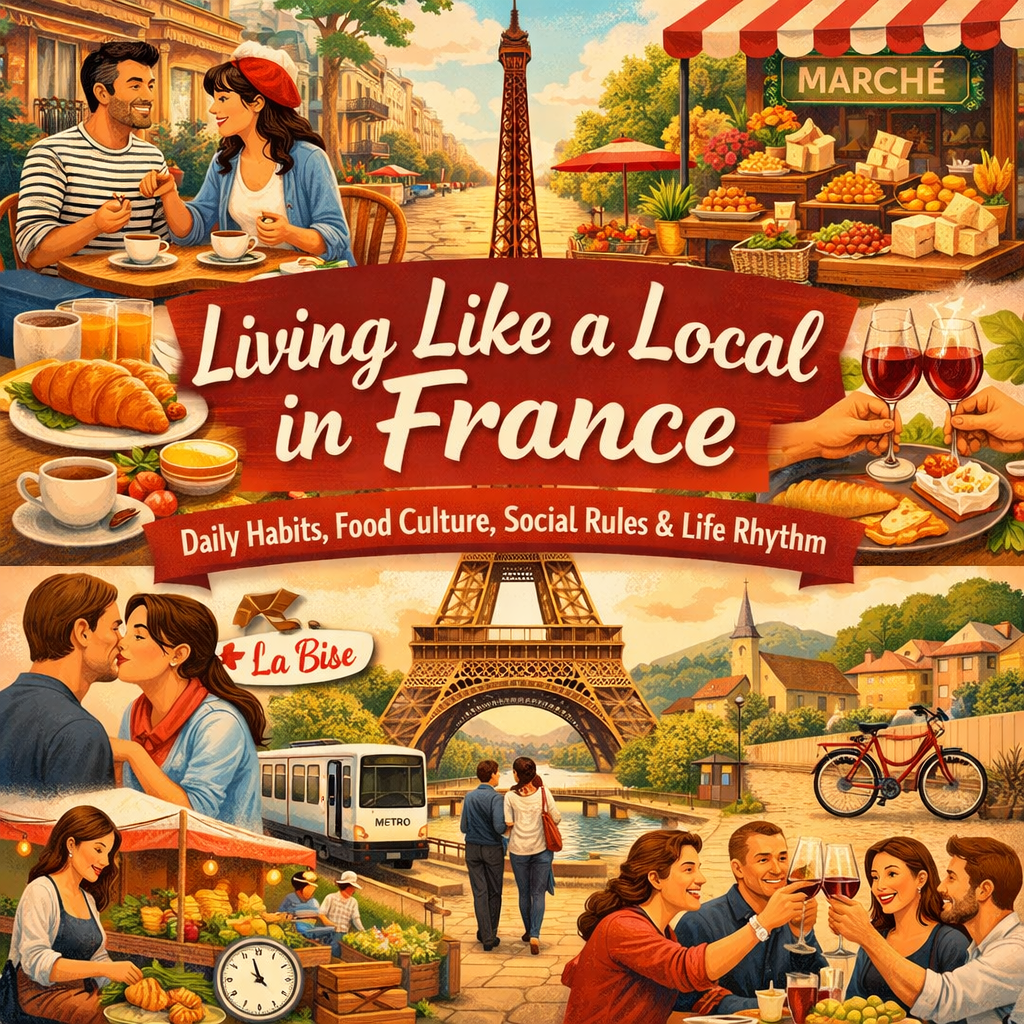
If you live in France that does not mean you are
moving to a new country- it is about adapting to a completely different rhythm
of life, mindset, culture, and daily behavior. France has a lifestyle which
offers quality over quantity, balance over speed and experience over
materialism.
You can be anybody whether you are a student,
professional, digital nomad, traveler, or someone planning to travel in France
understanding the French way of life will help you integrate faster, avoid
culture misunderstanding and truly enjoy the experience.
This particular guide will explore daily habits,
food culture, social rules, lifestyle rhythm, and real life experiences that
shape everyday life in France. By the end you will not only understand how
locals live – you will also know how to live like one and you will live also.
Introduction:
Living like a local means you are blending like a
local people into everyday French life instead of living like a tourist. Tourists
often focus on attractions, food spots, and shopping, while locals build
routines around work, family, meals, community, and personal well-being.
If you understand the difference between of being a
visitor and a resident will help you:
·
Integrate into society faster
·
Build meaningful social relationships
·
Avoid cultural mistakes
·
Enjoy deeper cultural experiences
·
Feel emotionally settled
French lifestyle is
built around balance, patience,
simplicity, and emotional well-being. Unlike fast-paced cultures that
focus on productivity and hustle, French life emphasizes mindful living, proper meals, social connection,
and work-life harmony.
This guide gives you a complete
cultural roadmap to help you experience France the way locals do.
The Philosophy of French Daily Life – Slowness,
Balance & Purpose
The
French Approach to Time & Life Rhythm:
One of the biggest cultural differences you will
notice in France is the slower pace of life. Time is not rushed.
Activities are done mindfully. Meals are enjoyed slowly. Conversations are
meaningful.
Unlike fast-moving societies where speed defines
success, the French believe that life should be savored, not rushed.
They focus on:
- Enjoying
meals without distractions - Taking
regular breaks - Spending
quality time with family - Appreciating
small pleasures
This mindset shapes daily routines, making life feel
calmer, healthier, and emotionally balanced.
Work-Life
Balance in French Culture:
France is famous for its strong work-life balance
culture. Standard working hours are limited, and employees are legally
entitled to paid vacations, rest days, and holidays.
Key features include:
- Shorter
working weeks - Long
lunch breaks - Strict
labor laws protecting employees - Strong
vacation culture
Locals prioritize personal life, hobbies, travel,
and family time, which reduces burnout and improves overall happiness.
A Typical Day in the Life of a Local in France
Morning
Routine – How French People Start Their Day:
French mornings are calm and simple.
Breakfast is usually light, consisting of:
- Coffee
or hot chocolate - Croissant
or bread with butter and jam - Fruit
or yogurt
Unlike heavy breakfasts, the focus is on quick
nourishment rather than large meals. People walk or cycle to work, enjoying
the morning air rather than rushing.
Afternoon
Routine – Work, Lunch & Social Flow:
Lunch is a significant part of French culture.
Many workers enjoy long lunch breaks, either at restaurants or with colleagues.
Meals are social, relaxed, and slow.
Work resumes afterward with structured focus and
discipline. Productivity is high because employees work efficiently without
burnout.
Evening
Routine – Relaxation, Socializing & Family Time:
Evenings are dedicated to relaxation and personal
life. Locals enjoy:
- Evening
walks - Home-cooked
dinners - Social
gatherings - Reading
or hobbies
Unlike cultures that continue working late, evenings
in France are for rest and enjoyment.
French Food Culture – More Than Just Croissants
& Cheese:
Daily Meals in France – Structure & Timing:
Meals
in France follow a structured rhythm:
- Breakfast (Le Petit Déjeuner): Light and quick
- Lunch (Le Déjeuner): Main meal of the day
- Dinner (Le Dîner): Light but social
Meals
are enjoyed slowly, often with conversation and no digital distractions.
Eating Habits in France – Quality
Over Quantity
The French focus on fresh
ingredients, local produce, and seasonal foods. Processed food consumption
is minimal. Fresh vegetables, bread, cheese, seafood, and fruits dominate daily
meals.
This approach contributes to better
health and longer life expectancy.
Dining
Etiquette & Table Manners in French Culture:
Dining etiquette is very important:
- Keep hands visible on the table
- Chew quietly
- Do not rush meals
- Respect food
Dining is treated as a cultural
ritual, not just a necessity.
Grocery Shopping & Local Markets – The Heart of French
Life
How
Locals Shop for Food Daily:
Instead of bulk shopping, locals
prefer daily visits to bakeries, butcher shops, and markets. This
supports freshness and strengthens community bonds.
Supermarkets
vs Local Stores – What Locals Prefer:
Although supermarkets exist, small
local shops remain popular due to quality, trust, and personal relationships.
Social Rules & Cultural Etiquette in France
Greeting
Culture – How to Say Hello Properly:
Greeting is essential. Always say “Bonjour”
before starting any conversation. Social greetings include:
- Handshakes
- Cheek kisses (La Bise)
- Polite verbal greetings
Skipping greetings is considered
rude.
Communication
Style – Direct Yet Polite:
French communication is direct
but respectful. People value honesty, logical conversation, and respectful
disagreement.
Public Behavior – What Is
Appreciated & What Is Not:
Public spaces are calm and quiet.
Loud talking, unnecessary noise, and cutting lines are frowned upon.
Friendship & Social Life – How Locals Build Connections
Making
Friends in France – Reality vs Expectations:
Building friendships takes time.
Trust is developed slowly, but once built, friendships are deep and lasting.
Social
Circles & Community Life:
Social life revolves around family,
neighbors, hobbies, and cultural events rather than constant social
gatherings.
Dress Code & Personal Appearance – Simple, Elegant &
Practical
Everyday
Fashion in France:
French fashion is minimalist,
elegant, and practical. Neutral colors, simple cuts, and comfort dominate
everyday wear.
Grooming
& Personal Care Habits:
Natural beauty is preferred. Simple
grooming, clean appearance, and subtle style reflect cultural values.
Transportation & Daily Movement – Walking is a Lifestyle
Public
Transport & Walking Culture:
Cities are designed for walking,
cycling, and public transport, reducing dependence on cars.
How
Mobility Shapes Daily Rhythm:
Daily walking promotes better
health, reduced stress, and environmental consciousness.
Language & Daily Interaction – How French Language
Shapes Behavior
Importance
of Speaking Basic French:
Even basic French increases respect,
acceptance, and social comfort.
Daily
Phrases Every Newcomer Must Know:
Key phrases include greetings,
polite expressions, and basic conversational words.
Weekend Lifestyle – How Locals Truly Enjoy Life
Family Time & Personal Hobbies:
Weekends are spent at parks,
cafés, museums, and family gatherings.
Travel
& Leisure Culture:
Short countryside trips and regional
travel are extremely popular.
Festivals,
Traditions & Cultural Celebrations
National
& Local Festivals:
Major celebrations include Bastille
Day, Christmas, Easter, and regional festivals.
Cultural
Importance of Traditions:
Traditions reinforce community
bonds, cultural pride, and identity.
Challenges of Living Like a Local in France
Cultural
Adjustment Issues:
Language barriers, bureaucratic
processes, and reserved social behavior can be challenging initially.
Lifestyle
Shocks for Newcomers:
Slower administration, formal
systems, and cultural differences require patience.
Practical Tips to Adapt Quickly & Live Like a Local
Daily
Habits You Should Adopt:
- Greet people
- Respect meal times
- Walk regularly
- Learn French
- Follow etiquette
Common Mistakes to Avoid:
- Speaking only English
- Rushing interactions
- Ignoring cultural rules
Conclusion – The Real Joy of Living Like a Local in France
Living like a local in France
transforms your mindset, habits, relationships, and personal growth. It
teaches patience, appreciation, and emotional balance. Instead of rushing
through life, you learn to experience it deeply.
Adapting to French lifestyle allows
you to build authentic relationships, better health, emotional peace, and
cultural understanding — making your life in France not just successful,
but meaningful.
FAQs – Living Like a Local in France
1.
Is it hard
to adapt to French lifestyle?
Initially yes, but with openness and
patience, adaptation becomes smooth.
2.
How long
does it take to feel local in France?
Usually 6–12 months with cultural
immersion.
3.
Can
foreigners truly integrate into French society?
Yes, learning the language and
respecting culture makes integration possible.
4.
Do I need
to speak French fluently?
Fluency is not required, but basic
conversational skills are essential.
5.
What is
the biggest cultural shock in France?
The slower pace of life and strong
social etiquette.