Introduction
Web development has evolved into one of the highest-paying and most in-demand tech careers in 2026. With the rapid growth of AI-driven platforms, SaaS companies, startups, remote work culture, and global digital transformation, skilled developers are enjoying exceptional salary growth worldwide.
Businesses today depend heavily on web applications, cloud platforms, and scalable digital products, which has significantly increased demand for frontend, backend, and full stack developers across industries such as fintech, e-commerce, edtech, healthcare, AI startups, and enterprise software companies.
One of the biggest questions aspiring developers ask is:
Which role pays more in 2026 — Frontend Developer, Backend Developer, or Full Stack Developer?
This in-depth salary guide will help you compare salaries in India and globally, analyze career growth, skills required, remote earning potential, and make an informed decision about which development path suits your goals best.
Overview of Developer Roles (Clear Role Comparison)
🔹 Frontend Developer
What They Do:
Frontend developers design and build the visual interface of websites and web applications. Their goal is to create smooth, engaging, fast, and responsive user experiences.
Technologies:
HTML
CSS
JavaScript
React
Angular
Vue.js
Tailwind CSS
Next.js
Focus:
UI/UX design implementation
Website responsiveness
User interaction
Performance optimization
Frontend developers directly impact user engagement, retention, and brand image, making their role extremely valuable.
🔹 Backend Developer
What They Do:
Backend developers handle server-side logic, databases, APIs, authentication, security, and scalability.
Technologies:
Node.js
Python (Django, Flask, FastAPI)
Java (Spring Boot)
PHP (Laravel)
.NET
MySQL, PostgreSQL, MongoDB
Focus:
Business logic
Database management
API development
Security & authentication
Performance optimization
Backend developers power the core engine of web applications, making them highly paid specialists.
🔹 Full Stack Developer
What They Do:
Full stack developers handle both frontend and backend development, managing entire application workflows.
Why Startups Prefer Them:
Can build complete products
Reduce hiring costs
Faster development cycles
End-to-end project ownership
Technologies:
Frontend + Backend + Databases + DevOps basics + Cloud deployment
Full stack developers often command higher salaries due to their versatility and broader technical skill set.
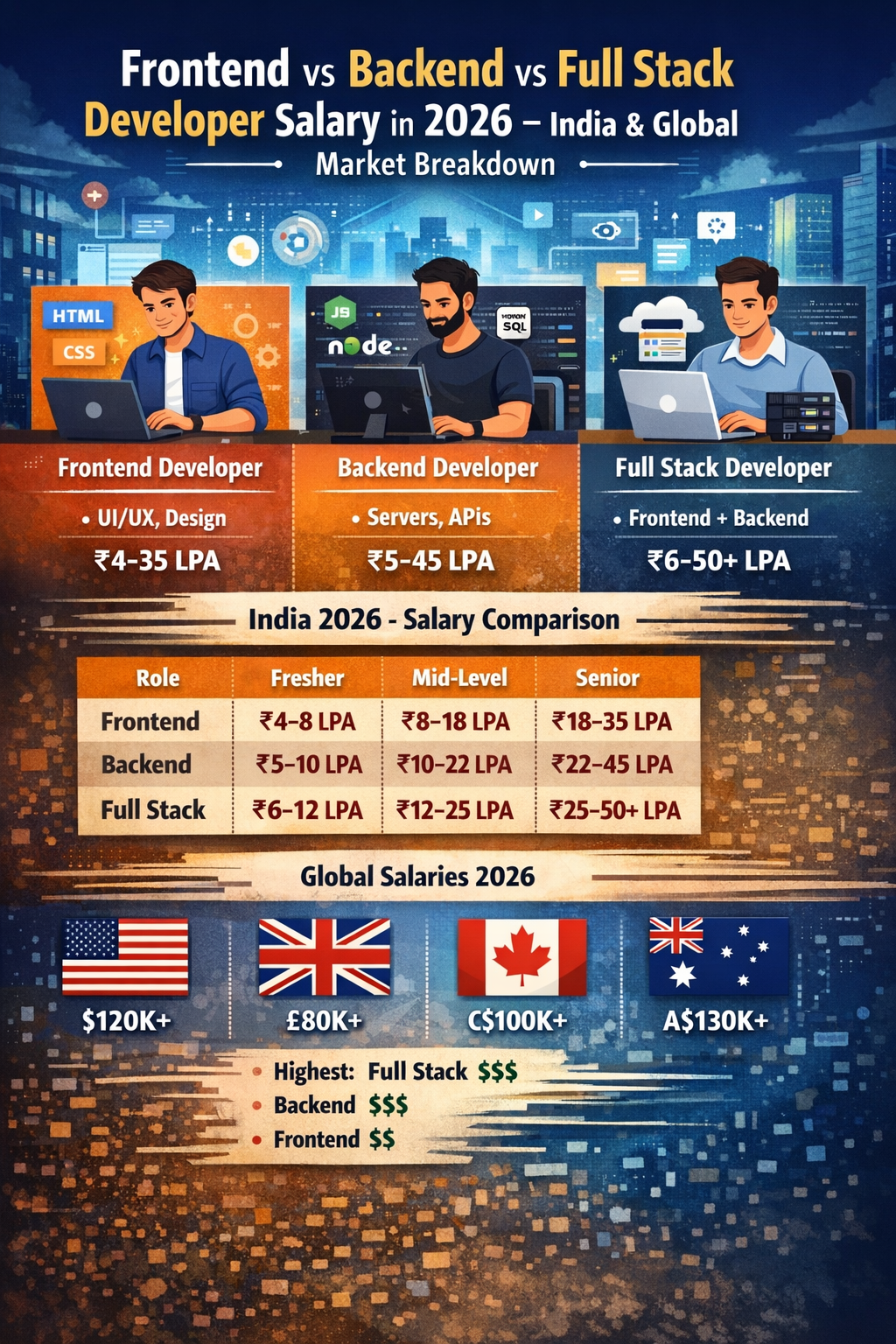
Salary Comparison in India (2026 Data)
Frontend Developer Salary in India (2026)
Fresher (0–1 year):
₹4 LPA – ₹8 LPA
2–5 Years Experience:
₹8 LPA – ₹18 LPA
Senior-Level (5+ years):
₹18 LPA – ₹35 LPA
City-Wise Comparison:
Bangalore: ₹7 – ₹30 LPA
Hyderabad: ₹6 – ₹25 LPA
Pune: ₹6 – ₹22 LPA
Remote India: ₹8 – ₹35 LPA
Backend Developer Salary in India (2026)
Fresher:
₹5 LPA – ₹10 LPA
Mid-Level (2–5 years):
₹10 LPA – ₹22 LPA
Senior-Level:
₹22 LPA – ₹45 LPA
High-Paying Industries:
FinTech
SaaS Platforms
AI & ML Startups
Cloud Product Companies
Full Stack Developer Salary in India (2026)
Fresher:
₹6 LPA – ₹12 LPA
Mid-Level:
₹12 LPA – ₹25 LPA
Senior-Level:
₹25 LPA – ₹50+ LPA
Why Full Stack Often Earns More:
Multi-skill advantage
Leadership opportunities
Startup demand
Remote job preference
Salary Comparison Table (India – 2026)
| Role | Fresher | Mid-Level | Senior | Average |
|---|---|---|---|---|
| Frontend | ₹4–8 LPA | ₹8–18 LPA | ₹18–35 LPA | ₹15 LPA |
| Backend | ₹5–10 LPA | ₹10–22 LPA | ₹22–45 LPA | ₹18 LPA |
| Full Stack | ₹6–12 LPA | ₹12–25 LPA | ₹25–50+ LPA | ₹22 LPA |
Global Salary Breakdown (2026)
🇺🇸 USA
Frontend: $95,000 – $140,000
Backend: $110,000 – $160,000
Full Stack: $120,000 – $180,000
🇬🇧 UK
Frontend: £55,000 – £85,000
Backend: £65,000 – £95,000
Full Stack: £70,000 – £105,000
🇨🇦 Canada
Frontend: CAD 75,000 – 110,000
Backend: CAD 90,000 – 130,000
Full Stack: CAD 100,000 – 150,000
🇦🇺 Australia
Frontend: AUD 90,000 – 130,000
Backend: AUD 105,000 – 150,000
Full Stack: AUD 115,000 – 170,000
🇦🇪 UAE
Frontend: AED 180,000 – 260,000
Backend: AED 220,000 – 320,000
Full Stack: AED 250,000 – 350,000
💱 Approx INR Conversion:
$120,000 ≈ ₹1 Cr
£80,000 ≈ ₹83 LPA
CAD 120,000 ≈ ₹74 LPA
AUD 130,000 ≈ ₹70 LPA
Experience-Wise Salary Growth (India vs Abroad)
| Experience | India | Abroad |
|---|---|---|
| 0–1 year | ₹4–10 LPA | ₹30–50 LPA |
| 2–5 years | ₹10–22 LPA | ₹50–90 LPA |
| 5–10 years | ₹22–45 LPA | ₹80 LPA – ₹1.5 Cr |
| 10+ years | ₹35–80+ LPA | ₹1.2 Cr – ₹2.5 Cr |
📊 Salary growth graph recommended for visual impact.
Which Role Pays More in 2026?
🔹 Short Answer:
Full Stack Developers earn the highest on average, followed closely by Backend Developers, while Frontend Developers earn slightly less but still enjoy excellent compensation.
Backend vs Full Stack:
Backend → Higher specialization, high-paying industries
Full Stack → Versatility, leadership roles, startup demand
When Frontend Can Earn Equally High:
Advanced UI/UX engineering
Web performance optimization
Design systems architecture
React + Next.js experts
Skills That Increase Developer Salary in 2026
To maximize salary potential, developers must master:
React + Next.js
TypeScript
Node.js + Express
System Design
Cloud Platforms (AWS, Azure, GCP)
AI Integration Skills
DevOps Basics
Docker & Kubernetes
🎯 Certifications & structured learning paths in cloud computing, system design, and full stack development significantly boost employability and salary.
Remote Jobs: Can Indian Developers Earn in Dollars?
Yes! Indian developers in 2026 are earning $40,000 – $120,000 annually through remote jobs.
Opportunities:
Global freelancing
Remote product companies
International SaaS startups
Salary Difference:
Indian companies: ₹6 – ₹25 LPA
Remote jobs: ₹25 LPA – ₹1 Cr
Payment & Tax Basics:
Platforms: Deel, Payoneer, Wise
Taxation: Declared as foreign income
Career Decision Guide: Which Should You Choose?
🎨 If you love design → Frontend Developer
🧠 If you love logic, APIs & databases → Backend Developer
🚀 If you want versatility & leadership → Full Stack Developer
Long-Term Growth:
Full Stack → Tech Lead → Solution Architect → CTO → Startup Founder
Conclusion
The salary comparison of frontend vs backend vs full stack developers in 2026 clearly shows that all three roles offer excellent earning potential, with full stack and backend developers leading in compensation.
However, salary alone should not define your career choice. Skills, interest, learning mindset, specialization, and long-term growth matter far more.
🔮 Future Outlook (2027 & Beyond):
AI-integrated web development
Cloud-native applications
High demand for full stack engineers
Massive growth in remote opportunities
💡 Choose your path wisely, invest in the right skills, and build real-world projects — success and high salary will naturally follow.