1. Introduction
Frontend development is one of the most in-demand skills in the tech industry today. Every website, web application, or digital platform you interact with has a frontend that shapes the user experience. For beginners who want to enter the world of web development, frontend development is often the best and most accessible starting point.
What is Frontend Development?
Frontend development focuses on building the visible part of a website or web application—everything users see, click, and interact with directly. This includes layouts, buttons, navigation menus, forms, animations, and overall responsiveness across devices.
Why Frontend Development Is a Great Career Choice for Beginners
Frontend development is beginner-friendly because:
It has a clear learning path
You can see results quickly
There is high demand for skilled frontend developers
It offers opportunities in jobs, freelancing, and remote work
Importance of Choosing the Right Frontend Languages First
Learning the right frontend languages in the correct order saves time, builds strong fundamentals, and prepares beginners for long-term success. Starting with the core technologies ensures you don’t struggle later with advanced frameworks or tools.
2. What Does a Frontend Developer Do?
A frontend developer bridges the gap between design and functionality.
Role of a Frontend Developer in Web Projects
Frontend developers transform design mockups into interactive, responsive, and user-friendly interfaces using frontend languages and tools.
Key Responsibilities
Building UI components
Improving UX (User Experience)
Ensuring fast performance
Making websites responsive on all devices
Cross-browser compatibility
Skills Required Beyond Languages
Apart from coding languages, frontend developers need:
Basic design sense (colors, spacing, typography)
Problem-solving mindset
Familiarity with tools like Git, browser DevTools
Understanding accessibility and usability
3. Criteria for Choosing Frontend Languages as a Beginner
Before learning any frontend language, beginners should consider these factors:
Ease of Learning
Languages with simple syntax and instant visual output are best for beginners.
Industry Demand & Job Opportunities
Languages that are widely used increase job and freelancing opportunities.
Community Support & Learning Resources
A strong community means tutorials, documentation, forums, and quick help.
Long-Term Relevance
Choose languages that will remain relevant in the future, not short-term trends.
4. HTML – The Foundation of Frontend Development
What is HTML?
HTML (HyperText Markup Language) is the backbone of every website. It defines the structure and content of web pages.
Why HTML Is the First Language Beginners Should Learn
Easy to understand
No programming logic required initially
Essential for all frontend frameworks
Key Concepts in HTML
Tags & Elements – Building blocks of webpages
Forms – Collecting user data
Semantic HTML – Meaningful tags for SEO and accessibility
Learning Outcomes for Beginners
After learning HTML, beginners can:
Create structured web pages
Build forms and layouts
Understand webpage hierarchy
5. CSS – Styling the Web
What is CSS and Why It Matters
CSS (Cascading Style Sheets) controls the appearance of HTML elements. Without CSS, websites would look plain and unstructured.
Core CSS Concepts for Beginners
Selectors & Properties
Box Model (margin, border, padding)
Flexbox & Grid basics
Responsive Design using media queries
Popular CSS Frameworks (Intro Level)
Bootstrap – Ready-made components
Tailwind CSS – Utility-first styling approach
Frameworks should be introduced only after mastering core CSS.
6. JavaScript – Bringing Websites to Life
Why JavaScript Is Essential for Frontend Development
JavaScript adds interactivity to websites, making them dynamic and user-friendly.
Beginner-Friendly JavaScript Concepts
Variables & Data Types
Functions & Events
DOM Manipulation
Real-World Use Cases
Form validation
Interactive sliders and menus
Fetching data from APIs
7. TypeScript – Should Beginners Learn It?
What is TypeScript?
TypeScript is a superset of JavaScript that adds static typing.
JavaScript vs TypeScript (Simple Comparison)
JavaScript: Flexible, beginner-friendly
TypeScript: Structured, scalable for large projects
When Beginners Should Start Learning TypeScript
Beginners should learn TypeScript after mastering JavaScript basics.
Benefits for Long-Term Frontend Careers
Fewer bugs
Better code maintainability
High demand in professional projects
8. Other Frontend Languages & Technologies (Optional for Beginners)
JSX
Used with React to write HTML-like code inside JavaScript.
SCSS / SASS
CSS preprocessors that improve styling efficiency.
WebAssembly (Brief Overview)
Allows high-performance code execution in browsers.
Why These Come After Core Languages
They depend heavily on HTML, CSS, and JavaScript fundamentals.
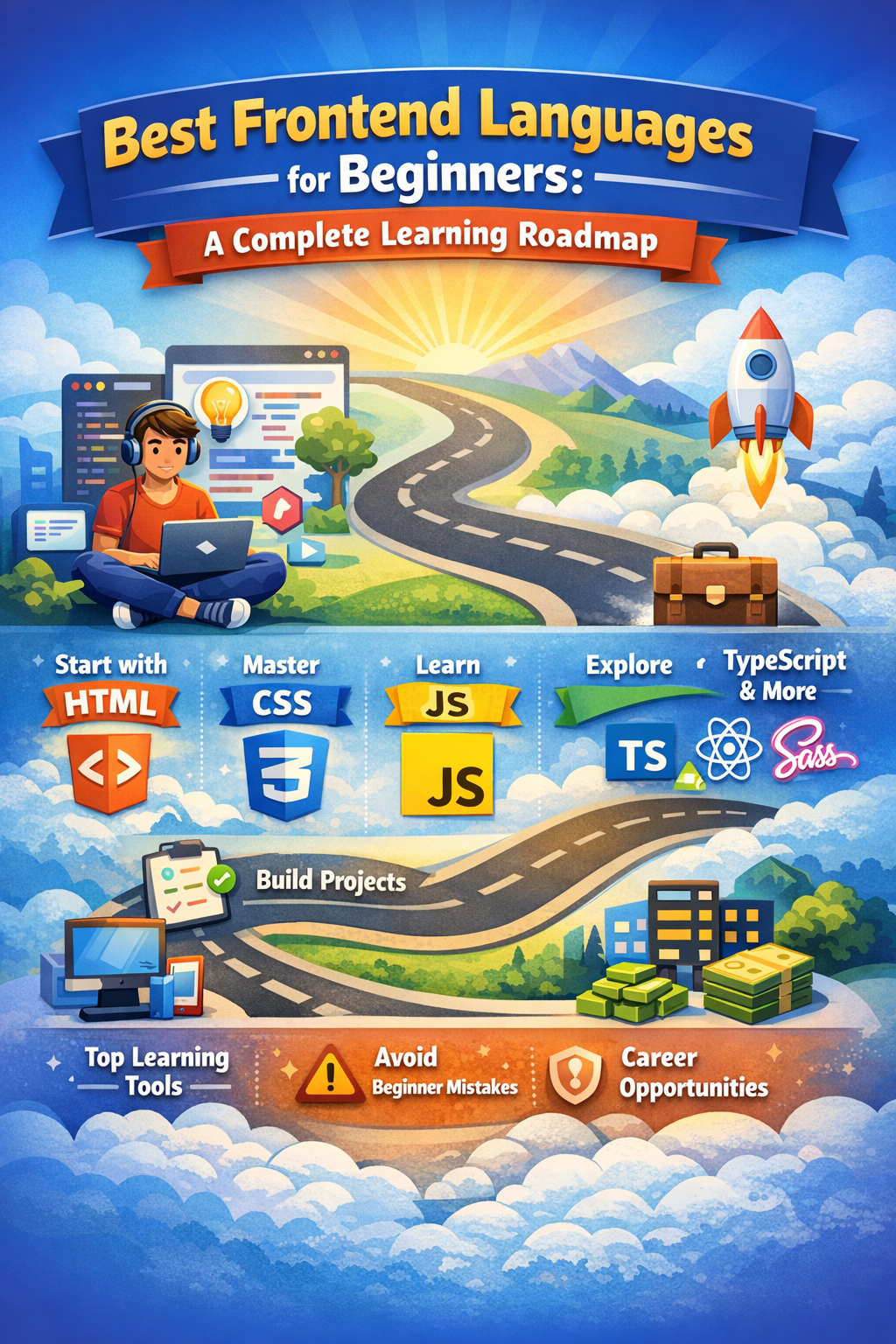
9. Complete Frontend Learning Roadmap for Beginners
Step-by-Step Learning Path
Learn HTML fundamentals
Master CSS basics and responsiveness
Start JavaScript from basics to DOM
Build small frontend projects
Move to frameworks (React, Vue – intro)
Explore TypeScript (optional but recommended)
10. Best Tools & Resources for Learning Frontend Languages
Code Editor: VS Code
Browser DevTools: Chrome DevTools
Online Learning Platforms: FreeCodeCamp, Coursera, Udemy
Practice Websites: Coding challenges, mini-project platforms
11. Common Mistakes Beginners Should Avoid
Skipping HTML and CSS basics
Jumping directly into frameworks
Not practicing consistently
Ignoring browser compatibility
12. Career Scope After Learning Frontend Languages
Entry-Level Job Roles
Frontend Developer
Junior Web Developer
UI Developer
Freelancing & Remote Opportunities
Frontend skills are highly valued in global freelance markets.
Salary Expectations for Beginners
Beginners can expect competitive salaries with rapid growth potential.
Growth Path
Senior Frontend Developer
UI Engineer
Full-Stack Developer
13. Conclusion
Frontend development is one of the best career options for beginners entering tech. By learning HTML, CSS, and JavaScript in the right order and following a structured roadmap, beginners can build strong foundations and advance confidently.
Start small, practice consistently, build real projects, and stay curious. With dedication and the right frontend languages, a successful frontend career is absolutely achievable.