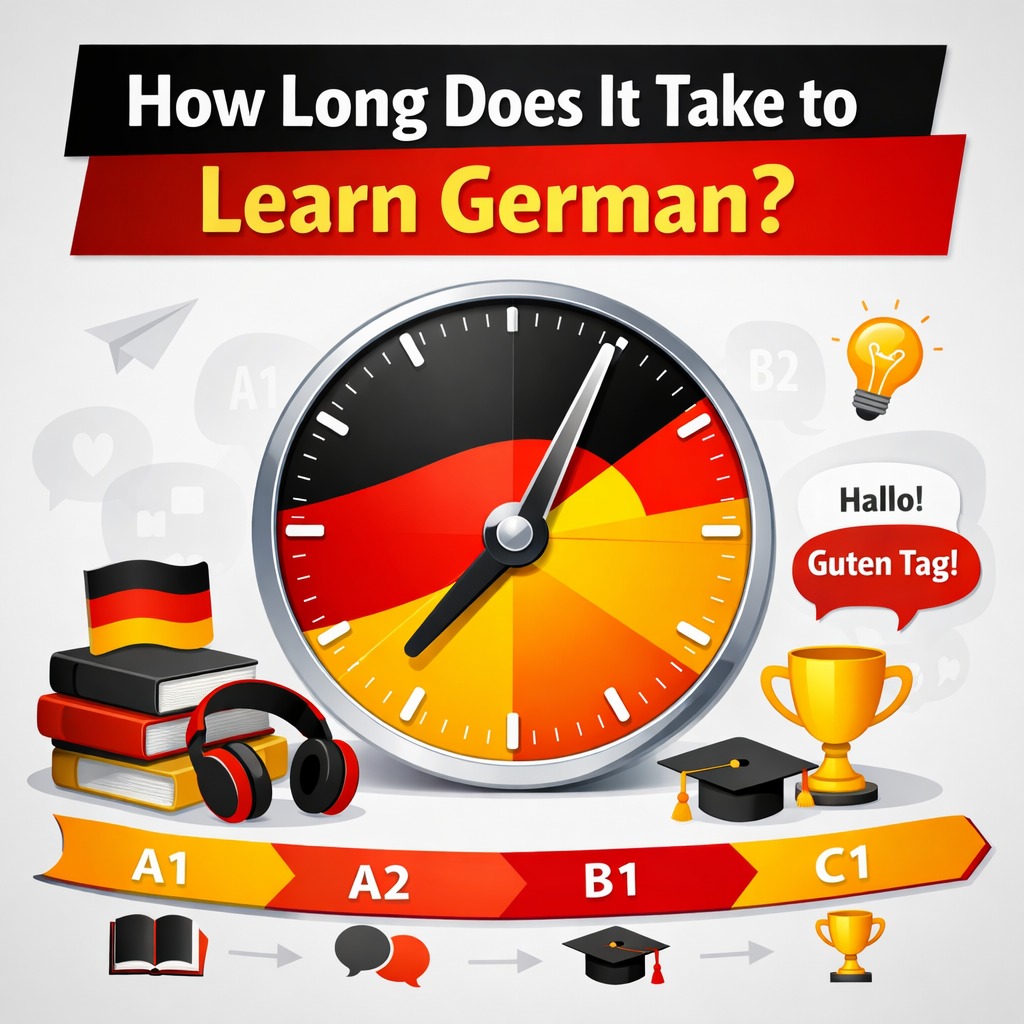
Learning a new language is an exciting journey, and
German is one of the most rewarding languages you can choose. Whether you are a
student, professional, or someone planning to work or study in Germany, one
question always comes first: How long does it take to learn German?
The answer depends on several factors such as your
learning method, consistency, goals, and the level of fluency you want to
achieve. This complete timeline guide will help you understand how long it
takes to learn German at each level, what challenges you may face, and how you
can speed up your learning process.
Introduction:
Why German Is a
Valuable Language to Learn
German is one of the most widely spoken languages in
Europe and the official language of Germany, Austria, and parts of Switzerland.
Germany has one of the strongest economies in the world, creating excellent
opportunities in fields like IT, engineering, healthcare, business, and
education. Learning German opens doors to global career opportunities, higher
education, and cultural understanding.
Common Questions
Learners Have About Time and Difficulty
Many learners wonder:
- Is
German hard to learn? - How
long does it take to speak German fluently? - Can
I learn German in 6 months? - How
much time is required for German for jobs?
This guide answers all these questions with
realistic timelines.
What This Guide Will
Help You Understand
You’ll get a clear breakdown of German language
levels (A1–C2), learning time at each stage, factors affecting your speed, and
practical tips to learn German faster.
How Difficult Is German for
English Speakers?
Similarities between English and German:
German and English belong to the same Germanic
language family. This means many words are similar, such as:
- Haus
(House) - Wasser
(Water) - Freund
(Friend)
Sentence structure in basic German is also familiar
to English speakers, making the early stages easier.
Challenges: Grammar, Cases, Genders,
Pronunciation:
Despite similarities, German has some challenges:
- Four
grammatical cases (Nominative, Accusative,
Dative, Genitive) - Three
genders (masculine, feminine, neutral) - Verb
placement rules - Compound
words - Clear
but unfamiliar pronunciation
These challenges increase as you move to higher
levels.
CEFR Language Levels (A1–C2) Explained:
German proficiency is measured using the CEFR
framework:
- A1
& A2: Basic user - B1
& B2: Independent user - C1
& C2: Proficient user
German Language Levels &
Learning Time (A1–C2)
A1 –
Beginner Level:
At A1, you learn:
- Basic
greetings - Self-introduction
- Simple
daily phrases - Numbers,
days, and basic grammar
Time required:
6–8 weeks
This level is perfect for absolute beginners.
A2 – Elementary Level:
At A2, you can:
- Handle
simple conversations - Talk
about routine tasks - Understand
basic texts and instructions
Time required:
2–3 months
You start feeling comfortable using German in daily life.
B1 –
Intermediate Level:
At B1, you can:
- Communicate
while traveling - Handle
workplace conversations - Express
opinions and experiences
Time required:
3–4 months
This is a crucial level for jobs and long-term stays.
B2 –
Upper-Intermediate Level:
At B2, you can:
- Use
German professionally - Understand
complex texts - Participate
in meetings and discussions
Time required:
4–6 months
Most employers consider B2 as job-ready German.
C1/C2 – Advanced &
Fluent Level:
At these levels, you achieve:
- Near-native
fluency - Advanced
writing and presentations - Academic
and professional mastery
Time required:
8–12+ months
This level is ideal for higher education and leadership roles.
Factors That Affect How Fast You
Learn German:
Several factors influence how long it takes to learn
German:
Daily Study Time
Studying 1–2 hours daily gives faster results than
irregular study.
Learning Method
- Self-study:
Slower, needs discipline - Coaching
or institute: Faster, structured learning
Practice Environment
Speaking with native speakers or practicing daily
improves fluency faster.
Motivation and Consistency
Consistent learners progress much quicker than those
who study occasionally.
Prior Language Learning Experience
If you’ve learned another foreign language before,
German becomes easier.
Self-Study vs German Coaching: Time
Comparison:
Learning Speed Differences:
Self-study may take 30–40% longer compared to
guided coaching.
Structured Curriculum vs Random
Resources:
Institutes follow a CEFR-aligned syllabus, while
self-learners often jump between topics.
Importance of Speaking Practice and
Feedback:
Regular speaking practice and correction are key to
faster progress.
How Long Does It Take to Learn
German for Jobs?
German for IT, Healthcare, and Business
Roles
- IT
& Business: B1/B2 required - Healthcare:
B2 mandatory in most cases
Job-Ready Level (B1/B2) Timelines
- B1:
6–8 months - B2:
9–12 months
Certification Requirements
Most employers accept:
- Goethe
Zertifikat - TELC
- ÖSD
Can You Learn German in 3, 6,
or 12 Months?
3 Months:
- Reach
A1 or basic A2 - Suitable
for travelers or beginners
6 Months:
- Reach
strong A2 or B1 - Good
for entry-level job preparation
12 Months:
- Reach
B2 level - Ideal
for working professionals and students
Fast results require intensive study (2–4
hours/day).
Tips to Learn
German Faster:
- Practice
speaking daily - Watch
German TV shows and YouTube - Listen
to German podcasts - Use
apps like Duolingo or Anki - Learn
vocabulary with context - Think
in German - Revise
regularly
Common Mistakes That Slow Down
Learning:
- Focusing
only on grammar - Avoiding
speaking practice - Studying
inconsistently - Skipping
revision - Fear
of making mistakes
Avoiding these mistakes can significantly reduce
learning time.
Conclusion:
Summary of Learning Timelines
- Beginner
to Intermediate (A1–B1): 6–8 months - Job-ready
level (B2): 9–12 months - Advanced
fluency (C1/C2): 1.5–2 years
Choosing the Right Learning Path
Whether you choose self-study or professional
coaching, the key is regular practice, motivation, and a structured plan. Start
today, stay consistent, and German fluency will follow.